Guanxi Is Not Networking: Why Transactional Thinking Kills Chinese Relationships

Quick answer
Guanxi isn’t a transaction—it’s a long-term trust deposit that compounds, unlike Western networking’s immediate quid pro quo. Expect months of meals and small favors before any business ask; rushing it signals disrespect. For foreigners, prioritize genuine care over pitch decks, and you’ll unlock referrals no contract can buy.
The Fatal Assumption: Treating Guanxi Like Western Networking
You've just landed in Shanghai. Your calendar is packed with meetings. You've got a solid product, a clear value proposition, and a list of potential partners. You're ready to network.
You meet a potential distributor. You exchange WeChats. You give your elevator pitch. You ask, 'So, what can you do for me right now?' The conversation stalls. You follow up next week with a proposal. No response. You send a reminder. Silence.
What went wrong? In Western business culture, networking is often transactional: you identify a need, offer a solution, and close a deal. It's efficient, direct, and time-bound. But in China, this approach can be lethal to building lasting business relationships. The concept of guanxi (关系) operates on a fundamentally different logic—one that values long-term, compounding trust over immediate, one-off transactions.
This article will unpack why the transactional model fails, introduce the compounding trust model of guanxi, and provide a practical framework to help you navigate the patience gap and build relationships that pay dividends for years.
The Transaction Model vs. The Compounding Trust Model
Imagine two bank accounts. The first is a checking account: you deposit money, you withdraw money, and the balance is zero at the end of the month. This is the transaction model—every interaction is a discrete exchange of value. In Western networking, you might attend a conference, collect 50 business cards, and follow up with a generic email asking for a 'quick call to explore synergies.' The goal is to identify what each party can do for the other, and if there's no immediate win, the connection fades.
The second account is a retirement fund: you make regular contributions, and over time, interest compounds, and the principal grows exponentially. This is the compounding trust model that underpins guanxi. Every meal, every sincere compliment, every small favor you do without expecting immediate return is a deposit. The 'interest' is the growing trust and goodwill that makes future cooperation smoother, faster, and more reliable.
In China, when you ask 'What can you do for me now?' you're essentially demanding a withdrawal before you've made any deposits. It's like walking into a bank and asking for a loan without an account history. The banker—your potential partner—will politely decline, and you'll be marked as someone who doesn't understand how things work.
Instead, the question should be: 'How can I contribute to this relationship over time?' This shift in mindset is the first step toward success.
The Long-Term ROI of Guanxi Investment
Critics might argue that investing in guanxi is time-consuming and vague. But let's look at the return on investment (ROI) from a purely business perspective.
- Reduced Transaction Costs: When trust is high, contracts are simpler, negotiations are faster, and due diligence is less burdensome. You save time and legal fees.
- Access to Information: In a market where information is often opaque, your guanxi network gives you early warnings about regulatory changes, partner reliability, and emerging opportunities. This is invaluable intelligence that no report can provide.
- Priority Access to Resources: When a supplier has limited capacity or a government official has a limited number of permits, who gets priority? The person who has built a relationship over years, not the one who just emailed a request.
- Resilience in Crisis: When something goes wrong—a shipment is delayed, a payment is late, a dispute arises—your guanxi network will go the extra mile to help you solve it, because they have a personal stake in your success. This crisis buffer alone can save your business.
Consider the example of a European machinery exporter who spent two years visiting a potential Chinese distributor's factory, attending family events, and helping them with English translations for their website—all without a single order. In the third year, when the distributor landed a major government contract, they chose this exporter as their exclusive supplier. The initial 'lost' time translated into a multi-million-dollar deal that competitors couldn't touch.
Real Case Examples: Success vs. Failure
Let's illustrate the difference with two contrasting stories.
Failure Case: The Transactional MBA
An American MBA graduate moved to Shenzhen to launch a tech startup. He attended every networking event, collected hundreds of WeChat contacts, and sent out mass messages with his pitch deck. He asked for introductions to investors, factory owners, and potential clients—often within the first conversation. Within six months, he was frustrated. People were polite but distant. No one returned his calls when he needed help. He concluded that 'guanxi is a myth' and left China, blaming the culture.
What he didn't realize: he had violated the most basic rule. He treated every interaction as a transaction, and people felt used. In Chinese social logic, this is called '把人当工具人' (treating people as tools), and it's a cardinal sin.
Success Case: The Patient Engineer
In contrast, a German engineer named Klaus was sent to Guangzhou to manage a joint venture. Instead of immediately pushing for contracts, he spent his first six months learning Mandarin and attending every company gathering, including weekend banquets and even a colleague's wedding. He offered free technical advice to a local supplier's factory manager, solving a production issue they'd struggled with for months—without asking for anything in return. Over time, he became known as 'Lao Ke' (Old Ke), a trusted insider. When his company faced a regulatory hurdle, a local partner used their own guanxi to expedite the approval. Klaus's patience had built a safety net that money couldn't buy.
The Patience Gap: Why You Must Slow Down
The 'patience gap' is the time between your initial investment in a relationship and the moment it yields tangible business results. In Western contexts, this gap might be weeks or months. In China, it can be one to three years, depending on the level of trust required.
This gap is not a inefficiency; it's a feature. It filters out those who are not committed to a long-term presence in the market. Chinese businesspeople are well aware that many foreigners are 'tourists'—here for a quick profit and gone. They are naturally cautious about investing time and resources in someone who might disappear.
To bridge the patience gap, you need to demonstrate commitment signals:
- Physical Presence: Regularly visit China, not just for meetings but for social occasions. Being there for a birthday dinner or a wedding speaks volumes.
- Language Effort: Even basic Mandarin phrases show respect and a willingness to adapt. It's a powerful signal that you're in for the long haul.
- Consistency: Show up consistently over time, not just when you need something. This builds a reputation of reliability.
- Small Acts of Generosity: Bring a gift from your home country, offer to help with a personal problem, or share useful industry insights—without any immediate expectation. These are deposits into the trust account.
By doing these things, you're not just waiting for a return; you're actively building the foundation that makes future returns possible.
Practical Steps to Shift from Transactional to Relational
Here's a concrete action plan to start building guanxi the right way:
- 1. Reframe Your Questions: Instead of 'What can you do for me?' ask 'What are your goals, and how can I support them?' This shifts the focus from extraction to contribution.
- 2. Master the Art of the Meal: In China, business often happens at the dinner table, not in the boardroom. Accept invitations, and reciprocate. Use meals to connect on a personal level—talk about family, hobbies, and shared interests, not just business.
- 3. Give Before You Receive: Offer to help with something small—an introduction, a piece of market data, a translation. These small gifts create a sense of obligation (renqing, 人情) that will be reciprocated later.
- 4. Use a Middleman (中间人): When you need to reach a high-level contact, find a mutual friend to introduce you. This 'warm introduction' instantly elevates your trust level.
- 5. Be Patient and Persistent: Don't expect immediate results. Follow up regularly (but not annoyingly), and keep the relationship warm even when there's no active deal.
- 6. Learn to Read Non-Verbal Cues: In China, a 'yes' can sometimes mean 'maybe' or 'I'll think about it.' Pay attention to body language and indirect communication. When in doubt, ask for clarification in a non-confrontational way.
Remember, guanxi is not a one-time transaction; it's a lifelong journey of mutual respect and support.
Common Pitfalls to Avoid
Even with the right mindset, there are traps that can derail your efforts.
- Treating everyone the same: Not every contact is worth the same investment. Focus on a few key relationships that align with your long-term goals, and nurture them deeply.
- Expecting reciprocity too soon: If you've done a favor, don't immediately ask for one in return. This makes it seem like you're keeping score, which undermines trust.
- Over-relying on gifts: Gifts are a token of appreciation, not a substitute for genuine relationship-building. A lavish gift without a sincere relationship can be seen as a bribe, which is both illegal and offensive.
- Ignoring the role of face (面子): Never embarrass your Chinese counterpart in public. Always give them a 'way out' in negotiations. Protecting their face is a critical part of building trust.
Avoid these mistakes, and you'll be well on your way to mastering guanxi.
Conclusion: The Compounding Payoff
The transactional model of networking is like a vending machine: you insert a coin and get a product. Guanxi is more like a garden: you prepare the soil, plant seeds, water them, and wait. It takes time, but the harvest is far richer and more sustainable.
As a foreigner in China, you have a unique advantage: you can stand out by being the rare Westerner who understands the value of patience and genuine relationship-building. By shifting from 'What can you get?' to 'How can we grow together?' you will not only unlock business opportunities but also gain lifelong allies and friends.
Start today by picking one relationship you want to deepen. Invite that person for a meal, ask about their family, and listen more than you speak. The compounding trust you build will be your most valuable asset in China.
What Chinese People Actually Say
What Chinese People Actually Say: Guanxi isn’t a transaction—it’s a long-term trust deposit that compounds, unlike Western networking’s immediate quid pro quo. Expect months of meals and small favors before any business ask; rushing is a mistake.
- 慢慢来 (màn màn lái) – “take it slowly.” Usage: Said when urging a partner to build trust before proposing a deal.
- 先请客 (xiān qǐng kè) – “first treat them to a meal.” Usage: Reminds to host a dinner before asking for any favor.
- 给面子 (gěi miànzi) – “give face.” Usage: Used to stress respecting someone's reputation publicly.
- 做人情 (zuò rénqíng) – “do a favor.” Usage: Refers to performing small acts to nurture reciprocal goodwill.
2026 Reality Check
2026 Reality Check: In China’s 2026 business landscape, the generational divide in guanxi is stark. Gen Z, raised on digital platforms and transparent feedback, treats relationships as ongoing, value‑exchange ecosystems rather than one‑off deals. Their older counterparts—often senior executives and traditional entrepreneurs—still view guanxi as a ledger of favors, expecting immediate reciprocity. This tension plays out unevenly across city tiers. In tier‑1 hubs like Shanghai and Shenzhen, Gen Z’s collaborative style is reshaping corporate culture, with startups leveraging peer‑to‑peer trust and data‑driven reputation. Meanwhile, tier‑2 and tier‑3 cities, where personal networks remain the primary lubricant for commerce, still cling to transactional norms, but even there younger consumers are pushing for more authentic, long‑term connections. The bottom line: transactional thinking erodes trust in a market that now rewards transparency and mutual growth. Companies that ignore this shift risk being left behind in the new relational economy.
Frequently asked questions
How is guanxi different from Western networking in practice?
Western networking often involves exchanging business cards and seeking immediate favors. Guanxi is a long-term, personal bond built on repeated acts of mutual support, often involving family or close friends. It's not transactional; it's relational. You invest years before seeing returns, and the relationship itself, not the deal, is the primary value.
Can I build guanxi with someone I just met at a conference?
Technically yes, but it won't be guanxi yet—it's just an introduction. Real guanxi requires time, shared experiences, and demonstrated reliability. Start by following up sincerely, offering help without expecting anything in return, and meeting multiple times in informal settings. Treat the first few months as a trust-building phase, not a negotiation.
What happens if I try to cash in on guanxi too early?
Asking for a significant favor before the relationship is solid will likely cause your contact to lose face and withdraw. They may politely decline or become distant. In Chinese culture, this signals you see them as a tool, not a person. To recover, apologize sincerely, shift focus to their needs, and rebuild trust slowly over many months.
Is guanxi the same in all regions of China, like Shanghai vs. a small town?
No, intensity varies. In small cities and rural areas, guanxi is often deeper and more binding, tied to family and community networks. In metropolises like Shanghai or Shenzhen, professional guanxi is more common, but still requires personal trust. Always observe local customs—gift-giving, dining habits, and communication styles differ, so adapt your approach.
What if I'm an introvert or don't enjoy socializing? Can I still build guanxi?
Yes, but you need to find authentic ways to connect. Guanxi isn't about being the life of the party; it's about consistency and sincerity. You can build trust through reliable follow-ups, remembering personal details, and offering practical help. Quality over quantity matters—a few deep relationships are more valuable than many shallow ones.
When should I give gifts or treat someone to dinner to strengthen guanxi?
Gift-giving is appropriate for holidays, after receiving help, or when visiting someone's hometown. Dinners are for celebrating milestones or just maintaining connection—not as a prelude to a request. Never give expensive gifts when asking for a favor, as it looks like bribery. Focus on thoughtful, modest gestures that show you remember their preferences and care about them personally.
Try our tools
Related guides

Guanxi vs Western Networking: Why Your LinkedIn Skills Fail in China
Western networking is transactional and efficiency-driven, while Chinese guanxi is an emotional bank account that compounds over time. To succeed in China, stop…
Read the guide →
Why Chinese Business Dinners Are Actually Trust Tests (Not Just Meals)
Chinese business dinners are less about food and more about gauging your character—hosts observe your manners, respect, and patience as signals of trustworthine…
Read the guide →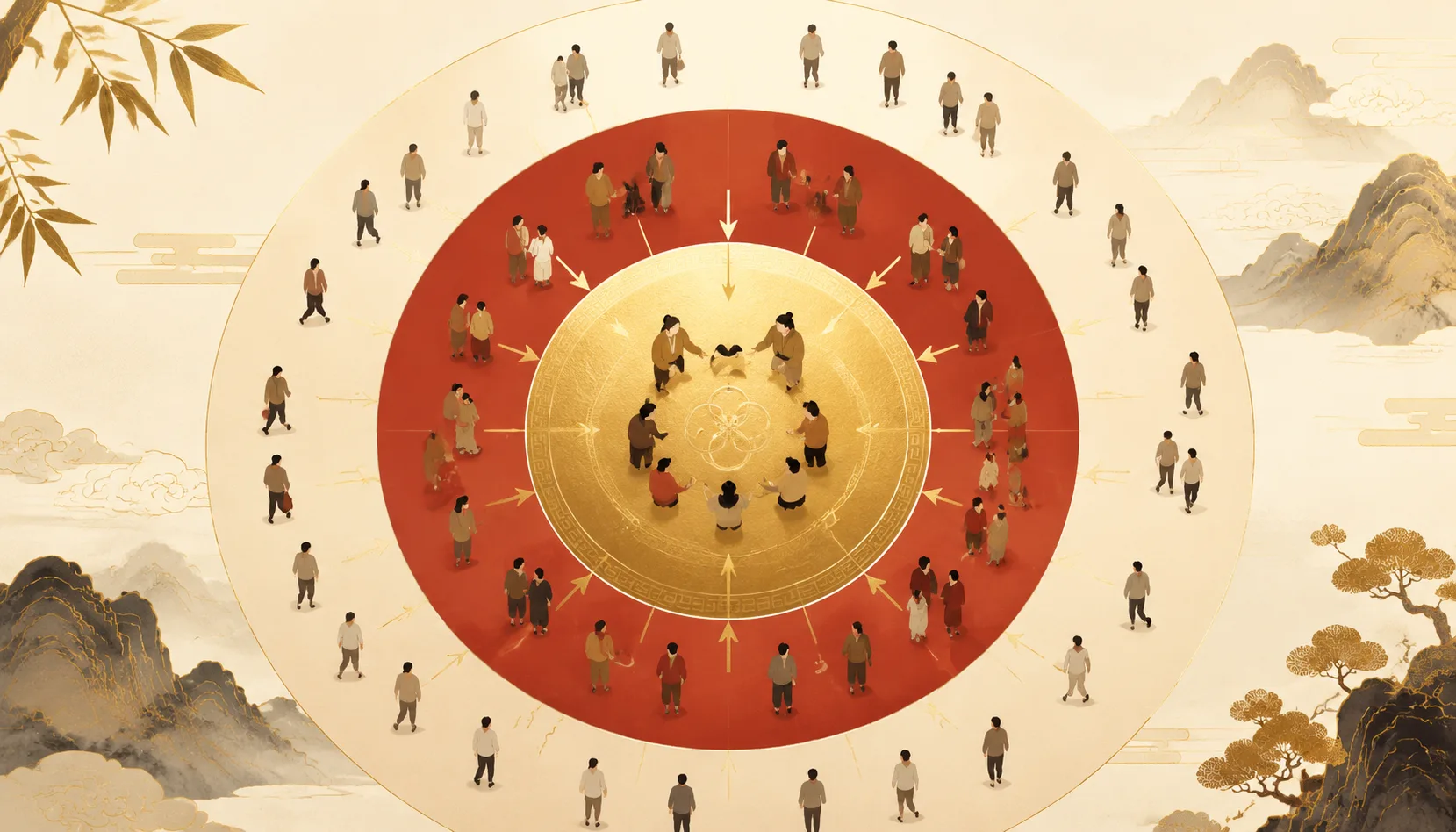
Guanxi Circles: Iron vs. Face Relationships in China
Chinese relationships are stratified into concentric circles—from iron relationships (铁关系 tiě guānxi) at the core to face-level acquaintances (面子关系 miànzi guānx…
Read the guide →