Chinese Gift Budget Guide: How Much to Spend on Gifts in China (2026 Price Breakdown)
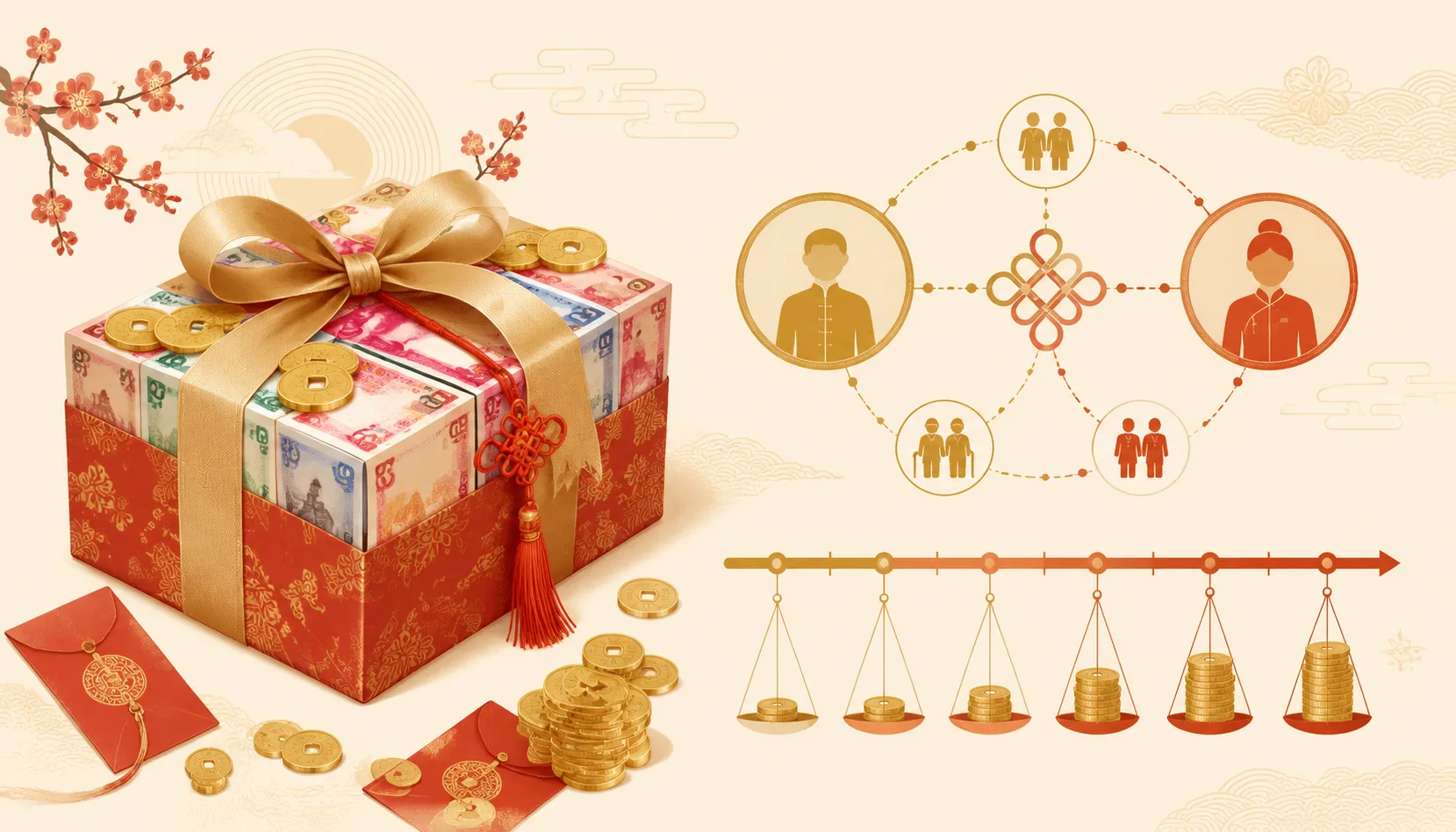
Quick answer
The safe zone for most situations: ¥100–500 RMB (~$15–$70 USD). For important business relationships at major holidays: ¥300–1500. For close friends at significant life events: ¥500–2000+. For anything involving government officials: ¥0 (compliance risk) or very modest symbolic items only.
Quick Answer
The safe zone for most situations: ¥100–500 RMB (~$15–$70 USD). For important business relationships at major holidays: ¥300–1500. For close friends at significant life events: ¥500–2000+. For anything involving government officials: ¥0 (compliance risk) or very modest symbolic items only.
Why Price Matters So Much in China
In Western gift culture, "it's the thought that counts" is partially true — a heartfelt, creative gift at a modest price is respected.
In Chinese gift culture, the price is part of the thought. The gift's market value communicates how you've positioned the relationship. When someone receives your gift:
- They roughly calculate its value
- They compare it to what the relationship "should" merit
- They update their mental model of where they stand with you
This is not mercenary. It's a legible social language — like using someone's proper title versus their first name. Getting the price wrong sends an unintended message.
Under-pricing says: "You're worth ¥30 to me." Over-pricing says: "I want something from you" or "I'm creating debt pressure." Right-pricing says: "I've thought about our relationship and calibrated accordingly."
The Four-Tier Price Framework
Tier 1: The Acquaintance / Courtesy Zone (¥50–150 / $7–22 USD)
Who this is for:
- Casual colleagues you interact with but aren't close to
- Neighbors, service providers you have ongoing relationships with
- Office-wide伴手礼 (travel souvenirs distributed to everyone)
- People who've done you a small favor
What fits here:
- Small specialty foods (individual packaged local snacks)
- A quality tea bag set
- Imported chocolate or cookies
- Something from your home country that isn't available locally
The ¥50 floor: Going below ¥50 for a non-share situation is risky. At ¥30, the packaging often looks like it matches the price — visibly cheap. A ¥50–80 product in quality packaging reads better than a ¥30 product in cheap packaging.
Signal sent: "I'm polite and I thought of you."
Tier 2: The Regular Friend / Colleague Zone (¥150–400 / $22–57 USD)
Who this is for:
- Colleagues you see daily and genuinely like
- Friends you see a few times a year
- Regular business contacts (vendors, counterparts you work with routinely)
- Your child's teacher (for annual appreciation)
What fits here:
- Mid-range tea gift box (铁观音, 龙井, 碧螺春 — well-packaged)
- Quality imported wine (one bottle, recognizable brand)
- A specialty food gift box (nuts, dried fruit, artisan foods)
- Brand-name coffee set
- Quality kitchenware or lifestyle item
The ¥200 sweet spot: For this tier, ¥200 is the amount that feels "I bothered to think about this" without creating obligation. A ¥200 gift in quality red packaging is reliably received well.
Signal sent: "I value you as part of my regular world."
Tier 3: The Important Relationship Zone (¥400–1000 / $57–142 USD)
Who this is for:
- Important clients and business partners
- Close friends
- Key mentors or sponsors
- Your boss (in appropriate context)
- Extended family you visit during holidays
What fits here:
- Premium single-origin tea (西湖龙井, 武夷岩茶)
- A quality bottle of Moutai or Wuliangye (baijiu)
- Imported wine from a premium region (Bordeaux, Burgundy, Napa Valley)
- High-end nuts and dried food gift sets
- Premium health supplement sets (ginseng, bird's nest, cordyceps)
- A small set of quality items (tea + wine, tea + snacks combination)
The ¥500 dignity line: For anyone in this tier, ¥500 is the psychological floor where the gift shifts from "nice gesture" to "I took this seriously." A ¥300 gift for a major client at Spring Festival does more harm than good — it reads as you not recognizing how important they are.
Signal sent: "You are a meaningful part of my professional and personal life."
Affiliate placement: → Premium tea gift boxes in the ¥400–800 range | Quality imported wine under ¥500 | Health supplement gift sets
Tier 4: The Priority / Inner Circle Zone (¥1000+ / $142+ USD)
Who this is for:
- Your most important business relationships (top 3–5 clients)
- Very close friends at significant life events
- Future in-laws (first visit, important occasions)
- Mentor who has made a real difference to your career
- Anyone who has done you a substantial favor in the past year
What fits here:
- Aged Pu'er tea (some premium vintage teas cost ¥1000+ per cake)
- Feitian Moutai (check current pricing — ¥2000+ per bottle at retail)
- Premium health products (high-grade cordyceps sets, quality bird's nest)
- High-end imported spirits (Cognac, aged Scotch, premium bourbon)
- Customized or bespoke items (personalized with their name or company, quality craftsmanship)
The ceiling problem: There is a real risk of over-gifting here. A ¥5000 gift to someone you've known for 2 months creates enormous social pressure. They now owe you ¥6000 back. If they can't reciprocate at that level, they may quietly distance themselves.
The guiding principle: "What level does this person probably gift at themselves?" Match that level rather than dramatically exceed it. A person who gifts at ¥500 will feel comfortable receiving ¥600–800. They will feel uncomfortable receiving ¥3000.
Signal sent: "You are among the most important people in my Chinese professional/personal network."
Occasion-Specific Price Adjustment
The occasion multiplies the base relationship tier. Some occasions justify (and require) spending more than the baseline:
| Occasion | Price Adjustment vs. Baseline |
|---|---|
| Chinese New Year (major holiday) | +50% to baseline |
| Mid-Autumn Festival | +30% to baseline |
| Wedding (host is close friend) | ¥800–2000 cash in red envelope |
| Wedding (host is colleague) | ¥400–800 cash |
| Birthday (milestone: 60th, 70th) | +100% — treat as major occasion |
| Housewarming (close friend) | ¥300–800 |
| Baby full moon | ¥300–1000 depending on relationship |
| First meeting (business, no prior relationship) | ¥100–300 (modest but present) |
| After a major favor | Match the favor's value in social terms |
The Price vs. Packaging Calculation
A ¥200 gift in premium packaging reads better than a ¥300 gift in shabby packaging. The perceived value of a gift is the product of actual value + presentation quality.
Upgrade moves:
- A ¥100 tea box in a generic plastic bag → perceived value: ¥80
- A ¥100 tea box in a lacquered wooden gift box with red ribbon → perceived value: ¥200
- The cost of the wooden box: ¥15 on Taobao
This is why packaging matters so much in Chinese gift culture. The incremental cost of good packaging is small; the perceived value difference is significant.
Affiliate placement: → Premium gift boxes, lacquered containers, and quality packaging for Chinese gifting | Red and gold gift bags and ribbon sets
Special Cases: Non-Monetary Calculations
Gifts to Government Officials or State-Owned Enterprise Employees
Hard stop. China's anti-corruption laws (since 2013) create real legal risk for giving anything valuable to public officials. Guidelines:
- Maximum safe value: approximately ¥200–300 per gift, per occasion
- Never cash, never gift cards, never anything easily converted to cash
- The safest option: branded company merchandise, a book, or a purely symbolic cultural item
- When in doubt: don't give; take them to a modest public meal instead
Gifts to Medical Professionals
Doctors in China are legally prohibited from receiving personal gifts. A "red envelope" (to ensure better care) is explicitly illegal. However, cultural practices persist in informal forms. As a foreigner: decline to participate in this custom entirely. Instead, express gratitude publicly and to the hospital administration — this is both appropriate and impactful.
Reciprocation Math
When someone gives you a gift, the expected reciprocal amount is:
- Same relationship, same occasion next time: Match what they gave, or give 10–20% more
- Different occasion: Find the equivalent occasion tier in their life and give at the appropriate level
- Running significantly behind on reciprocation: One substantial gift that "resets" the ledger is understood and appreciated
The Budget Conversation That's Okay to Have
In Chinese social circles, asking about gift budget expectations is completely normal and not rude. If you're unsure about an amount:
- Ask a mutual Chinese friend: "I'm giving a gift for [event] — what's the going rate?"
- For weddings specifically: "What are people generally giving for [person]'s wedding?"
This question signals social awareness, not cheapness. It shows you care about getting it right.
Summary Table
| Occasion | Close Friend | Regular Contact | Casual |
|---|---|---|---|
| Chinese New Year | ¥500–1500 | ¥200–500 | ¥100–200 |
| Mid-Autumn Festival | ¥300–800 | ¥150–400 | ¥80–150 |
| First visit/meeting | ¥150–300 | ¥100–200 | ¥80–150 |
| Wedding (red envelope) | ¥800–2000 | ¥400–800 | ¥200–400 |
| Birthday | ¥200–500 | ¥100–300 | N/A |
| Hospital visit | ¥150–400 | ¥100–200 | ¥80–150 |
| Home dinner | ¥100–250 | ¥80–150 | ¥50–100 |
| Housewarming | ¥300–800 | ¥200–400 | ¥100–200 |
| Favor gratitude | Match favor significance |
What Chinese People Actually Say
- 红包 | hóngbāo | Red envelope with money | Use for weddings, Lunar New Year, or business occasions; amount should be even numbers (except 4) and usually ends in 8.
- 送礼 | sòng lǐ | To give a gift | Use when referring to the act of giving gifts; pair with specific occasions like "春节送礼" (Spring Festival gift-giving).
- 份子钱 | fènzi qián | Gift money for weddings/events | Use when contributing to wedding or birthday celebrations; amount varies by relationship and region.
2026 Reality Check
2026 Reality Check: The traditional "one month salary" rule for wedding gifts is fading. In tier-1 cities like Beijing and Shanghai, ¥2,000-5,000 is now standard for weddings; ¥500-1,000 for birthdays. Red envelopes (hongbao) for holidays remain strong at ¥200-500 for adults.
Gen Z vs. Older Generations: Boomers and Gen X still follow the "face" principle—spending generously to show respect. Gen Z is more pragmatic: they split bills, pool money for group gifts, or give thoughtful small items instead of cash. Digital red envelopes via WeChat remain popular across all ages.
City Divide: In smaller cities and rural areas, the "one month salary" idea persists—¥1,000-3,000 for major occasions. In tier-1 cities, inflation and high living costs have actually pushed some to give less cash but more practical gifts. The rule isn't dead, but it's definitely evolving.
Frequently asked questions
What is the minimum acceptable gift amount in China without looking cheap?
For casual colleagues or acquaintances, stay above ¥50 RMB (~ USD). Anything under that risks signaling low regard. A box of quality fruit (¥60–100) or a mid-tier tea set (¥80–150) works well. Avoid single items under ¥30 unless it's a symbolic token like a local specialty snack.
How much should I spend on a gift for my Chinese girlfriend's parents for the first time?
Plan ¥500–1000 RMB (~0–140 USD) total. Split it: quality tea (¥200–300), health supplements like bird's nest or ginseng (¥300–500), and fruit or pastries (¥100–200). Never give cash directly—it feels transactional. If her parents are wealthy or urban professionals, lean toward the higher end or choose one premium item.
Is it rude to give an expensive gift to a Chinese business partner?
Yes, if it exceeds roughly ¥1500 RMB (~10 USD) for a routine meeting. Expensive gifts create a sense of obligation (renqing), which can embarrass the recipient or trigger compliance concerns. At major holidays like Spring Festival, ¥300–800 is respectful for managers; for C-suite, ¥1000–1500 max. Always check your company's anti-bribery policy first.
Can I give alcohol as a gift in China, and what's the right price?
Absolutely—baijiu (white liquor) and quality red wine are classic gifts. For a colleague: ¥100–300 bottle of wine or a mid-tier baijiu like Fenjiu. For a client or boss: ¥500–1000 for Moutai or Wuliangye. Avoid gifting Western spirits to older recipients who prefer baijiu. Check if the recipient drinks; non-drinkers may prefer premium tea at the same price point.
What if I'm on a tight budget—what's the cheapest gift that still shows respect?
Focus on thoughtfulness over cost. ¥30–80 options: a box of regional pastries, a small potted plant, or a beautifully packaged local honey. Add a handwritten card in Chinese (even a short phrase helps). The key is explaining the meaning behind the gift, like 'this tea helps digestion'—that personal touch outweighs the price tag.
When should I spend over ¥2000 RMB on a gift in China?
Only for major life events with very close friends or family: weddings (¥800–2000 in cash or equivalent gifts), newborn celebrations (¥1000–2000 for gold jewelry or high-end baby gear), or milestone birthdays for parents. For business, never exceed ¥1500 unless it's a corporate-sponsored event. If you're considering ¥2000+ for a romantic partner, communicate openly—some may feel pressured by the debt of reciprocity.
Try our tools
Related guides

Chinese Gift-Giving Guide 2026: Rules, Taboos, and What Actually Works
In China, gift-giving is not about the gift. It's about the relationship. The right gift, delivered at the right time with the right words and two hands, commun…
Read the guide →
What to Bring to a Chinese Home for Dinner: Guest Gift Guide for 2026
Never arrive empty-handed at a Chinese home dinner. Safe options: a fruit basket, quality packaged pastries or snacks, good quality tea, or imported wine/spirit…
Read the guide →
Chinese Wedding Gift Money (份子钱): How Much to Give and Exactly How to Do It
At Chinese weddings, guests give cash in red envelopes (份子钱, fènzi qián). The amount must be even — never odd. The minimum for a colleague in a tier-1 city is t…
Read the guide →