Does the direction a teapot spout faces matter in China?
Quick answer
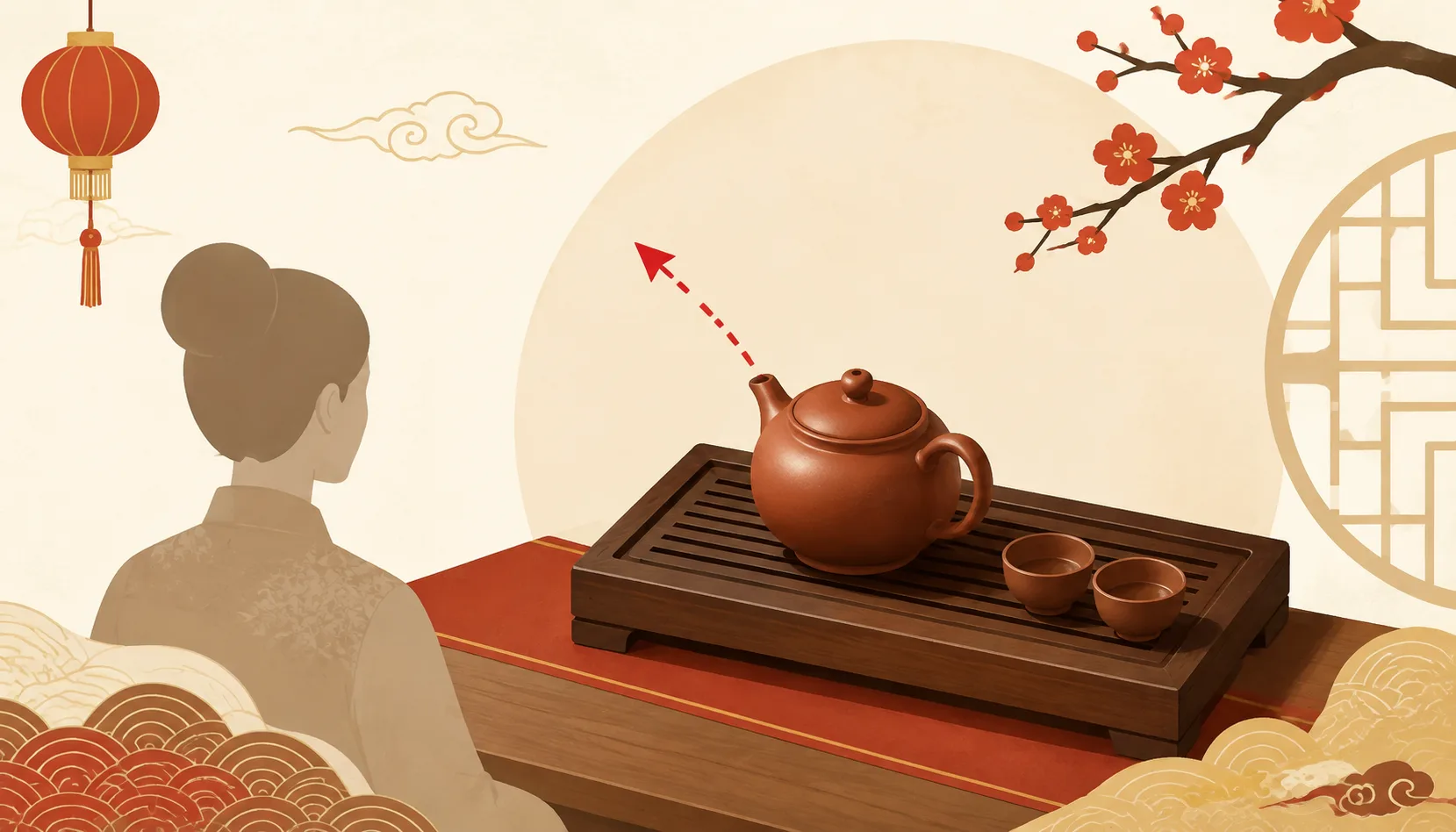
Yes. When setting down a teapot, always position the spout away from guests. Pointing the spout at someone is considered offensive and bad luck.
Why This Rule Matters
Chinese tradition holds that pointing the teapot spout at someone is 'fáng' (妨, to harm or jinx) that person. It's seen as disrespectful and bad-omened. The belief has deep roots in tea ceremony etiquette.
What You Should Do
- Pour tea by turning slightly sideways, then set the pot down with the spout facing away from guests
- Stabilize the lid with one hand while pouring with the other
- Point the spout toward a wall or empty space, never toward a person
What You Shouldn't Do
- Set a teapot with the spout pointing directly at a guest
- Point the teapot at someone while serving
- Pour wine from a wine pot with the spout aimed at guests — the same rule applies
Practical Tips for Foreigners
This rule is still respected in many traditional tea settings and among older generations. When in doubt, watch what your Chinese host or senior colleague does and follow their lead. Breaking this rule once is forgivable — breaking it repeatedly signals a lack of cultural awareness.
Why the Spout Taboo Persists
The rule against pointing a teapot spout at someone isn't just about table manners—it's rooted in the Chinese concept of 'shāqì' (杀气), or killing energy. Historically, teapots were made of metal or ceramic and often held boiling water. A spout aimed at a guest was seen as a metaphorical weapon, a subtle way of 'shooting' hostility or ill intent. Even though modern teapots are harmless, the symbolism lingers. In business settings, especially in northern cities like Beijing, older executives still read this as a deliberate slight. If you're a <a href="/business/managing-chinese-team-tips/">foreign manager</a>, ignoring this can silently undermine trust in meetings where you think you're just being casual.
Real Scenarios: Teapot Spout Pointing at Guests
- A Canadian businessman in Shanghai, mid-negotiation, absentmindedly rotated the teapot so its spout faced his host across the table. The host’s smile tightened, and he subtly pushed a dish of snacks between himself and the spout, a silent shield. The deal still closed, but the host later mentioned to a colleague that the guest seemed 'unaware of basic courtesies.'
- At a family dinner in Chengdu, a German exchange student, trying to be helpful, poured tea for everyone and then set the pot down with the spout pointing directly at the grandmother. The room went quiet; the grandmother quietly moved her cup to the other side of her placemat. The student only realized his mistake when his Chinese friend whispered a quick explanation under the table.
- A French tourist in Xi'an, enjoying a casual meal at a local restaurant, placed the teapot spout toward a neighboring table of elderly men to keep the handle within easy reach. One of the men frowned and turned his chair slightly away. The tourist noticed the shift and, feeling confused, asked his guide, who explained the taboo and helped him reposition the teapot, earning a nod of approval from the men.
- During a teahouse meeting in Hangzhou, an Australian entrepreneur, focused on his laptop, nudged the teapot so its spout faced his Chinese partner across the table. The partner, a seasoned host, gently rotated the teapot back without a word, then smiled and continued the conversation. The entrepreneur later learned from a mutual friend that his partner had interpreted the gesture as a subtle sign of disrespect, nearly derailing their partnership over a simple oversight.
Regional and Generational Nuance
The rule isn't uniform across China. In the north—Beijing, Tianjin, and Shandong—etiquette is more rigid, especially among the older generation (50+). In the south, like Shanghai or Shenzhen, younger urbanites are more relaxed, but don't assume that applies to everyone. In tea-centric provinces like Fujian and Guangdong, where gongfu tea ceremonies are daily rituals, the spout rule is non-negotiable. Even in casual settings, a local will notice. The safest approach: always position the spout toward an empty space or a wall. If you're hosting, point it at the center of the table or toward yourself—that signals humility and respect.
What Your Host Thinks But Won't Say
If you point the spout at a Chinese host, they won't correct you—that would be rude. Instead, they'll silently judge your cultural awareness. They might think: 'Doesn't he know this? Or worse, is he doing it on purpose?' This can cost you in business or friendships. Foreigners often miss the quiet signals: a host might subtly rotate the pot themselves, or avoid pouring from that side. If you notice this, apologize lightly ('duìbùqǐ, wǒ bù zhīdào') and reposition it. That small gesture shows you're learning and can rebuild goodwill instantly.
What Chinese People Actually Say
- 壶嘴不对人 | hú zuǐ bù duì rén | The teapot spout should not point at guests | Always rotate the spout away from anyone at the table
- 茶七酒八 | chá qī jiǔ bā | Fill tea 70% full, wine 80% full | Leaves room for tea aroma and prevents spills
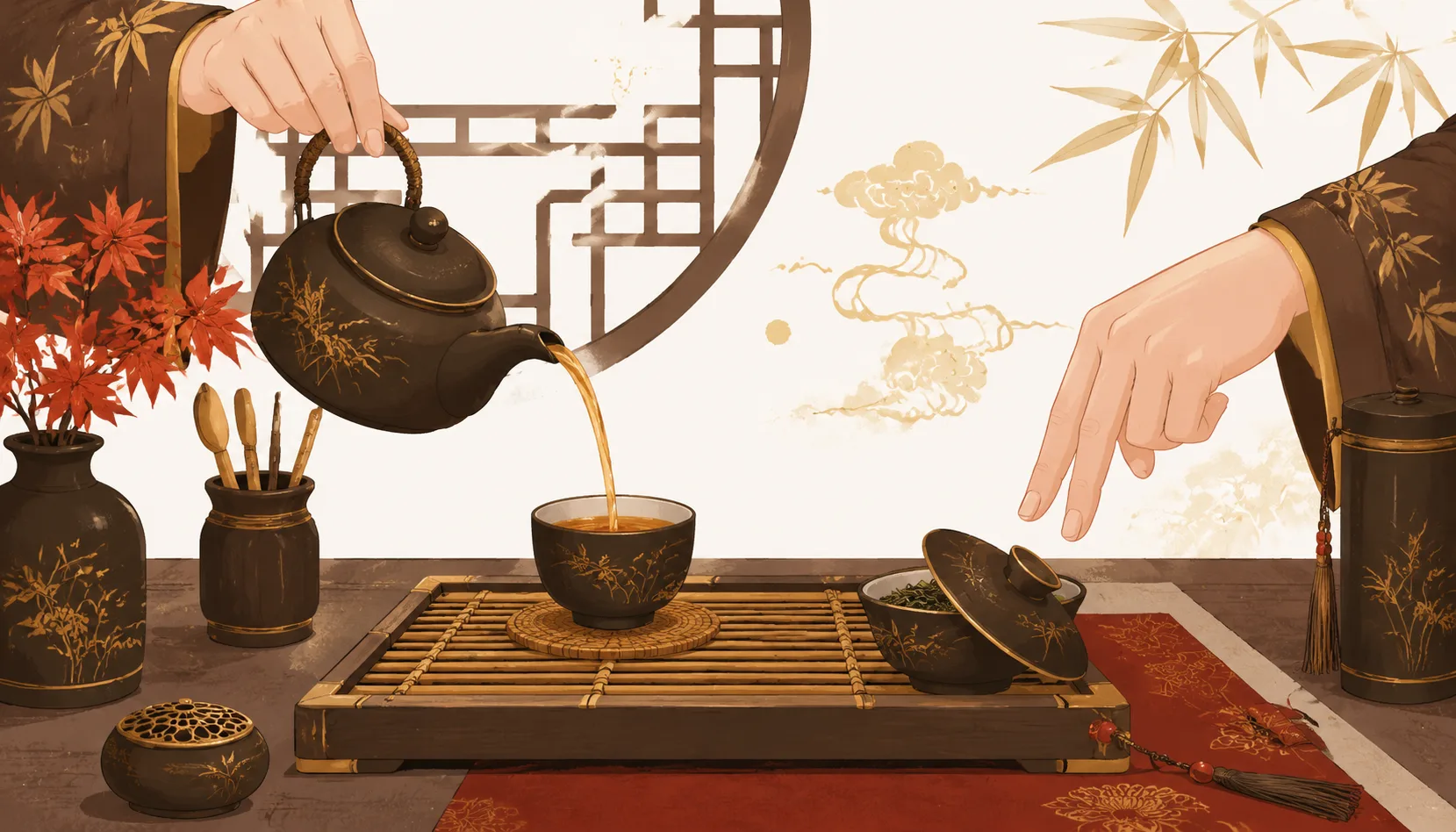
- 叩指礼 | kòu zhǐ lǐ | Finger-tapping courtesy when receiving tea | Tap index fingers to show gratitude to the pourer
2026 Reality Check
2026 Reality Check: The "never point the spout at a guest" rule is fading fast. Most younger Chinese don't know it exists.
Gen Z vs. Older Generations: Boomers and Gen X still observe tea etiquette in formal settings—family dinners, business meetings, traditional tea houses. Gen Z? They might tilt the spout away out of habit if taught, but many see it as outdated. They care more about Instagram-worthy tea photos than spout placement.
Beijing/Shanghai vs. Smaller Cities: Tier-1 cities see the rule as "nice to have" but rarely enforced. Upscale tea restaurants in Shanghai still train staff to avoid pointing at guests. In smaller towns and rural areas, especially among older locals, the tradition holds stronger—it's tied to respect for elders and hospitality norms.
Bottom line: Dying in urban youth culture, survives in traditional and elderly circles.
Frequently asked questions
Why is pointing a teapot spout at a guest considered offensive in China?
It is seen as a sign of disrespect and bad luck, rooted in traditional customs where the spout direction symbolizes a 'shot' or negative energy toward the person.
What is the correct way to place a teapot on the table in China?
Always position the teapot spout away from any guests, ideally pointing toward an empty space or the wall, to avoid causing offense.
Does this rule apply to other teapots, like those used for gongfu tea ceremonies?
Yes, the same rule applies in all tea settings, including formal gongfu ceremonies, where the spout should never face any participant.
What should I do if I accidentally point the teapot spout at someone?
Apologize briefly and immediately rotate the teapot so the spout faces away, then continue pouring or serving as normal to show you respect the custom.
Is this rule only about teapots, or does it apply to other pouring vessels like kettles?
The rule primarily applies to teapots, but it is also polite to avoid pointing the spout of any hot beverage container, like a kettle, at guests to prevent accidents and show courtesy.
Are there regional differences in this teapot spout custom across China?
The custom is widely observed across China, though the level of strictness may vary; in southern tea culture regions like Guangdong, it is especially emphasized, so it's best to follow it everywhere.
Try our tools
Related guides
Chinese Tea Etiquette: Knuckle Tap, Pouring Rules & Signals
When someone pours your tea, tap the table with two fingers (index and middle) to say thanks. Always pour for others before yourself, and keep their cups filled…
Read the guide →
Chinese Restaurant Dining Etiquette: During and After
During a Chinese meal: wait for the host to signal the start, toast with the host before drinking, serve others before yourself, and never leave without a prope…
Read the guide →
Visiting a Chinese Home: Etiquette Guide for Foreigners
Bring a small gift, arrive 5 minutes late (never early), remove shoes at the door, wait for the host to assign your seat, and let the eldest eat first. Follow t…
Read the guide →