Hot Pot Etiquette for Foreigners: 15 Rules Before You Dip

Quick answer
Hot pot is a communal dining experience where sharing the broth and cooking ingredients together is part of the fun. The key rules are: always use the serving spoon when putting food in the pot, never double-dip your personal chopsticks, and follow your host's lead on cooking order and timing.
Quick Answer
Hot pot is a communal dining experience where sharing the broth and cooking ingredients together is part of the fun. The key rules are: always use the serving spoon when putting food in the pot, never double-dip your personal chopsticks, and follow your host's lead on cooking order and timing.
DO
- Wait for the broth to reach a rolling boil before adding ingredients
- Use the communal serving spoon (勺子 sháozi) to add food to the pot
- Use your personal chopsticks only for dipping from the shared sauce bowl
- Follow the host's lead on what to cook first (usually meat, then vegetables)
- Try a bit of everything, especially dishes the host recommends
- Add ingredients in small batches to maintain broth temperature
- Respect the ordering process – the host or elder usually orders
- Learn basic phrases like "gān bēi" (干杯 – cheers) and "hǎo chī" (好吃 – delicious)
- Appreciate the communal experience – this is bonding time
- Ask if you're unsure about proper timing or technique
DON'T
- Never put your own chopsticks directly into the communal pot
- Don't overload the pot with too much food at once
- Don't leave meat cooking for more than 30 seconds in boiling broth
- Don't talk loudly or splash broth while cooking
- Don't start eating until the host begins
- Don't mix your personal sauce with the communal dipping sauce unless instructed
- Don't rush – hot pot is a slow, social dining experience
- Don't refuse to try at least a small portion of everything offered
- Don't be the first to leave unless absolutely necessary
- Don't cook vegetables before meat unless the group decides to
Why This Matters
Hot pot (火锅 huǒguō) is more than just a meal in China – it's a social institution that dates back over 1,000 years. When you sit around a bubbling pot with Chinese friends, colleagues, or family, you're participating in a ritual that symbolizes unity, sharing, and community. Getting the etiquette right shows respect for Chinese culture and makes you a welcome guest at any table.
For foreigners, hot pot can be intimidating. The array of raw ingredients, the boiling broth, the various dipping sauces, and the social dynamics can feel overwhelming. But here's the good news: Chinese hosts are generally very welcoming to foreigners who make an effort to learn the customs. Even small attempts to follow etiquette – like using the serving spoon or waiting for the broth to boil – earn significant appreciation.
The consequences of getting it wrong range from minor awkwardness to genuine offense. Putting your chopsticks directly into the pot is considered unsanitary and can be seen as disrespectful. Overcooking meat or vegetables wastes good food. Starting to eat before the host or elders is considered rude. These aren't just nitpicky rules – they reflect deeper Chinese values about respect, sharing, and consideration for others.
Regional and Generational Differences
One of the most important things to understand is that "hot pot" isn't the same everywhere in China. The etiquette can vary significantly depending on where you are and who you're dining with.
In Beijing, the style is typically hot pot with copper pots (铜锅 tóngguō), thin sliced lamb (羊肉片 yángròu piàn), and a simple sesame sauce. The broth is often clear and mild. Beijing hot pot tends to be more traditional and formal – you'll find more emphasis on proper order and respect for elders. The atmosphere in Beijing hot pot restaurants is often lively but with clearer social hierarchies.
In Shanghai and the broader Yangtze River Delta region, hot pot is often more diverse and experimental. You'll find more variety in broth flavors – from mild to spicy to specialty bases. The atmosphere tends to be more casual and relaxed. Shanghai diners are often more flexible about the "rules" and may encourage you to try different approaches.
In smaller cities and rural areas, hot pot traditions can be even more pronounced. The hospitality is often warmer, but the expectations for proper behavior may be stricter. In smaller towns, refusing food or not finishing your bowl can be more noticeably offensive than in cosmopolitan Shanghai.
Generational differences are equally significant. Older generations (born before 1970) typically adhere more strictly to traditional hot pot etiquette. They expect the proper order of cooking (meat first, then vegetables, then noodles), they may be more formal about waiting for elders to start eating, and they often have strong preferences about dipping sauces. Breaking these rules, even accidentally, may draw a gentle correction.
Gen Z and younger millennials in China have largely relaxed these traditions. They're more likely to view hot pot as casual fun rather than a formal dining experience. You'll find younger Chinese people more willing to mix things up, try unconventional ingredient combinations, and laugh off minor etiquette slip-ups. However, they still appreciate when foreigners show awareness of traditional customs – it shows respect and cultural interest.
What Chinese People Actually Say
- "Lái, chī, bié kèqi" (来吃,别客气) – "Come, eat, don't be polite" – hosts say this to encourage guests to eat freely
- "Xiān fàng ròu, hòu fàng cài" (先放肉,后放菜) – "First meat, then vegetables" – the traditional cooking order
- "Bié zhǎo le, kuài chī ba" (别找了,快吃吧) – "Don't look for it, just eat" – told when you're trying to find something in the pot
- "Zhè ge yào shāo yī xià" (这个要烧一下) – "This needs to cook a bit longer" – helpful guidance on timing
- "Gān bēi!" (干杯) – "Cheers!" – said when clinking glasses
- "Hǎo chī ma?" (好吃吗) – "Is it delicious?" – hosts frequently ask this
- "Zìjì dòng shǒu, bié kèqi" (自己动手,别客气) – "动手 yourself, don't be polite" – encouraging you to serve yourself
- "Zhè zhǒng chī fǎ bù duì" (这种吃法不对) – "This way of eating is not correct" – gentle correction
- "Jìn le, jìn le!" (进了,进了) – "It went in, it went in!" – excitement when meat goes into the pot
- "Kuài lā, kuài lā!" (快啦,快啦) – "Hurry up, hurry up!" – when food is ready to eat
2026 Reality Check
Hot pot culture in China continues to evolve in 2026, with several notable trends affecting etiquette expectations:
Hot pot chains are standardizing service: Major chains like Haidilao (海底捞) have set global expectations for hot pot service. Their staff will often assist with cooking, making some traditional guest responsibilities less critical. However, knowing the etiquette still shows cultural awareness.
Individual hot pot pots are becoming popular: In many modern restaurants, especially in Shanghai and Beijing, you'll find individual small pots (小火锅 xiǎo huǒguō) rather than one large communal pot. This reduces some traditional etiquette concerns but introduces new ones – like not reaching across others' pots.
Gen Z is creating new norms: Younger Chinese diners are more experimental, sometimes cooking unconventional ingredients together and mixing styles. While traditional etiquette still applies in family settings, casual restaurants are more flexible.
International hot pot is expanding: Chinese hot pot chains have expanded globally, bringing these etiquette norms with them. You'll now find authentic hot pot restaurants in major cities worldwide, making this knowledge useful beyond China.
Digital ordering changes dynamics: Many restaurants now use tablets or apps to order, reducing the traditional host's role in ordering. However, the social aspects – waiting for elders to start, using serving spoons, cooking order – remain important.
The core advice remains: observe first, follow the host's lead, use the serving spoon, and don't put your chopsticks directly in the pot. These fundamental rules apply regardless of regional or generational variations. When in doubt, a genuine smile and a willingness to learn goes further than perfect technique.
Related guides
Baijiu Guide for Foreigners: What It Is and How to Drink It
Baijiu (白酒, báijiǔ) is China's national spirit — clear, 50–60% alcohol, and intensely flavored. At a formal banquet, you will very likely encounter it. The key …
Read the guide →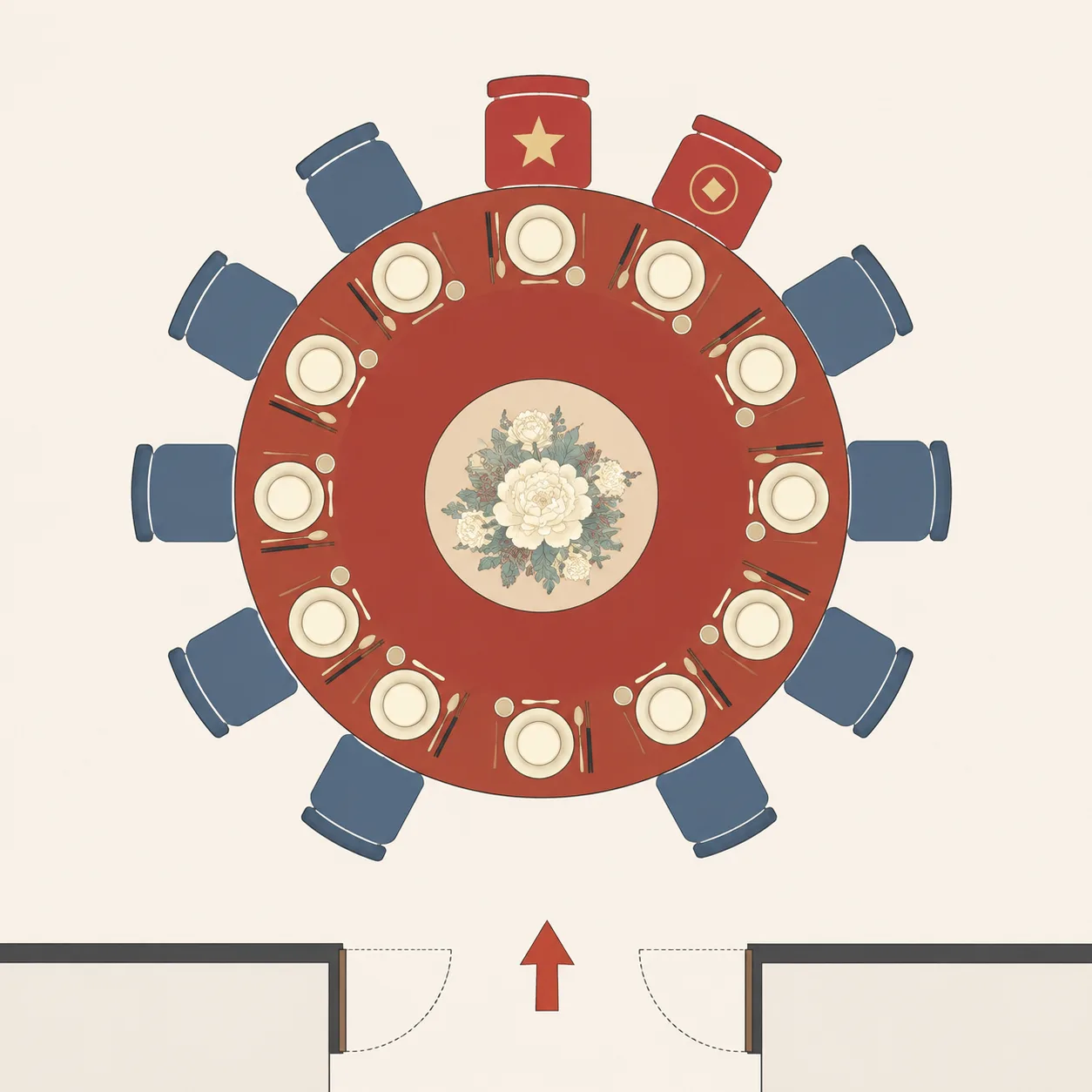
Chinese Banquet Seating: Where to Sit and What It Means
At a Chinese banquet, the seat of honor faces the door and belongs to the host or most senior person. The most important guest sits to the host's right. Everyon…
Read the guide →
How Ganbei Works in China: Toasting Guide for Foreigners
Ganbei (干杯, gānbēi) means "empty the cup." When someone says it to you directly, finish your drink. When proposing a toast, always hold your cup lower than the …
Read the guide →