Why is it offensive to ask '还要饭吗' when offering rice in China?
Quick answer
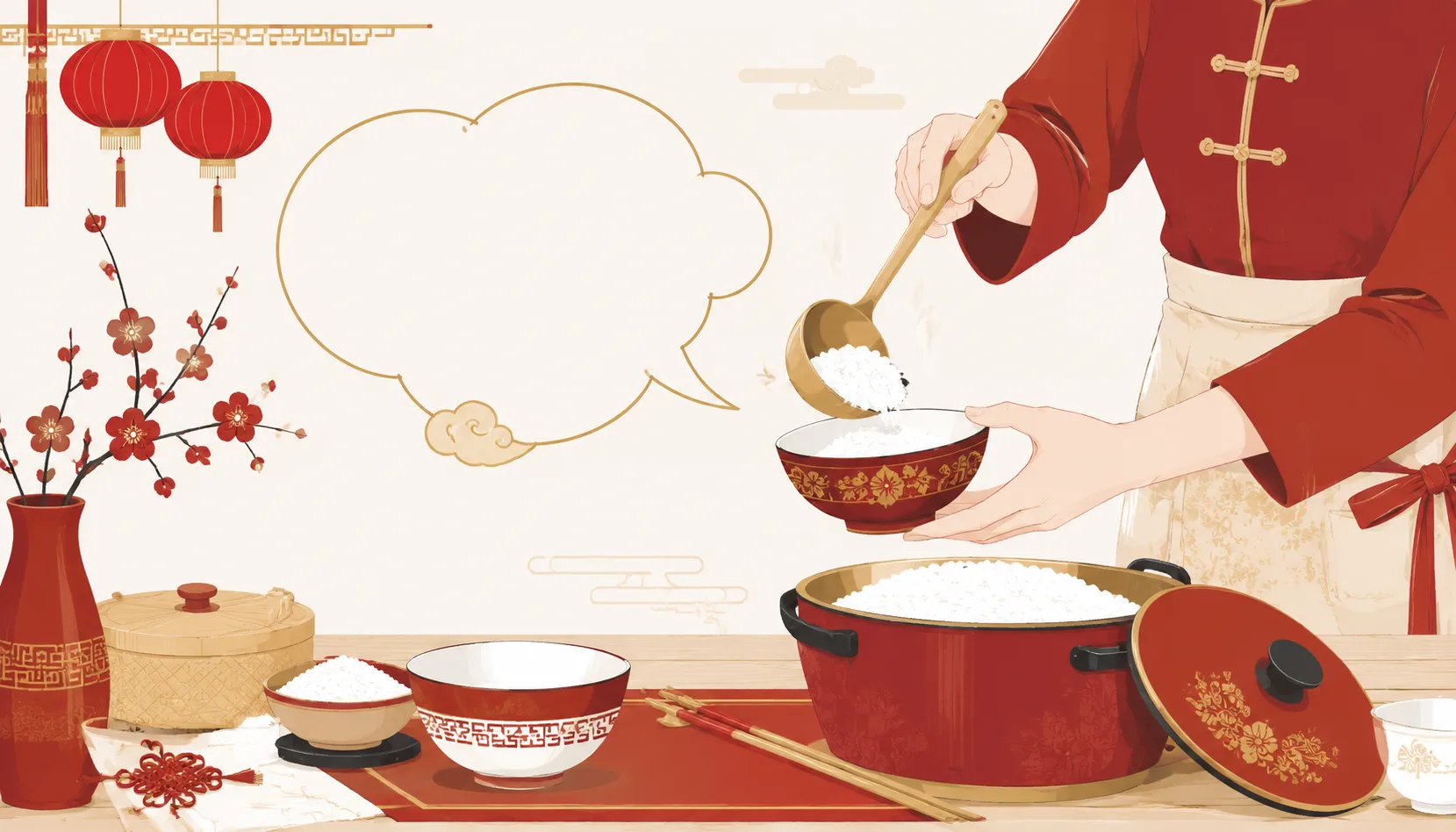
The phrase '还要饭吗' (hái yào fàn ma) literally means 'Do you still want rice?' but '要饭' also means 'to beg for food.' It unintentionally implies the guest is a beggar. Say '再来一碗吗' (would you like another bowl?) instead.
Why This Rule Matters
'要饭' (yào fàn) is the Chinese expression for begging for food. Asking '还要饭吗' (literally 'still want food?') sounds identical to asking 'are you still begging?' This is extremely awkward and embarrassing for the host and guest alike.
What You Should Do
- Say '再来一碗吗?' (zài lái yī wǎn ma, would you like another bowl?) when offering more rice
- Say '还吃吗?' (hái chī ma, would you like more to eat?) as an alternative
- Be thoughtful about the specific words you use when serving guests
What You Shouldn't Do
- Ask '还要饭吗?' when offering rice to guests
- Use the word combination '要饭' in a hospitality context
Practical Tips for Foreigners
This rule applies in most social and formal settings across China. When in doubt, watch what your Chinese host or senior colleague does and follow their lead. Breaking this rule once is forgivable — breaking it repeatedly signals a lack of cultural awareness.
Why This Slips Out and What Hosts Hear
The trap is that '要饭' is a perfectly normal verb phrase in your textbook — 'to want rice' — but in daily speech it's almost exclusively used for beggars. When a Chinese host hears '还要饭吗,' they don't process grammar; they hear you calling their guest a panhandler. The host's first thought is often 'Did this foreigner just insult my friend?' followed quickly by 'Oh no, they don't know the slang.' In Beijing and Tianjin, where the phrase is more culturally loaded, even a slip from a foreigner can be remembered for months. In Shanghai, younger professionals might laugh it off, but older hosts from Fujian or Guangdong still wince.
Real Scenarios: The Rice Phrase in Action
- At a family dinner in Chengdu, a Canadian guest, trying to be polite, said 'hǎo yào fàn' when offered more rice. The host's smile froze—the phrase sounded like a demand, not a thank-you, and the grandmother quietly put down the serving spoon.
- During a business lunch in Shanghai, a German manager used 'hǎo yào fàn' to decline a second serving. His Chinese colleagues exchanged glances, unsure if he was unhappy with the food or just being abrupt—the meeting's atmosphere turned awkward for a moment.
- In a Hangzhou teahouse, a French tourist enthusiastically said 'hǎo yào fàn' to a waitress, meaning 'I'd love more rice.' The waitress hesitated, then brought the rice but avoided eye contact, leaving the tourist confused about the cold response.
- An Australian expat in Guangzhou, after learning the correct phrase 'wǒ xiǎng yào yī wǎn fàn,' used 'hǎo yào fàn' by mistake at a hotpot restaurant. His local friend laughed and explained, 'You sounded like a hungry emperor ordering a servant!'—everyone at the table chuckled, but he felt embarrassed.
Regional and Generational Nuance
This rule isn't uniform across China. In northern cities like Beijing and Xi'an, '要饭' hits harder because the beggar association is stronger in local dialect. In southern tech hubs like Shenzhen or Hangzhou, under-35 professionals often shrug it off, especially if they've worked with foreigners. But in rural areas or with anyone over 50 — particularly in Shandong, Henan, or Fujian — the insult can feel genuine. When in doubt, stick to '再来一碗' or simply point at the rice pot and raise your eyebrows. A safe fallback is '要不要再添一点饭?' (do you want me to add a bit more rice?), which is both polite and unambiguous.
Beyond Rice: Similar Word Traps
The same logic applies to other everyday phrases. Avoid '你死了吗?' (are you dead?) when asking if someone's phone is off — it's literal but jarring. Also steer clear of '你吃了吗' if you're not actually inviting them to eat; in many cities it's a greeting, but in <a href="/business/chinese-formal-meeting-guide/">formal business</a> settings it can sound like you're prying. The deeper lesson: Chinese is full of homophones and context-dependent phrases. When you're unsure, mirror the host's exact words or use a more formal structure like '您还需要什么吗?' (do you need anything else?). This buys you safety while you learn the slang.
What Chinese People Actually Say
- 还要加点饭吗?| hái yào jiā diàn fàn ma? | "Would you like to add more rice?" | Use instead of asking directly about rice—this invites them to decide.
- 够不够?| gòu bù gòu? | "Is that enough?" | Warm, caring tone; shows host attentiveness.
- 吃饱了吗?| chī bǎo le ma? | "Are you full?" | Polite way to check if they've had enough; avoids pressuring.
2026 Reality Check
In 2026, the rule against asking "Do you still want rice?" at dinners is fading but not dead. It survives mainly with older generations in formal settings.
Gen Z largely ignores this etiquette. They see it as outdated hospitality that pressures guests. Many view it as a generational "thing" their parents do. Urban youth prefer direct asks like "more food?" or let guests serve themselves.
Beijing and Shanghai have moved past this the fastest. International exposure and busy lifestyles made the ritual feel unnecessary. Smaller cities and rural areas still follow it more—where dining carries more social weight and refusing food can seem rude.
The bottom line: the rule is dying in tier-1 cities among young people, but it persists elsewhere as a sign of respect. Context matters more than the rule itself.
Frequently asked questions
Why is it offensive to ask '还要饭吗' when offering rice in China?
The phrase '还要饭吗' literally means 'Do you still want rice?' but '要饭' also means 'to beg for food,' unintentionally implying the guest is a beggar. Use '再来一碗吗' (would you like another bowl?) instead.
What is the polite way to offer more rice to a guest in China?
Say '再来一碗吗' (zài lái yī wǎn ma), which means 'Would you like another bowl?' This avoids the negative connotation of begging and is considered courteous.
Can I use '还要饭吗' with close friends or family in China?
Even with close friends, it's best to avoid '还要饭吗' because it can sound like a joke about begging, which may cause awkwardness. Stick to polite alternatives like '再来一碗吗' to keep interactions smooth.
What are other common Chinese phrases to avoid when offering food?
Avoid phrases that imply poverty or need, such as '你要饭吗' (do you want to beg?). Instead, use direct but polite offers like '要不要加点菜' (would you like more dishes) or '再吃点' (eat a bit more).
How do I politely ask if someone wants more food without causing offense?
Use phrases like '要不要再来一点' (yào bù yào zài lái yī diǎn) meaning 'Would you like a bit more?' or simply '再来一碗吗' for rice. These are neutral and respectful.
What should I do if I accidentally say '还要饭吗' to a Chinese guest?
Apologize quickly by saying '不好意思,我说错了' (sorry, I misspoke) and clarify you meant '再来一碗吗.' Most people will understand it was a mistake, especially if you show sincerity.
Try our tools
Related guides
Chinese Restaurant Dining Etiquette: During the Meal and Beyond
During a Chinese meal: wait for the host to signal the start, toast with the host before drinking, serve others before yourself, and never leave without a prope…
Read the guide →
Ordering Food at a Chinese Restaurant: The Unwritten Rules
Chinese restaurant culture has specific rules foreigners often miss: seating is hierarchical (best seat faces the door), the host or senior person typically ord…
Read the guide →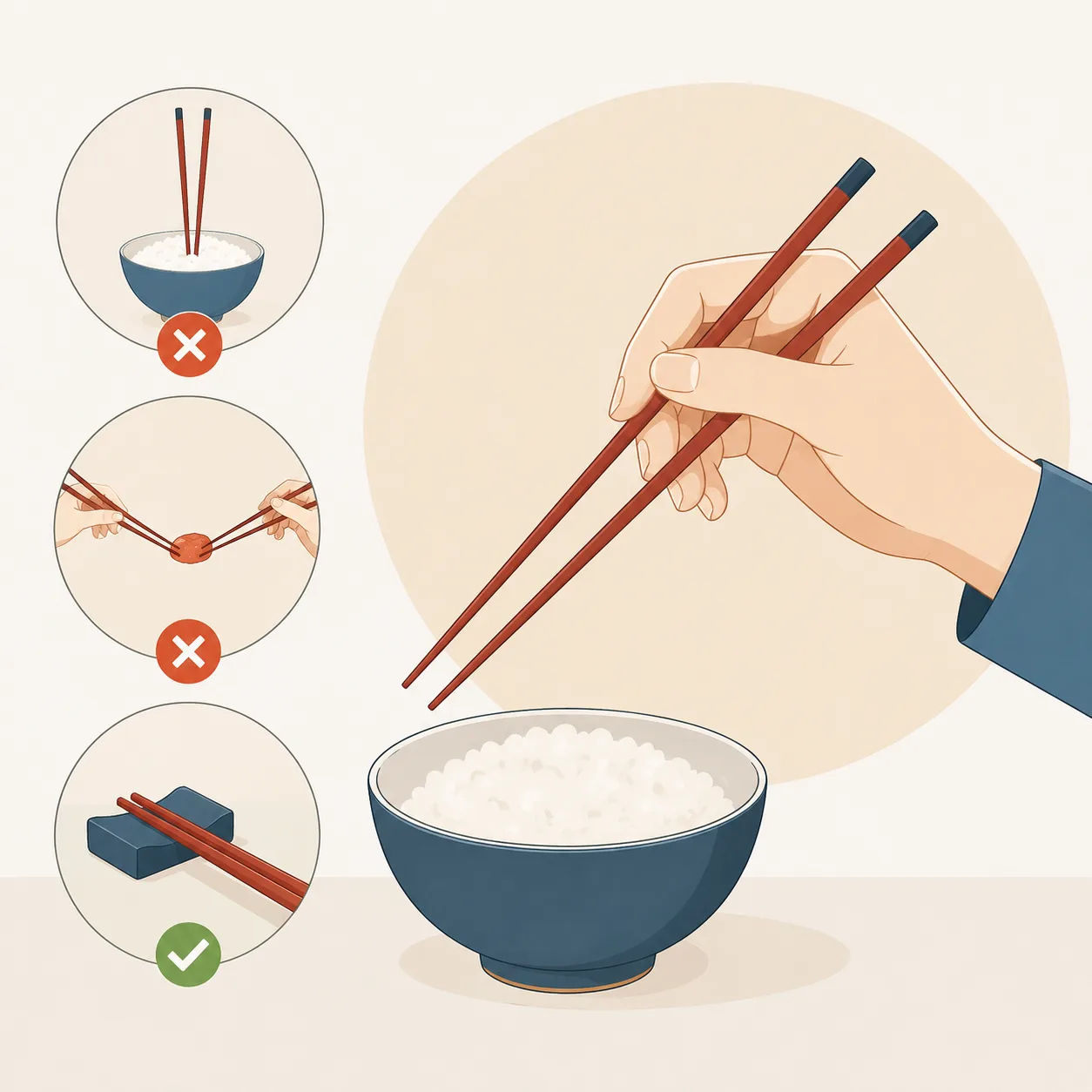
Chopstick Rules in China: What to Do and What to Avoid
The three biggest chopstick taboos in China: never stand them upright in a bowl of rice, never tap your bowl with them, and never dig through shared dishes. Kee…
Read the guide →