Dim Sum Etiquette in China: Ordering, Tea & Server Signals

Quick answer
In Chinese dim sum restaurants, let the eldest or most senior person at the table pour tea and begin eating; to signal the server, simply place your chopsticks parallel on top of your bowl or raise your hand slightly. Always order communal dishes to share, and wait for the host or elder to invite you to start before eating.
Quick Answer
In Chinese dim sum restaurants, let the eldest or most senior person at the table begin eating, while a younger diner pours the tea for them; to signal the server for more hot water, simply tilt the lid of the teapot. Always order communal dishes to share, and wait for the host or elder to invite you to start before eating.
DO
- Wait for the host or eldest person to begin eating before you start
- Pour tea for the most senior person at the table first
- Place chopsticks parallel across your bowl to signal you want more food
- Use both hands to receive tea or food from elders
- Order a variety of dishes for the table to share
- Say "xièxie" (谢谢) to thank the server
- Tap two fingers on the table as a silent thank you when someone pours your tea
- Try a bit of everything offered to show appreciation
DON'T
- Start eating before the host or eldest person
- Pour your own tea if you are the youngest or least senior at the table
- Wave or shout at the server to get attention
- Point your chopsticks at other diners
- Stick chopsticks upright in your rice bowl (this resembles funeral incense)
- Leave chopsticks crossed on your bowl (this signals you are finished)
- Refuse tea offered by an elder without good reason
- Rush through the meal - dim sum is a social experience
Why This Matters
Dim sum (点心, diǎnxīn) is far more than just food—it is a cornerstone of Chinese culinary culture and social bonding. For foreigners visiting China, understanding dim sum etiquette demonstrates respect for Chinese traditions and significantly enhances the dining experience. The ritual of dim sum brings together family, friends, and business associates in a relaxed setting where relationships are strengthened over small plates of steamed and fried delicacies.
When you understand the unwritten rules of dim sum service, you avoid unintentionally offending your hosts or appearing rude. Chinese dining etiquette places tremendous importance on hierarchy, respect for elders, and communal sharing. The way you handle your tea, signal for service, and interact with your dining companions all communicate your cultural awareness and good manners.
In business contexts, a dim sum lunch can make or break deals. Chinese partners often observe how foreigners handle themselves during meals to gauge their character and suitability for partnership. Mastering dim sum etiquette shows you have taken the time to understand Chinese culture, which earns respect and builds trust. Even in casual settings with friends, following these customs makes you a more welcome guest and helps you blend in with local diners.
The good news is that most Chinese people are understanding when foreigners make mistakes—they appreciate the effort to learn. However, deliberately ignoring these customs can create awkward moments or give the wrong impression. This guide covers everything you need to navigate a dim sum restaurant with confidence, from the moment you sit down to the final bill.
Regional and Generational Differences
Chinese dim sum culture varies significantly between regions and generations, which is important for foreigners to understand. The two major dim sum traditions—Cantonese and Northern—differ in both cuisine and customs.
Cantonese dim sum (粤式点心, yuè shì diǎnxīn) originates from Guangdong province and is what most Westerners recognize. It features delicate, bite-sized portions with thin, translucent wrappers. Har Gow (虾饺, xiā jiǎo) shrimp dumplings, Siu Mai (烧麦, shāo mài) pork dumplings, and Char Siu Bao (叉烧包, chā shāo bāo) bbq pork buns are staples. In Cantonese restaurants, the tea-pouring hierarchy is strictly observed, and the dining pace is more leisurely.
Northern Chinese dim sum (京味点心, jīng wèi diǎnxīn), popular in Beijing and Tianjin, tends toward heartier, dough-based items like Jianbing (煎饼, jiān bìng) crepes, Baozi (包子, bāozi) stuffed buns, and Scallion Pancakes (葱油饼, cōng yóu bǐng). The atmosphere is often more casual, and the tea-pouring rules may be less rigid than in Guangdong.
In Shanghai and the Yangtze River Delta region, you will find Xiaolongbao (小笼包, xiǎo lóng bāo) soup dumplings as the star attraction. Shanghai dim sum service tends to be faster-paced, and the cart system (点心车, diǎnxīn chē) is less common than in Guangzhou or Hong Kong.
Generational differences are equally significant. Older generations (60+) typically adhere strictly to traditional hierarchy rules. They expect the eldest person to pour tea first and will feel uncomfortable if a younger person pours before them. They often prefer the classic cart-service restaurants where dim sum ladies (点心阿姨, diǎnxīn ā yí) push trolleys around the dining room.
Gen Z and younger millennials (roughly 18-35) in China's major cities have relaxed many of these customs. In trendy dim sum spots in Shanghai, Beijing, or Shenzhen, you may find young people pouring their own tea, ordering through apps on their phones, and taking photos of food before eating. However, when dining with elders or in more traditional establishments, they still observe the core etiquette rules. Foreigners should follow the lead of their Chinese companions—if they seem relaxed about traditions, you can be more casual; if they are more traditional, match their behavior.
What Chinese People Actually Say
- "Lái yìdiǎn cháshui" (来一点茶水) - "Bring some tea, please"
- "Qǐng gěi wǒmen diǎnxīn" (请给我们点心) - "Please bring us dim sum"
- "Gēn wǒ yìqǐ chī ba" (跟我一起吃吧) - "Eat together with me" (host inviting guests to start)
- "Xièxie nín" (谢谢您) - "Thank you" (more formal than xièxie)
- "Qǐng wèn, zhège zěnmme chī?" (请问,这个怎么吃?) - "Excuse me, how do you eat this?" (perfect for asking about unfamiliar dishes)
- "Wǒ lái dào chá ba" (我来倒茶吧) - "Let me pour the tea" (offering to be the tea pourer)
- "Zài lái yìdiǎn, hǎo ma?" (再来一点,好吗?) - "Can we have some more?"
- "Qǐng wèn, mǎi dān" (请问,买单) - "Excuse me, the bill please"
- "Zhège hěn hǎochī" (这个很好吃) - "This is delicious" (always appreciated by hosts)
- "Duō chī yìdiǎn" (多吃一点) - "Eat more" (host encouraging guests)
2026 Reality Check
The dim sum landscape in China continues evolving rapidly. In 2026, several trends are reshaping the traditional experience. Mobile ordering via apps like Meituan (美团) and Dianping (大众点评) has become dominant in major cities, with many restaurants eliminating paper menus entirely. However, the core etiquette remains remarkably stable—Chinese people still appreciate when foreigners show respect for hierarchy and communal dining customs.
Technology meets tradition: In Shanghai and Shenzhen's newest dim sum restaurants, you may order via QR codes on your table, and robotic servers may deliver food. Yet the tea-pouring customs and the importance of elder-first service remain unchanged. Even tech-savvy Gen Z diners will defer to grandparents at the table.
Regional variations persist: Guangzhou (Canton) remains the dim sum capital, where traditional cart-service restaurants still thrive and elderly patrons expect full protocol observance. Beijing's dim sum scene has modernized faster, with more casual service. Smaller cities may have fewer English menus, so learning a few key phrases is more valuable than ever.
For foreigners: The most important update for 2026 is that many restaurants now accept international mobile payments (Alipay and WeChat Pay support foreign cards), but carrying some cash is still wise in smaller establishments. The fundamental advice remains: watch your Chinese companions, follow their lead, and don't be afraid to ask politely if you're unsure. Most Chinese people are delighted when foreigners make an effort to understand their customs.
Related guides
Baijiu Guide for Foreigners: What It Is and How to Drink It
Baijiu (白酒, báijiǔ) is China's national spirit — clear, 50–60% alcohol, and intensely flavored. At a formal banquet, you will very likely encounter it. The key …
Read the guide →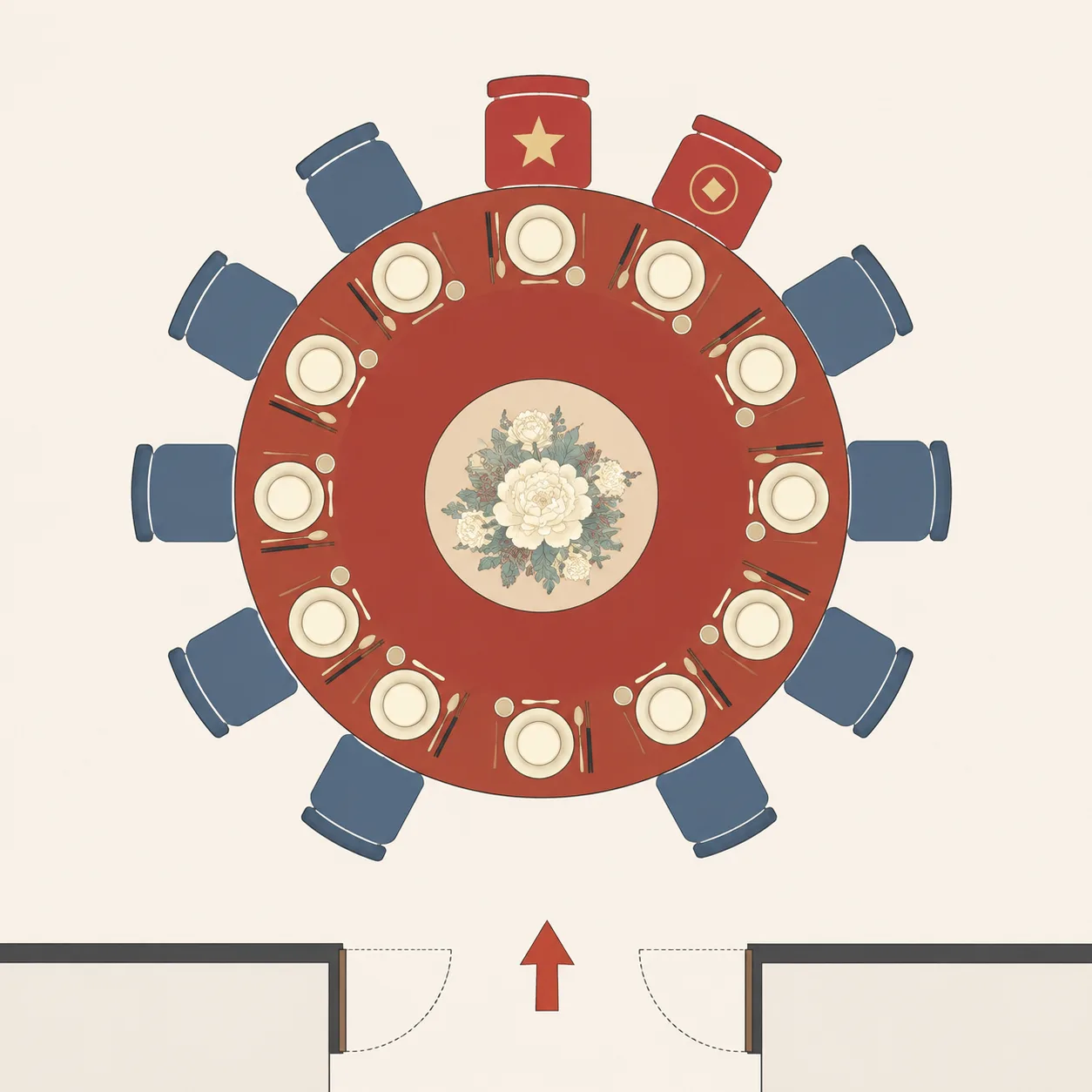
Chinese Banquet Seating: Where to Sit and What It Means
At a Chinese banquet, the seat of honor faces the door and belongs to the host or most senior person. The most important guest sits to the host's right. Everyon…
Read the guide →
How Ganbei Works in China: Toasting Guide for Foreigners
Ganbei (干杯, gānbēi) means "empty the cup." When someone says it to you directly, finish your drink. When proposing a toast, always hold your cup lower than the …
Read the guide →