Chinese BBQ (烧烤) Etiquette: Social Rules Around the Grill

Quick answer
When attending a Chinese BBQ, wait for the host to start cooking or invite you to begin, and always offer food to others before taking some yourself. The key is following the host's lead on timing and showing consideration for fellow diners.
Quick Answer
Chinese BBQ (烧烤) etiquette centers on respecting the host, sharing food generously, and timing your cooking and eating to match the group. Wait to be invited to start, offer food to others first, and follow the flow of the meal.
DO
- Wait for the host to begin cooking or say "开始吧" (kāishǐ ba - let's start) before you grill
- Offer food to others (especially elders) before taking some yourself
- Use the shared tongs provided—never use your personal chopsticks for communal food
- Say "谢谢" (xièxie - thank you) when someone cooks for you
- Keep your beer glass lower than elders' when toasting
- Try a bit of everything, especially what the host prepares
- Bring a small gift: drinks, fruit, or snacks are appropriate
- Offer to help grill or flip meat if you're sitting near the grill
DON'T
- Start cooking before the host invites you to
- Point chopsticks at people or stick them upright in rice
- Take the best pieces of meat before offering to others
- Leave all the cooking to one person without offering help
- Eat everything on your plate—leave a little to show you're full
- Refuse alcohol without a good reason (health, religion, driving)
- Critique the food or cooking methods, even as a joke
- Rush the meal—Chinese BBQ is a social event, not a race
Why This Matters
Chinese BBQ culture is fundamentally different from Western backyard grilling. In China, a BBQ (烧烤) is rarely just about the food—it's a carefully choreographed social ritual that reveals your understanding of Chinese dining customs and your ability to navigate group dynamics.
When you attend a Chinese BBQ, you're not just eating meat; you're performing your social competence in front of colleagues, friends, or potential business partners. The way you handle the grill, pour drinks, and interact with others sends subtle signals about your character. A foreigner who demonstrates proper BBQ etiquette immediately earns respect and is welcomed into the social circle. Conversely, someone who ignores the unwritten rules may be seen as rude or inconsiderate—even if they have the best intentions.
The good news: Chinese BBQ etiquette is learnable, and Chinese hosts are generally forgiving of foreigners who make mistakes. The key is showing effort and awareness. This guide will walk you through every situation you'll encounter, from the moment you arrive to the final toast.
Understanding these rules also opens doors to deeper cultural experiences. BBQ gatherings in China often happen in parks, on rooftops, at roadside stalls, or in private homes. They're spaces where hierarchies soften, conversations flow freely, and relationships deepen over sizzling meat and cold beer. By respecting the etiquette, you become part of that experience rather than just a spectator.
Regional and Generational Differences
Chinese BBQ etiquette varies significantly depending on where you are in China and who you're eating with. Understanding these differences will help you adapt your behavior to any situation.
<b>Beijing vs. Shanghai vs. Smaller Cities</b>
In <b>Beijing</b>, BBQ culture has strong roots in the northern tradition of grilled lamb and skewers (羊肉串). The atmosphere tends to be more casual and boisterous, with large groups gathering in outdoor spaces. Beijingers are known for their directness—if someone wants you to try something, they'll put it on your plate without asking. The hierarchy matters here: always show respect to elders, and don't be surprised if the person who organized the event takes charge of the grill. Toasting culture is strong in Beijing; expect multiple rounds of "干杯" (gān bēi - cheers) and be prepared to drink.
<b>Shanghai</b> BBQ culture is more refined and often incorporates seafood, vegetables, and smaller portions. The atmosphere tends to be more relaxed and less hierarchical. Shanghai hosts may be more concerned with presentation and variety than quantity. You'll find more use of dipping sauces and condiments, and people might take more time to cook their food carefully. The toasting culture is present but less aggressive than in Beijing.
In <b>smaller cities and rural areas</b>, BBQ (烧烤) often means simpler setups—portable grills in backyards, by rivers, or in open fields. The food is typically more rustic: whole fish, large meat cuts, and locally sourced ingredients. The hospitality is often more intense; hosts may insist you eat more and drink more. Refusing too firmly can be seen as rejecting their generosity. The rules are more traditional, and elders are treated with greater deference.
<b>Gen Z vs. Older Generations</b>
Among <b>younger Chinese (Gen Z and Millennials)</b>, BBQ etiquette has evolved significantly. The rigid formalities have softened—younger hosts might encourage everyone to grab their own food and cook at their own pace. There's more emphasis on taking photos (美食摄影) and sharing to social media. The conversation topics are more casual, and the alcohol pressure is generally lower. However, the core values of sharing and generosity remain important.
With <b>older generations</b>, expect more traditional rules. The eldest person or the host typically eats first. There's often a specific order to toasting. Leaving food on your plate is still common to show you've been well-fed. The conversation may be more formal, touching on work, family, and future plans. If you're eating with grandparents, show extra deference—don't start eating before they do, and offer them the best cuts of meat.
What Chinese People Actually Say
- "开始吧" (kāishǐ ba) - "Let's start" - what the host says to begin eating
- "你先请" (nǐ xiān qǐng) - "You go first" - polite way to let someone else go before you
- "吃点这个" (chī diǎn zhège) - "Try some of this" - someone offers you food
- "干杯" (gān bēi) - "Cheers" - the standard toast, drink your glass empty
- "我敬你一杯" (wǒ jìng nǐ yī bēi) - "I toast you" - a more formal way to toast someone
- "谢谢,我不喝了" (xièxie, wǒ bù hē le) - "Thank you, I won't drink more" - polite way to stop drinking
- "很好吃" (hěn hǎo chī) - "Very delicious" - compliment the food
- "我来烤吧" (wǒ lái kǎo ba) - "Let me grill" - offering to help cook
- "够了吗?" (gòule ma?) - "Is that enough?" - host asking if you want more
- "不要客气" (bú yào kèqì) - "Don't be polite" / "Make yourself at home"
- "慢慢吃" (màn màn chī) - "Eat slowly" / "Take your time" - inviting you to enjoy the meal
- "再来一串" (zài lái yí chuàn) - "One more skewer" - offering more food
2026 Reality Check
Chinese BBQ culture continues to evolve in 2026. Here are the current trends and changes foreigners should know about:
- Health consciousness is rising: Many younger Chinese now prefer leaner meats, more vegetables, and less oil. Don't be surprised if hosts offer grilled corn, peppers, and mushrooms alongside meat. You can always ask for "少油" (shǎo yóu - less oil).
- DIY BBQ restaurants are popular: In major cities, self-service BBQ restaurants where you cook your own food are trendy. The etiquette here is different—grab what you want, cook at your own pace, but still avoid being greedy with limited ingredients.
- Vegetarian options are more common: If you're vegetarian or have dietary restrictions, communicate this clearly. Say "我是素食者" (wǒ shì sùshí zhě - I'm a vegetarian) or "我不吃猪肉" (wǒ bù chī zhūròu - I don't eat pork).
- Food delivery BBQ is huge: Many Chinese now order pre-marinated skewers and cook them at home. The social rules remain the same, but the setting might be more casual—a small apartment kitchen rather than a park.
- International influence is growing: You'll find Korean-style BBQ, Japanese yakiniku, and Western-style grills in Chinese cities. The etiquette overlaps but isn't identical—follow the lead of your Chinese hosts.
- Tipping is still rare: In 2026, tipping at BBQ restaurants in China is still not expected or common. If you're at a high-end restaurant in Shanghai or Beijing, you might leave a small amount, but it's not required.
- Environmental awareness is increasing: Many parks and public BBQ areas now have strict rules about cleaning up. Always dispose of waste properly and leave your spot as clean as you found it.
Remember: the most important rule of Chinese BBQ etiquette is simple—be present, be generous, and enjoy the experience with your companions. The specific rules matter less than your attitude of respect and openness. When in doubt, watch what others do and follow their lead. Chinese hosts are usually happy to guide foreigners through the experience, and your effort to learn will be appreciated.
Related guides
Baijiu Guide for Foreigners: What It Is and How to Drink It
Baijiu (白酒, báijiǔ) is China's national spirit — clear, 50–60% alcohol, and intensely flavored. At a formal banquet, you will very likely encounter it. The key …
Read the guide →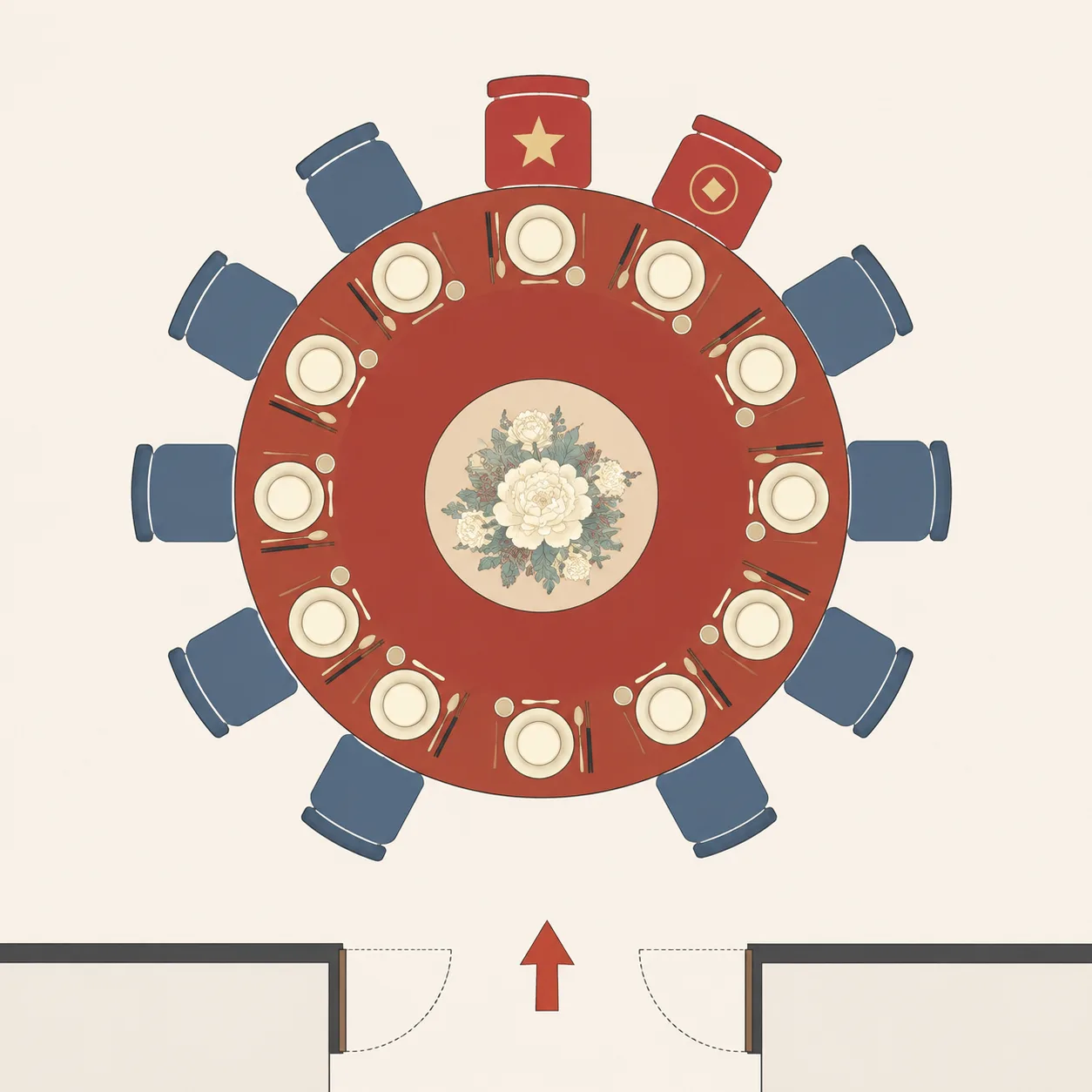
Chinese Banquet Seating: Where to Sit and What It Means
At a Chinese banquet, the seat of honor faces the door and belongs to the host or most senior person. The most important guest sits to the host's right. Everyon…
Read the guide →
How Ganbei Works in China: Toasting Guide for Foreigners
Ganbei (干杯, gānbēi) means "empty the cup." When someone says it to you directly, finish your drink. When proposing a toast, always hold your cup lower than the …
Read the guide →