What do foreigners need to know about using high-speed rail, taxis, and rideshare in China?
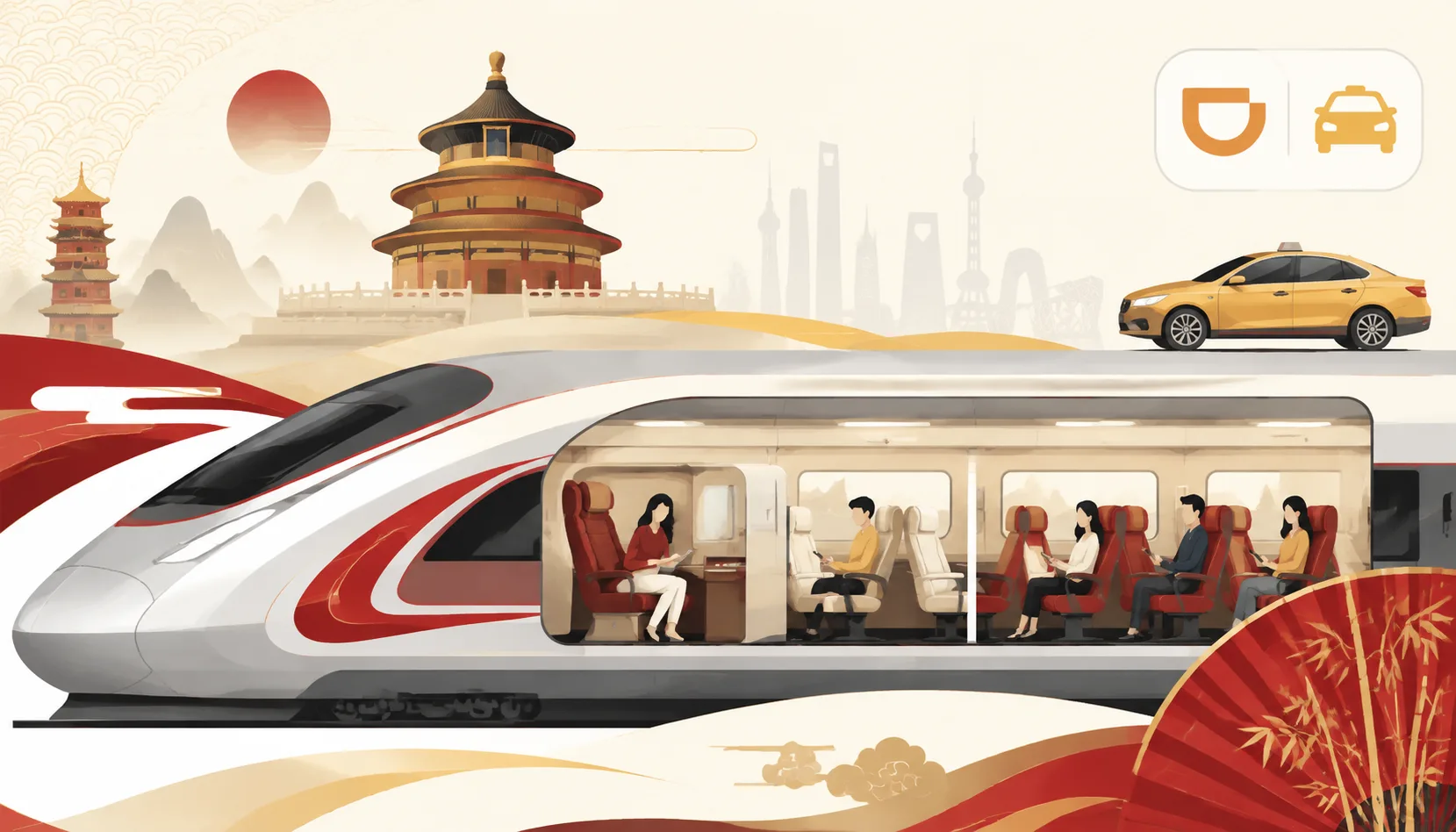
Quick answer
China's high-speed rail (高铁, gāotiě) is fast, punctual, and remarkably comfortable — but requires a passport for ticket purchase, a name-to-seat system, and specific behavioral norms (eating is fine, phone speakers are not, reclining your seat without warning the person behind you is socially awkward). DiDi is the dominant rideshare app and requires a Chinese phone number to set up.
High-Speed Rail Basics
China's high-speed rail network is one of the world's largest and most advanced. Trains travel at 250–350 km/h between cities, making rail competitive with or faster than flying for journeys under 5 hours when airport time is factored in.
Ticket purchase: Tickets require your passport number and are registered to your name. You cannot transfer or resell them. Purchase options:
- Trip.com or Railtrip: English-language booking platforms that accept international cards — the easiest option for foreigners.
- 12306 (official): China's official rail app, requires a Chinese phone number and can be complex for international users but is cheapest for last-minute tickets.
- Station ticket windows: Bring your passport. Queues can be long during holiday periods.
Seat classes:
• Second class (二等座): Comfortable, 3+2 seating, most affordable
• First class (一等座): Wider seats, 2+2 configuration, ~50% more expensive
• Business class (商务座): Fully reclining seats, premium pricing
Checking in: At the station, pass through security (bag X-ray), then proceed to the waiting hall. Your train number and gate are displayed on large screens. Board only during the boarding window shown on your ticket — gates close before departure.
Behavior on the High-Speed Train
High-speed rail carriages are quieter than you might expect given China's reputation for noise. There are real behavioral norms in place:
Eating: Fully acceptable. Vendors walk through selling snacks, and passengers bring their own food. Instant noodles (方便面, fāngbiàn miàn) are extremely common — hot water dispensers are in every carriage. Strong-smelling food is technically discouraged but widely eaten.
Phone audio: Same rules as metro — earphones are expected. Playing audio on speakers in a premium train carriage draws real disapproval.
Reclining your seat: Seats recline, but reclining without a word to the person behind you — especially in second class where space is tighter — is considered thoughtless. A brief turn-around gesture or quick verbal acknowledgment is appreciated.
Standing up before the train stops: As the train approaches its destination, passengers rush to stand and gather luggage — sometimes 10 minutes early. This is cultural habit, not a signal you need to rush. The platform has ample time to exit. Joining the standing crowd early is optional.
Seat swapping: People frequently ask to swap seats to sit with family or friends. Saying no is entirely acceptable. A polite "I prefer to stay in my reserved seat" (我坐我自己的座位,谢谢) is sufficient.
Taxis and DiDi: Getting Around Cities
Traditional taxis: Still available in most Chinese cities. Payment by cash (RMB) or mobile payment (WeChat/Alipay QR). Meters are standard — do not accept taxis without meters, and do not agree to a fixed price before the journey (this usually means you will be overcharged). Showing your destination as Chinese text on your phone eliminates language barriers.
DiDi (滴滴): China's dominant rideshare app, similar to Uber. Typically cheaper than taxis, GPS-navigated (no language issue), and payment is in-app. The main challenge for foreigners: DiDi requires a Chinese phone number for registration. If you have a local SIM, setup is straightforward. Without one, some international users have found workarounds through the DiDi international app.
Airport transfers: Most major airports have designated taxi queues monitored by staff — use these rather than accepting solicitation from drivers inside the terminal. Airport taxi touts are reliably overpriced.
Motorcycle taxis (摩的, mó dī): Common in smaller cities and suburban areas. Cheap and fast, but no insurance and safety varies. Helmet is sometimes provided, sometimes not. A practical option for short distances where other transport is limited.
What Chinese People Actually Say
- 检票 | jiǎnpiào | ticket check/validation | Show your ticket QR code at the gate; staff may also check your ID.
- 滴滴出行 | Dīdī Chūxíng | DiDi ride-hailing app | Use this app to book taxis; enter your destination in Chinese or show address to driver.
- 打表 | dǎbiǎo | meter-based pricing | Tell the driver "打表" to ensure they use the meter instead of negotiating a fixed price.
2026 Reality Check
2026 Reality Check: Most high-speed rail etiquette rules still exist but are loosely enforced. Foreigners are rarely penalized for minor infractions.
Gen Z vs Older Generations: Chinese Gen Z passengers are generally more relaxed about seat reservation etiquette and luggage space sharing. Older Chinese passengers still expect strict queue order and will quietly disapprove of cutting in line.
Beijing/Shanghai vs Smaller Cities: Major cities have adapted to international norms—passengers now routinely stand up quickly to free seats. In smaller cities, traditional etiquette remains stronger; older locals may glare at foreigners who don't understand "denghao" (waiting your turn) at ticket gates.
Taxi: Digital hailing (Didi) has eliminated most taxi disputes. Foreigners should still have addresses ready in Chinese characters—most drivers appreciate this effort regardless of city.
Frequently asked questions
Can I buy high-speed rail tickets with a foreign passport at the station in China?
Yes, but you must go to a staffed ticket window, not a self-service machine. Bring your physical passport — photocopies won't work. The staff will scan it and link your ticket to your passport number. For same-day travel, arrive at least an hour early, as queues at major stations like Beijing South or Shanghai Hongqiao can be long.
What happens if my train is delayed and I miss my connection?
China's high-speed rail is punctual, but if a delay causes you to miss a connection, go to the station's ticket office or 'transfer service' desk. You can get a free rebooking on the next available train to your destination, even on a different train type. Your original ticket must be used for the same route; no refunds are given for voluntary no-shows.
Is it rude to recline my seat on a Chinese high-speed train?
Reclining is allowed and common, but do it gently and check behind you first. If the person behind you is tall or has a tray open, a sudden recline is considered thoughtless. A quick glance or a soft '不好意思' (excuse me) goes a long way. In second class, seats recline less than in first class, so it's rarely an issue.
How do I pay for a taxi in China if I don't have Alipay or WeChat Pay?
Taxis in most cities accept cash, but drivers often lack change for large bills. Carry 10 and 20 yuan notes. For DiDi, you must link a payment method — a foreign Visa or Mastercard works in the app, but cash is not accepted. If you have no Chinese payment apps, your best bet is hailing a street taxi and paying cash.
Can I use DiDi without a Chinese phone number as a tourist?
Technically no — DiDi requires SMS verification with a Chinese number to register. However, you can use the DiDi app in English with a foreign number if you already have an account from before. As a workaround, many hotels and WeChat mini-programs offer taxi-hailing services. Alternatively, use Alipay's 'Transport' section, which supports DiDi in some cities with a foreign number.
What's the difference between taking a taxi and DiDi in terms of price and safety in China?
Taxis are metered and safe, but during rush hour or rain, you may wait a long time. DiDi is usually 10-20% cheaper, shows the fare upfront, and lets you track the driver. For safety, both are reliable — all licensed drivers are background-checked. One tip: in smaller cities, taxis may not use the meter; agree on a price before getting in, or use DiDi for transparency.
Try our tools
Related guides
China Subway and Bus Etiquette: The Unwritten Rules
Chinese metro culture has its own logic: people do queue at the painted lines (mostly), crowds at rush hour are extremely dense and this is accepted, phone spea…
Read the guide →
China National Day Golden Week 2026: What Stops & Changes
China's National Day Golden Week (国庆黄金周) runs October 1–7 — 7 days of public holiday. Almost everything non-essential stops: vendors, many service businesses, a…
Read the guide →
Chinese New Year Survival Guide for Foreigners (2026)
Spring Festival is China’s biggest holiday, a family reunion that dwarfs Western celebrations. If invited to New Year’s Eve dinner, arrive early, bring fruit or…
Read the guide →