Personal Space in China: Why Someone Is Standing So Close (And It's Not Rude)
Quick answer
In China, close physical proximity isn’t rudeness—it’s a practical response to dense urban living, where space is scarce and efficiency rules. With over 1.4 billion people, personal bubbles shrink naturally in subways or queues. Instead of stepping back, relax your shoulders and go with the flow; locals won’t take offense if you mirror their calm, pragmatic approach.
Introduction: The Invisible Bubble
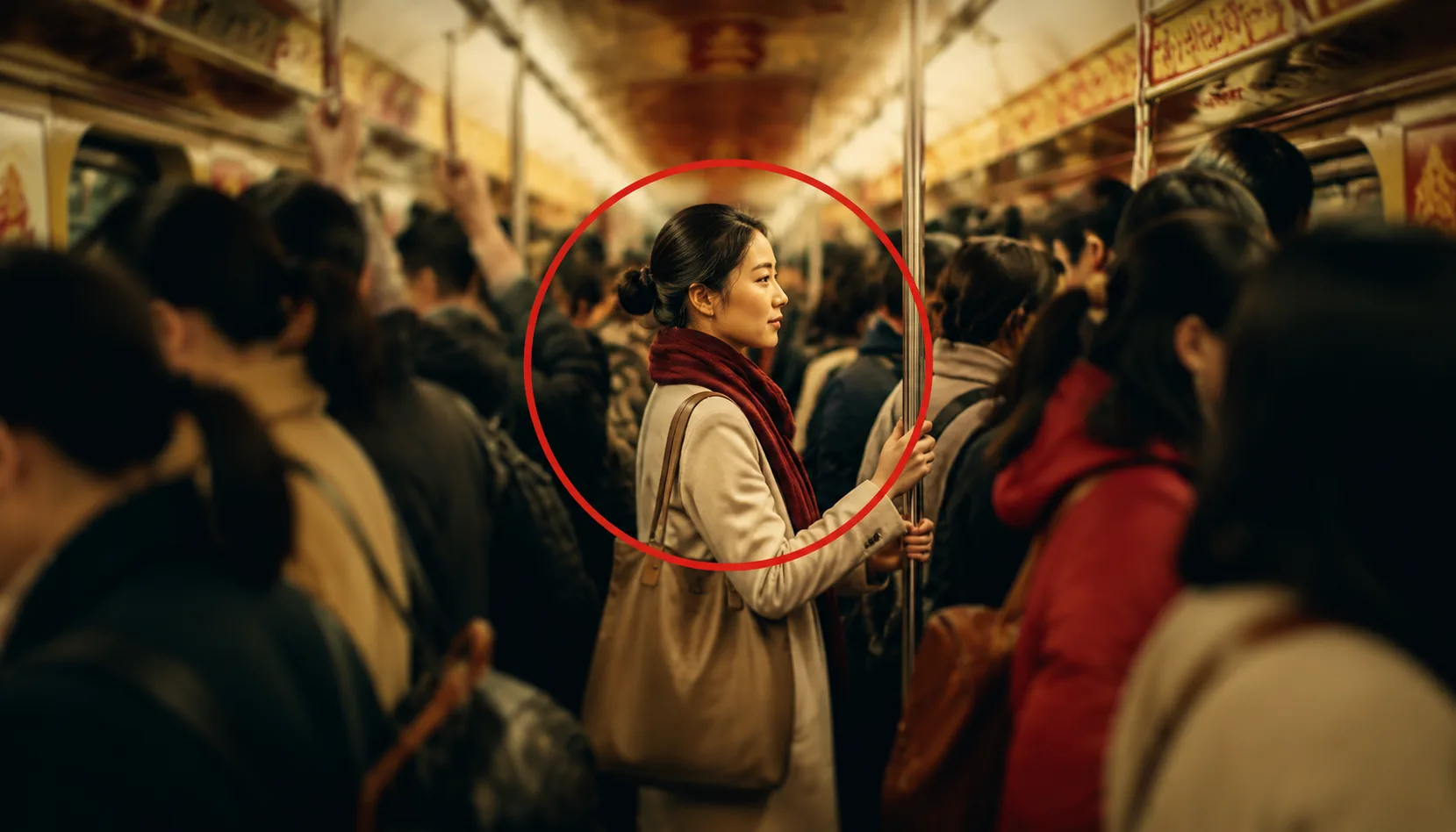
You're standing in a Beijing subway car, gripping the overhead handle, when someone steps in and stands so close you can feel their breath on your neck. Your first instinct is to step back, but there's nowhere to go. You exchange an awkward glance, but the person seems completely unbothered. Welcome to personal space in China.
For many Westerners, this is one of the most jarring aspects of adapting to life in China. In the West, we're raised with an invisible bubble—roughly an arm's length—that we expect strangers to respect. In China, that bubble often shrinks dramatically, especially in public spaces. But here's the crucial insight: this is not rudeness, and it's not an invasion of your privacy. It's a different set of norms, shaped by history, demographics, and social values.
In this guide, we'll unpack why public space in China feels so crowded, the cultural logic behind it, and—most importantly—how to calibrate your own expectations so you can move through Chinese cities with ease and confidence.
The Demographic Reality: 1.4 Billion People, One Shared Space
The most fundamental reason for the difference in personal space is simple math. China is home to over 1.4 billion people, and its major cities—Beijing, Shanghai, Guangzhou, Shenzhen—are among the most densely populated on Earth. In a city like Shanghai, you're sharing the streets, sidewalks, and transit systems with millions of others every single day.
This density isn't new. For centuries, China has been a predominantly agrarian society with high population densities in fertile river valleys. Villages were compact, homes were close together, and public spaces were shared by necessity. This historical backdrop has created a cultural tolerance—and even expectation—of physical proximity in public settings.
Western countries, by contrast, often have vast open spaces and lower population densities. This has fostered a culture where personal space is a prized commodity, and physical distance is linked to autonomy and privacy. When you bring these two different historical experiences together, you get a clash of expectations.
But density alone doesn't tell the whole story. The way space is used and valued also differs.
Public Proximity vs. Private Intimacy: Two Different Rules
One of the most confusing aspects for foreigners is the apparent contradiction: in China, strangers may stand extremely close to you on the subway, but friends and colleagues maintain a more formal physical distance in private interactions. How can this be?
The key is to understand that public space and private space operate under different rules. In China, public space is often viewed as a shared, neutral zone. In a crowded elevator or subway car, everyone is expected to make do with the available space. It's not personal—it's practical. People are simply trying to get where they need to go, and standing close is a natural consequence of limited room.
In private or social settings, however, the rules shift. When you're having a conversation with a colleague or meeting a friend for coffee, the physical distance is often similar to what you'd find in the West—about an arm's length. In fact, in formal business settings, Chinese professionals may maintain even more distance than Westerners, out of respect for hierarchy and formality.
So the next time someone stands close to you in a queue, remember: they're not trying to invade your personal space. They're just following the unwritten rule of public space: share it.
The Historical Roots: From Communal Living to Modern Cities
To fully understand why personal space norms differ, it helps to look at history. Traditional Chinese society was built around the concept of the family and the collective, not the individual. In rural villages, families lived in close quarters, shared meals, and worked together in the fields. Privacy was a luxury that few could afford, and being alone was often seen as unusual or even lonely.
This communal ethos extended to public life. Markets, temples, and streets were bustling with people, and physical contact was unavoidable. Over time, this created a cultural mindset that tolerates—and even expects—physical closeness in public spaces. It's not seen as intrusive; it's just the natural state of things.
In contrast, Western societies, particularly in Northern Europe and North America, have been influenced by ideas of individualism and personal autonomy. The rise of the middle class and suburban living in the 20th century further emphasized the importance of private space, both at home and in public. The result is a cultural preference for more physical distance.
China's rapid urbanization has brought millions of people into dense cities, but the cultural norms haven't changed overnight. Even in modern high-rise apartments, where privacy is more available, the old habits and expectations persist. Understanding this historical context helps you see that the close proximity you experience isn't a personal affront—it's a deeply ingrained cultural pattern.
Why It's Not Considered Rude: The Role of Intent and Context
In Western cultures, standing too close to a stranger is often interpreted as aggressive, disrespectful, or even threatening. In China, the same behavior is usually neutral—neither positive nor negative. It's simply a practical response to a crowded environment.
Several factors contribute to this:
- High tolerance for crowding: Decades of living in dense cities have made people more accustomed to physical proximity. It's not a big deal.
- Group-oriented mindset: In a culture that values the collective over the individual, the needs of the group (e.g., fitting everyone into the subway car) often take precedence over individual comfort.
- Non-verbal communication: Chinese people are often highly attuned to non-verbal cues. If you're visibly uncomfortable, someone might step back, but they won't automatically assume they've done something wrong.
- No ill intent: The vast majority of people are simply focused on their own tasks—commuting, shopping, or waiting in line. They're not thinking about you or your personal space.
This doesn't mean that Chinese people don't value personal space at all. In fact, in private settings, they may be just as protective of it as Westerners. The difference is that in public, the default assumption is that space is shared, not owned.
Eye Contact, Shoulder-Touching, and Same-Sex Physical Closeness
Beyond simple proximity, there are other physical norms that can feel different in China:
Eye Contact: In the West, maintaining eye contact is a sign of confidence and honesty. In China, prolonged eye contact—especially with someone older or of higher status—can be seen as disrespectful or challenging. This is why you might notice Chinese colleagues or service workers avoiding direct eye contact. It's not shyness; it's a sign of respect.
Shoulder-Touching: Touching someone's shoulder to get their attention or to express friendliness is common in China, especially among friends and colleagues of the same sex. It's a casual, non-threatening gesture. However, touching someone of the opposite sex—especially in a professional setting—is generally avoided to maintain propriety.
Same-Sex Physical Closeness: You may see two women walking arm-in-arm or two men with their hands on each other's shoulders. This is not a sign of romantic involvement; it's a display of platonic friendship. In Chinese culture, same-sex physical closeness is seen as natural and innocent, unlike in some Western contexts where it might be misinterpreted.
These differences can be disorienting at first, but they're part of the rich tapestry of Chinese social life. The key is to observe, adapt, and not overreact.
How to Calibrate Your Personal Space Expectations
Adapting to different personal space norms doesn't mean abandoning your own comfort. It means learning to adjust your expectations and responses. Here are some practical tips:
- Expect crowding in public transit: During rush hour on the subway or bus, physical contact is inevitable. Accept it, and you'll feel less stressed.
- Don't take it personally: If someone stands close to you in a queue, remind yourself it's not about you. They're just following the local norm.
- Use your body language: If you need more space, you can gently create it by shifting your position or using a bag as a buffer. Most people will understand.
- Be mindful in private settings: When talking one-on-one, maintain a comfortable distance, but don't be surprised if the other person stands a bit closer than you're used to.
- Observe and mirror: Pay attention to how locals interact. If they stand close, you can do the same without feeling awkward.
- Communicate your needs politely: If someone is truly invading your space (e.g., in a meeting), you can say, "I need a little more room, could you step back?" in a calm, friendly tone.
Remember, you're not expected to become Chinese overnight. It's okay to have your own comfort zone. The goal is to understand the local norms so you can navigate them without frustration.
Conclusion: Embracing the Crowd
Personal space in China is a reflection of a society that has learned to thrive in close quarters. It's not about disrespect or invasion—it's about pragmatism and a different set of social values. By understanding the demographic, historical, and cultural reasons behind this norm, you can transform your experience from one of irritation to one of insight.
Next time you're in a crowded subway car, take a deep breath and remind yourself: this is just how things are here. You're not being singled out; you're part of a shared experience that billions of people navigate every day. Embrace the crowd, and you'll find that your personal bubble—though smaller—can still be perfectly comfortable.
For more insights into Chinese culture and etiquette, explore the rest of ChinaRules101. We're here to help you bridge the gap between cultures with confidence and grace.
What Chinese People Actually Say
What Chinese People Actually Say:
- 借过一下 (jiè guò yī xià) – "Excuse me, let me pass." Used when you need to squeeze through a packed subway car.
- 麻烦让一下 (máfan ràng yī xià) – "Sorry, please move a little." Used to politely ask someone to make space on a bus.
- 往里靠 (wǎng lǐ kào) – "Move inwards." A short command used by conductors or locals to get people to shift deeper into a crowd.
- 请您往这边站 (qǐng nín wǎng zhè biān zhàn) – "Please stand this way." Used by tour guides or staff to direct a group in a tight area.
2026 Reality Check
In 2026, China's personal space norms are shifting. Gen Z, raised on global digital culture and more exposed to Western individualism, now routinely maintain a half‑arm's length in public transport and queues, especially in tier‑1 cities like Shanghai and Shenzhen. Older generations, however, still view close‑standing as a sign of warmth and social cohesion; in tier‑2/3 cities such as Chengdu or Nanjing, it's common for elders to stand shoulder‑to‑shoulder when chatting, seeing it as respectful intimacy. Yet even in these cities, younger commuters in metro stations have started to adopt the "one‑meter" rule, reflecting a gradual blend of tradition and modern expectations. The reality is a mosaic: urban youth are carving out more personal space, while the broader population still values proximity as a social cue.
Frequently asked questions
How close is too close when talking to someone in China?
In casual conversation, Chinese people often stand about one arm's length or closer—roughly 30-50 centimeters. If someone steps closer, it usually signals engagement, not aggression. There's no hard rule, but if you feel uncomfortable, take a small step back. Most locals will unconsciously adjust to match your distance without taking offense.
Is it rude to step back when someone stands too close in China?
Not at all. Stepping back is generally interpreted as a personal preference, not a rejection. However, doing it repeatedly or dramatically might seem odd. A better approach is to subtly angle your body or hold an object (like a bag) between you. This creates space naturally while keeping the interaction friendly.
Why do Chinese people stand so close in queues and on public transport?
China's population density is the main driver. In cities like Shanghai or Beijing, subway cars and queues are physically packed, leaving no room for personal bubbles. People stand close because they have to, not because they want to invade your space. It's a practical adaptation to crowded environments, so treat it as a logistical reality rather than a social statement.
Can I ask someone to give me more space in China without being rude?
Yes, politely and with a smile. A simple 'Qǐng ràng yīxià' (please move over a bit) works in most situations. On public transport, saying 'Qǐng wǎng lǐ zǒu' (please move inside) is standard. The key is tone—Chinese communication values harmony, so a light, apologetic request is rarely met with hostility.
Is personal space different in rural China compared to big cities?
Surprisingly, rural areas often have larger personal space in daily interactions, because there's more physical room. However, in markets or festivals, crowding is common. The difference is context: in cities, close proximity is a necessity; in rural settings, it's more about social warmth. Either way, don't assume a rural local wants a hug—just mirror their behavior.
What should I do if a stranger stands extremely close, like in a lift or at an ATM?
In a lift, people usually face the doors and avoid eye contact—this is the universal 'elevator rule' in China too. At an ATM, if someone stands very close, it's likely a queueing habit, not a threat. You can say 'Qǐng pái duì' (please queue) or hold up a hand as a gentle stop signal. Staying calm and non-confrontational works best.
Try our tools
Related guides

Eye Contact in China: When Looking Away Is Actually More Respectful
In China, sustained direct eye contact with seniors or authority figures can signal challenge, not confidence. Instead, lower your gaze slightly or look away pe…
Read the guide →
Public Behavior in China: What Is and Isn't Acceptable
Chinese cities have their own public behavior logic: noise levels are higher than Western norms in some contexts and strictly controlled in others, personal spa…
Read the guide →
10 Social Mistakes Foreigners Commonly Make in China
The most common mistakes cluster around face (publicly correcting or disagreeing with someone), physical greeting norms (hugging or back-patting people who are …
Read the guide →