How should foreigners set up their WeChat profile and add contacts in China?
Quick answer
Use a clear, professional photo of yourself — not a pet or cartoon. Set your display name to something Chinese colleagues can recognize and remember easily. When adding someone's WeChat, you scan their code (not the other way around), and always send a brief introduction message immediately after connecting.
Before you send a single message on WeChat, your profile has already introduced you to every Chinese contact you have. Unlike Western social apps where profiles are glanced at briefly, Chinese WeChat users actively evaluate your photo, display name, personal bio, and Moments cover when deciding how to relate to you — especially in professional contexts.
Getting your profile right is a one-time investment that pays dividends across every relationship you build in China.
Profile Photo: Why It Matters More Than You Think
In Chinese social culture, the principle "see the photo, see the person" (见图如见人) applies especially to WeChat. Your photo is the first piece of social information anyone receives about you — and in professional contexts, it signals your level of seriousness and maturity.
What works
- A clear, professional headshot — business casual to business formal, with your face clearly visible and well-lit. This is the universal safe choice for any Chinese professional or business context.
- A natural personal photo — if this is a personal account, a clear, warm life photo (travel, outdoors, but recognizably you) works well.
What doesn't work in professional contexts
- Pets, even cute ones — signals immaturity or that you're hiding behind something
- Cartoon characters, anime, or abstract art — reads as unprofessional in Chinese business culture
- Dark or unclear photos where your face is not visible
- Rock band photos, extreme expressions, or deliberately provocative images — creates immediate social distance with conservative clients or colleagues
The guiding principle: in China, a clear personal photo builds trust faster than any other profile element. It says: I am who I say I am, and I am willing to show my face.
Display Name: Make It Easy to Find and Remember
Chinese colleagues searching their WeChat contact list use the search bar. If your display name is an obscure English nickname or a string of characters no one recognizes, you will get lost in the list and eventually forgotten.
The recommended format
Real name + English name / company / department
- Professional: Zhang Wei | Tom | Marketing or Tom Wang - Siemens
- Personal: Tom Wang or 汤姆 Tom (Chinese phonetic rendering + English name)
What to avoid
- Long Western names that are hard for Chinese speakers to remember or type: Christopher-Alexander-Montgomery
- Random nicknames, internet handles, or names that don't match your actual identity
- Names with special characters or symbols that don't render well in Chinese input systems
For foreigners, including your Chinese romanized name (pīnyīn) alongside your English name significantly helps Chinese colleagues identify and remember you. Even a rough Chinese phonetic name — if someone at your company gave you one — is worth including.
Personal Bio and Moments Cover Photo
Personal bio (signature)
This is optional, but if you write one, keep it positive and professionally appropriate. Your bio is visible to all your WeChat contacts — including your boss, clients, and colleagues.
- Safe choices: A neutral professional statement, a mild aspiration, or simply leaving it blank
- Avoid: Venting about work, expressing cynicism, political opinions, or anything that might read as negative energy. A bio that says "counting down to Friday" or "this job is killing me" will be seen by everyone who looks at your profile.
Moments cover photo
This is the wide banner image at the top of your personal Moments page — visible to all your contacts when they tap your profile. Think of it as a background that reflects your personality and values.
- Good choices: Scenic landscape photography, a personal action shot, clean artistic photography, a motivational image in good taste
- Avoid: Politically sensitive imagery, anything revealing or provocative, low-quality or overly sad photos
Who Scans Whom: The Unwritten Rule
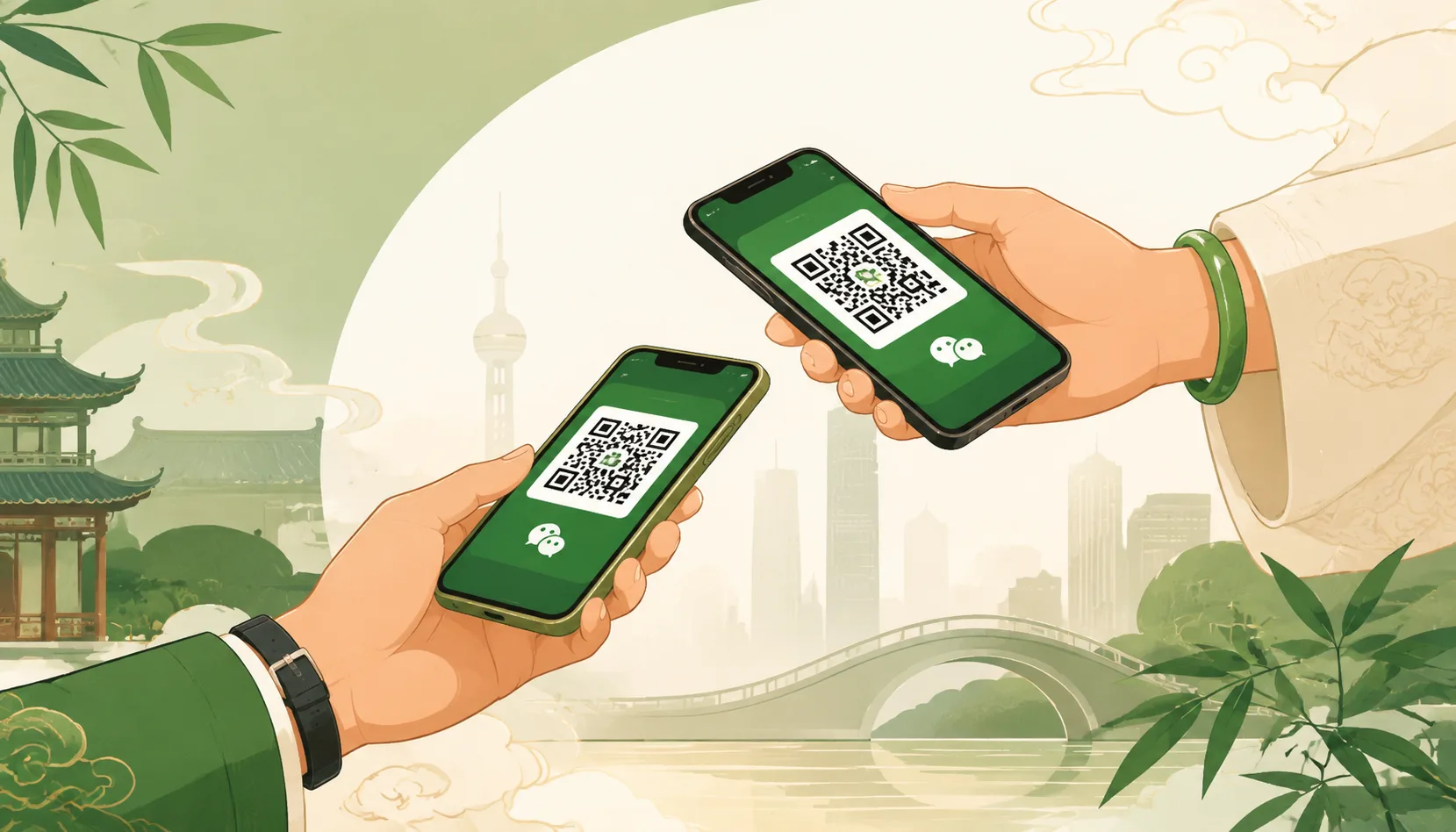
When exchanging WeChat contacts in China, there is an implicit hierarchy to who takes out their phone and scans the other person's QR code. The rule: the more junior, newer, or lower-status person scans the more senior person's code.
Practically:
- Junior employee scans manager's code
- Client-facing person scans the client's code
- New acquaintance scans the established contact's code
- Guest scans the host's code
What this looks like in practice: when meeting someone senior, you take out your phone, open your own QR code, and offer to have them scan it — or better, you ask "May I scan your WeChat?" and let them show you their code. The gesture of offering your own code to be scanned, rather than demanding they scan yours, is the deferential approach.
What not to do: Pushing your QR code screen in front of someone senior and saying "scan me" without asking feels presumptuous and can create an awkward first impression.
The First Message After Adding Someone
The moment someone accepts your WeChat contact request, the conversation window opens. Many people — especially from Western social media backgrounds — either send a minimal "hi" or say nothing at all. In Chinese professional culture, both are missed opportunities and mild social missteps.
A new WeChat connection is a fresh relationship. Your first message should briefly re-introduce yourself so the recipient knows immediately who you are and where you met. This is especially important because many people accept contact requests after meetings or events where they met multiple people, and a generic "hi" from an unknown display name provides no context.
Template (adapt as needed)
Manager Wang, hello — this is Tom from [Company]. We met at the industry conference yesterday. Very glad to connect. Please don't hesitate to reach out if there's anything I can help with.
In Chinese:
王经理您好,我是昨天行业会议上认识的汤姆,来自[公司]。很高兴能加到您的微信,以后多联系!有什么需要随时告诉我。
What if someone doesn't accept your request?
If your friend request sits pending for more than 48 hours, do not send a second request or follow-up message. The other person may not have seen it — or may have decided not to connect. Sending multiple requests or a message pressing them to accept is considered inappropriate. If the connection matters professionally, ask a mutual contact to make a gentle introduction.
What Chinese People Actually Say
- 头像 | tóuxiàng | profile photo | Keep it clear and friendly; avoid dark or blurry images.
- 昵称 | nìchēng | display name | Use your real name or a name others can easily recognize.
- 微信号 | wēixìnhào | WeChat ID | Share only with people you know; don't post it publicly.
2026 Reality Check
In 2026, basic WeChat etiquette still exists but has relaxed significantly. Most users now accept profile photos that aren't traditional headshots—Gen Z especially uses selfies, pet photos, or anime avatars without social penalty.
Gen Z vs. Older Generations: Young people (under 30) largely ignore the old "real photo + real name" rule. They prioritize self-expression and privacy. Users 40+ still tend to use clear face photos and their real names, especially for work contacts.
Beijing/Shanghai vs. Smaller Cities: Tier-1 cities are more relaxed—international influences and younger demographics drive casual norms. Smaller cities and older users hold tighter to traditional etiquette, particularly for adding new contacts.
The bottom line: Real-name culture persists in professional settings across China, but casual social use has modernized. It's no longer rude to use a creative avatar—just match your audience.
Frequently asked questions
Is it okay to use a photo of my pet or a cartoon as my WeChat profile picture?
Technically yes, but it's strongly discouraged in professional or social settings. Chinese contacts use your profile photo to recognize you, especially in group chats. A pet or cartoon makes you harder to identify and can seem less serious. Use a clear, well-lit photo of your face — it's the safest choice for building trust.
What should I put in my WeChat 'Moments' bio or signature as a foreigner?
Keep it simple and neutral. A one-line description like 'Marketing Manager at ABC Company' or 'English teacher in Shanghai' works well. Avoid political statements, religious references, or overly personal details. Your bio is visible to contacts before they add you — a clean, professional line helps people decide to accept your request.
How do I add someone on WeChat if they don't have their QR code handy?
You have several options. You can search by their WeChat ID (the alphanumeric username), phone number, or scan their personal QR code from their profile page. If none of these work, ask them to scan your QR code instead. In China, the person initiating the connection usually scans the other person's code, but either direction is acceptable.
Can I add a Chinese colleague's WeChat without saying anything first?
You can, but it's considered impolite. Always send a short introduction message immediately after the connection is made — something like 'Hi, this is John from the Shanghai office. Nice to connect.' This confirms who you are and gives context. Silence after adding someone can feel awkward or even suspicious in Chinese business culture.
What if my Chinese name is hard for colleagues to remember or pronounce?
That's common, and there's a simple fix. Set your WeChat display name to include both your English name and a Chinese nickname if you have one — for example, 'John (小张)'. If you don't have a Chinese name, just use your English name clearly. Avoid using only initials or obscure characters that people can't easily type to search for you.
Is it rude to change my WeChat profile photo or name frequently?
Frequent changes aren't rude, but they are inconvenient for your contacts. Chinese users often rely on your photo and name to find you in a long list of chats. If you change them too often, people may not recognize you or might even block you by mistake. Change your photo or name only when necessary, like after a job change.
Try our tools
Related guides
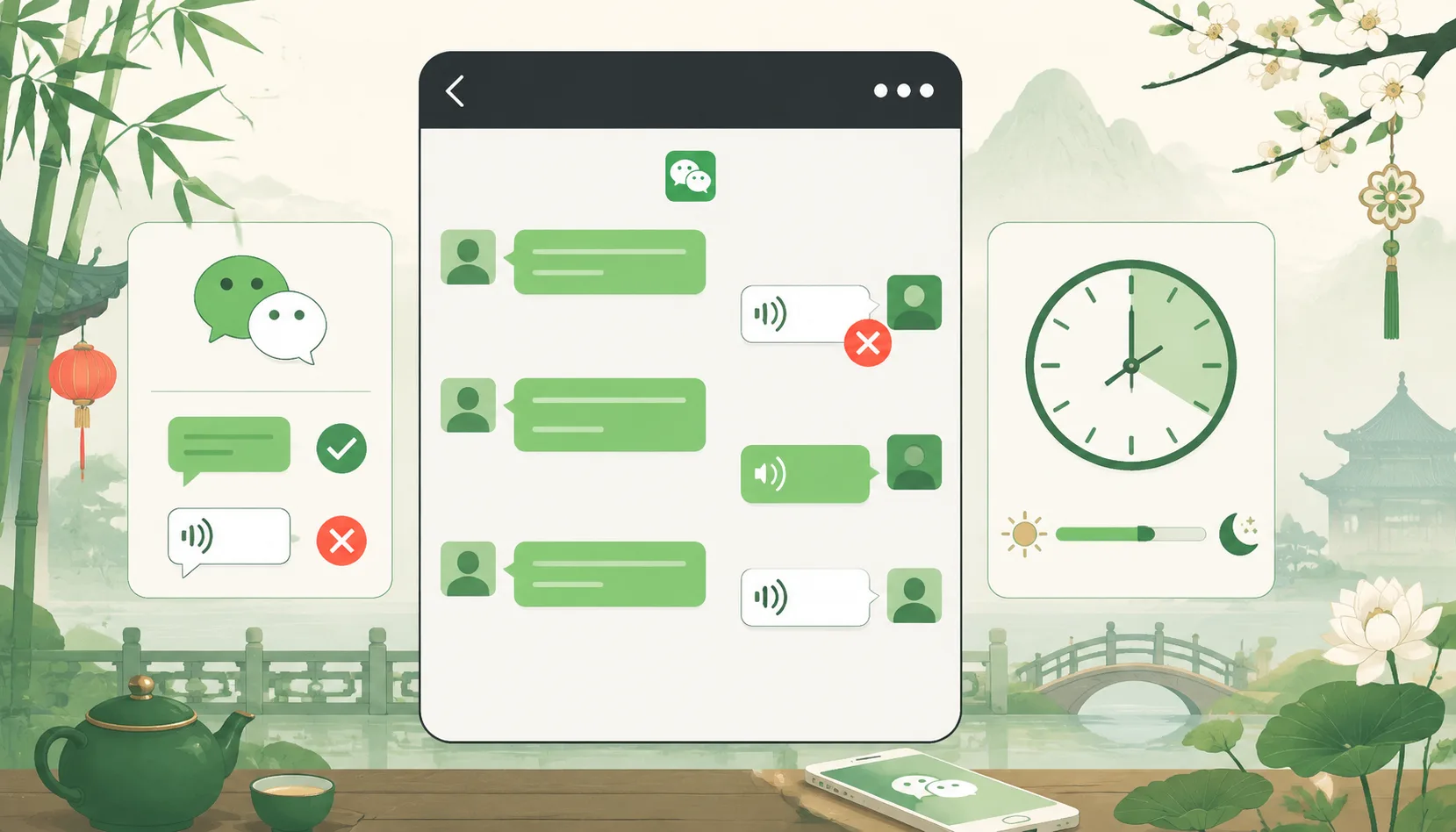
WeChat Messaging Etiquette in China: Rules to Know
Don't send voice messages to colleagues without asking first — text is almost always preferred. Don't message for work matters after 10pm. The 🙂 emoji is not fr…
Read the guide →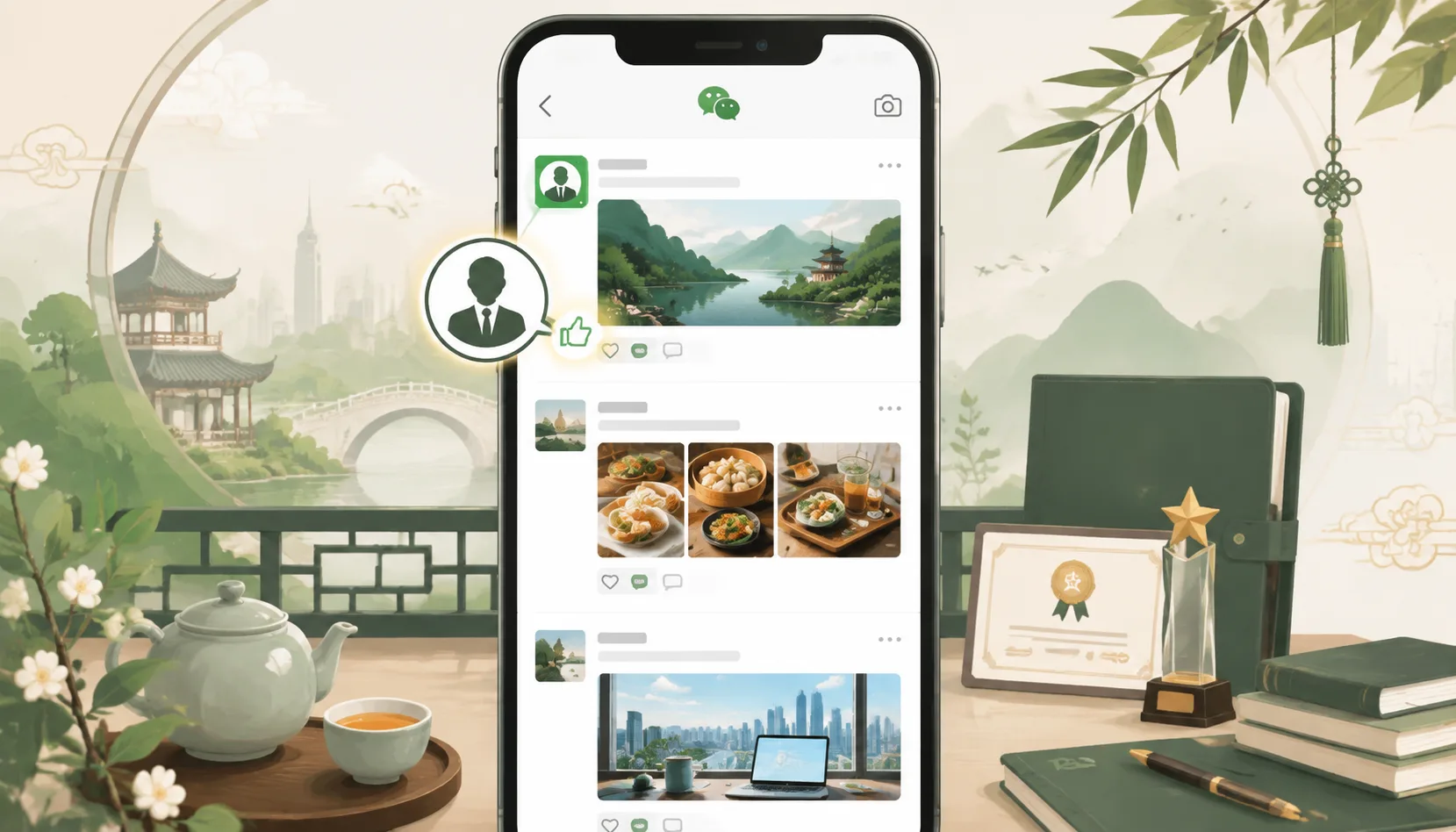
WeChat Moments Etiquette: What Foreigners Should Know
WeChat Moments (朋友圈) is more like a professional-personal hybrid than a pure social feed — your boss, clients, and family all see the same posts. Post 1-3 times…
Read the guide →
WeChat Pay and Red Envelopes: A Foreigner's Guide to China
WeChat Pay may allow some users to link international cards, but eligibility, supported cards, verification, limits, and merchant acceptance vary by account, is…
Read the guide →