Does sitting posture matter in Chinese social and business settings?
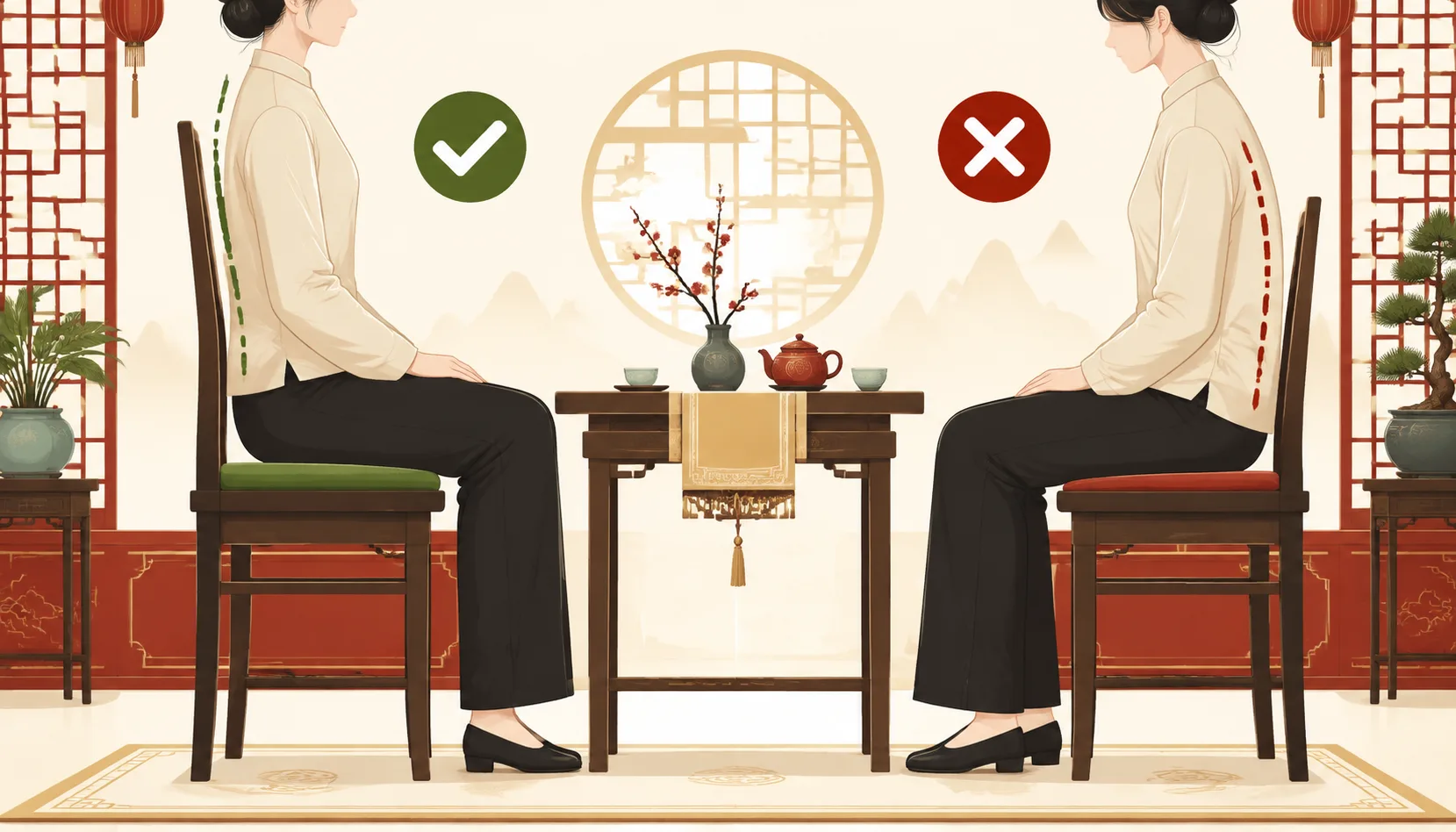
Quick answer
Yes. Sitting with bad posture — slouching, leaning back casually, or shaking your legs — signals laziness, disrespect, or nervousness in Chinese social settings.
Why This Rule Matters
The Chinese standard for sitting posture comes from the saying 'zuò rú zhōng' (坐如钟, sit like a bell — solid and upright). Shaking legs (dǒu tuǐ) is particularly stigmatized — it's associated with instability, bad luck, and a restless character. The Confucian text on behavior codifies this: a restless sitter is seen as untrustworthy.
What You Should Do
- Sit upright with your back straight, even if there is a backrest
- Rest both hands on your thighs, palms down, or lightly on the armrests
- Keep both feet flat on the floor at about shoulder width
What You Shouldn't Do
- Slouch or lean back as if lounging during a formal or semi-formal meeting
- Shake or bounce your legs while seated — this is seen as a serious flaw
- Cross your legs in ways that show the sole of your shoe toward someone
- Put your feet on the furniture
Practical Tips for Foreigners
This posture rule is enforced most in formal settings, government or state-owned offices, and family gatherings with elders—especially in Beijing, Xi'an, Guangdong, and Fujian—while younger professionals in Shenzhen or Shanghai may slouch in casual or startup contexts. When in doubt, watch what your Chinese host or senior colleague does and follow their lead. Breaking this rule once is forgivable — breaking it repeatedly signals a lack of cultural awareness.
Why posture signals more than you think
In China, how you sit is read as a direct reflection of your inner state. A straight back shows you are alert, sincere, and engaged. Slouching or leaning back suggests you are bored, arrogant, or even trying to dominate the conversation. This is especially true in <a href="/business/chinese-negotiation-small-talk-strategy/">business meetings</a> in Beijing or Shanghai, where senior managers notice every non-verbal cue. Your posture also affects how your words are interpreted — a casual slouch can undermine even the most well-prepared pitch. When you sit upright, you silently communicate that you respect the person across the table and the matter at hand.
Real scenarios where posture matters
- A British expat in Shanghai slouched in a client meeting, thinking it looked relaxed. The Chinese client later told his colleague, 'He seems uninterested in our project.' The deal still closed, but the relationship never warmed.
- In Guangzhou, a young American manager leaned back with his hands behind his head during a dinner with a state-owned enterprise partner. The host, a 55-year-old executive, quietly shifted the conversation to small talk and ended the evening early.
- A German engineer in Shenzhen corrected his habit of shaking his leg under the table during a factory audit. His Chinese counterpart later praised him, saying, 'You sit like a serious person — I knew I could trust your quality checks.'
- In Chengdu, a Canadian teacher slouched while having tea with a student's grandparents. They never said a word, but the student later explained: 'They think you look down on our family.'
Regional and generational differences to know
Posture rules are strictest among older generations and in formal settings like government offices, state-owned enterprises, and traditional family gatherings. In Beijing and Xi'an, where hierarchical culture runs deep, sitting straight is almost mandatory in front of elders or superiors. In more cosmopolitan cities like Shenzhen or Shanghai, younger professionals under 35 are more relaxed — they might slouch at a hipster café or during a startup pitch. But even there, don't assume casualness is safe. In Guangdong and Fujian, many business owners over 50 still equate posture with integrity. When in doubt, sit straight — it never hurts, but slouching can quietly close doors.
What your host thinks but won't say
Your Chinese counterpart will rarely correct your posture directly. Instead, they make silent judgments. A slouch may be read as 'this foreigner lacks discipline' or 'he doesn't take our relationship seriously.' In a family setting, elders might think, 'She has no manners — her parents didn't teach her respect.' They won't voice these thoughts, but they shape how much trust and warmth they extend to you. Over time, a reputation for good posture earns you the label of 'you dong liwu' (懂礼貌) — someone who understands courtesy. That unspoken respect opens doors to better business terms, stronger friendships, and deeper invitations into Chinese life.
What Chinese People Actually Say
- 坐姿端正 | zuò zī duān zhèng | sit with proper posture | commonly used in schools and workplace training
- 腰背挺直 | yāo bèi tǐng zhí | keep waist and back straight | emphasizes the straight back requirement
- 双脚平放 | shuāng jiǎo píng fàng | place both feet flat on the floor | describes the feet position precisely
2026 Reality Check
In 2026, the rule "back straight, feet flat on floor" is fading but not dead. Formal settings (job interviews, business meetings, family dinners with elders) still expect it. Casual contexts? Ignored.
Gen Z vs Older Generations: Boomers and Gen X still enforce it—especially at home, "sit properly!" remains a reflex. Gen Z largely ignores it in private but complies in formal settings. They see it as "old school" etiquette, not personal failing.
Beijing/Shanghai vs Smaller Cities: Tier-1 cities: more relaxed in public spaces, but corporate/educational environments still demand posture. Smaller cities and rural areas: stricter, especially in homes. Elders still correct kids actively.
Verdict: The rule survives as situational etiquette, not universal habit. Enforcement drops with age and formality of setting.
Frequently asked questions
Why is sitting with a straight back important in Chinese business meetings?
A straight back shows respect, attentiveness, and self-discipline, which are highly valued in Chinese business culture. Slouching can be interpreted as disinterest or disrespect toward the host or senior colleagues.
What does shaking or bouncing your legs mean in Chinese social settings?
Shaking your legs is often seen as a sign of nervousness, impatience, or even poor character. It is considered distracting and impolite, so keep your feet still and flat on the floor.
Is it okay to lean back in a chair during a casual conversation with Chinese friends?
Even in casual settings, leaning back too far can appear overly relaxed or dismissive. Sit upright but not stiff, and adjust your posture to match the formality of the occasion.
How should I sit when being introduced to an elder or a senior in China?
Sit with your back straight, both feet flat on the floor, and avoid crossing your legs. This posture conveys humility and respect, especially during introductions or when receiving instructions.
Are there any specific sitting rules for dining at a formal Chinese banquet?
At formal banquets, sit upright and avoid resting your elbows on the table. Keep your feet flat and still, and follow the host's lead for when to start eating or speaking.
What should I do if I feel uncomfortable sitting straight for a long time?
Take brief, subtle breaks by adjusting your position slightly, but avoid dramatic slouching or stretching. Focus on maintaining a respectful posture, and you can excuse yourself to the restroom if needed.
Try our tools
Related guides

10 Social Mistakes Foreigners Commonly Make in China
The most common mistakes cluster around face (publicly correcting or disagreeing with someone), physical greeting norms (hugging or back-patting people who are …
Read the guide →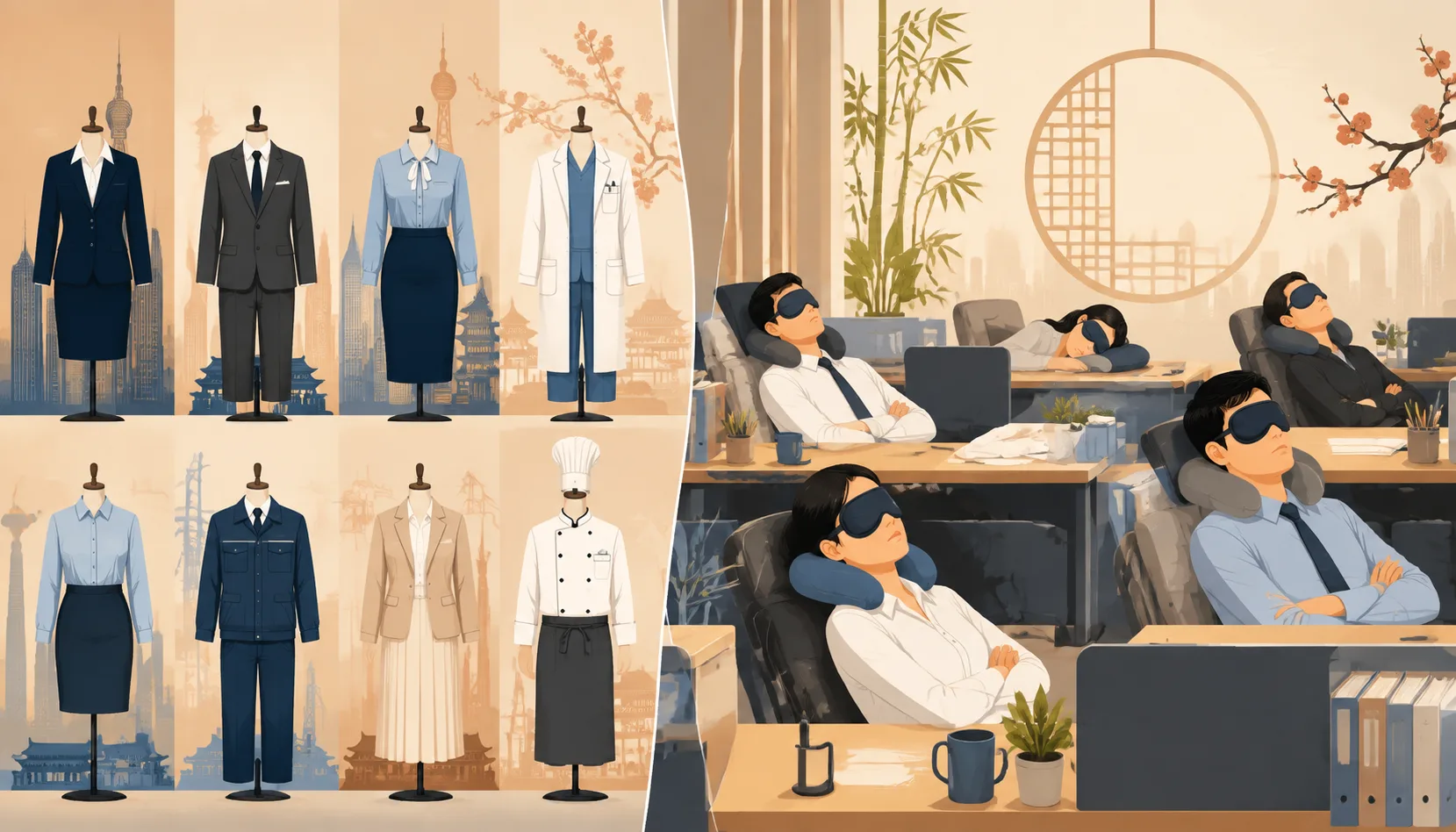
Chinese Office Etiquette: Dress Codes, Naps & Team Building
Chinese office etiquette has three surprises for most Westerners: dress codes are industry-specific and more formal than you'd expect, the lunch nap (午休) is a r…
Read the guide →
Ancient Chinese Etiquette Rules: What Foreigners Must Know
China has thousands of years of accumulated social rules — many of them "unwritten" but universally understood. These rules cover everything from how you sit, h…
Read the guide →