Is leg shaking while sitting considered rude in China?
Quick answer
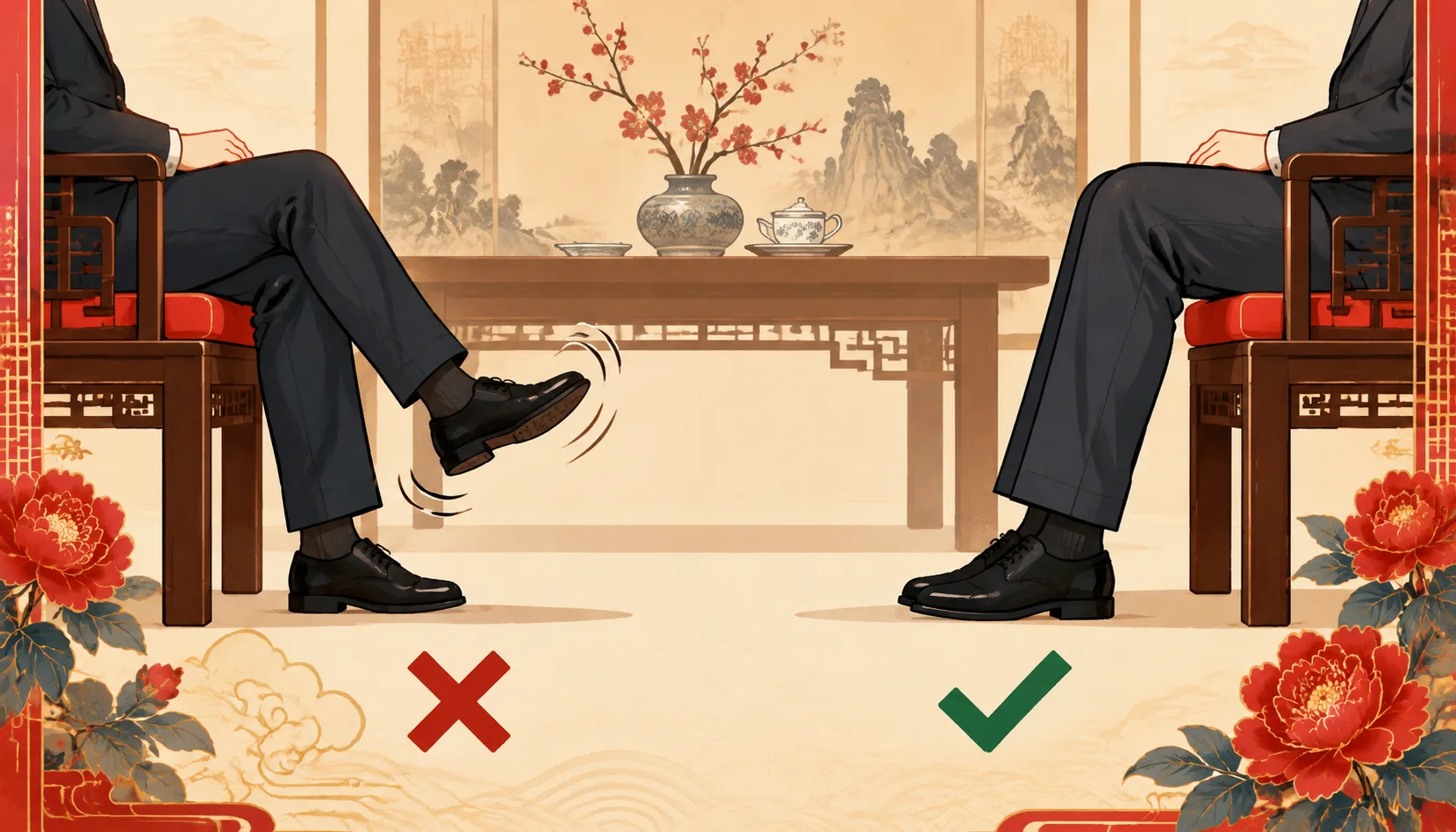
Yes. Bouncing or shaking your leg while seated is seen as a sign of instability, bad luck, or a restless character — and is widely considered rude and distracting.
Why This Rule Matters
Leg shaking (dǒu tuǐ, 抖腿) is one of China's most well-known behavioral no-nos. The Confucian sage Confucius reportedly criticized his student Zilu for being unable to sit still, predicting it would bring misfortune. Today the belief is: a person who can't sit still lacks inner calm and reliability. In business settings it signals nervousness.
What You Should Do
- Keep both feet flat on the ground when seated
- If you feel restless, shift your seating position quietly
- In a formal meeting or at a dinner table, keep legs completely still
What You Shouldn't Do
- Bounce your knee rhythmically under the table
- Shake your leg rapidly while talking to someone
- Assume no one notices — it is very visible and distracting
Practical Tips for Foreigners
This rule applies in most social and formal settings across China. When in doubt, watch what your Chinese host or senior colleague does and follow their lead. Breaking this rule once is forgivable — breaking it repeatedly signals a lack of cultural awareness.
Why the Rule Runs Deep
The aversion to leg shaking isn't just about manners—it's rooted in old beliefs about energy and fortune. In traditional Chinese thought, a person's posture reflects their inner state, and constant fidgeting suggests you're 'leaking' your qi (vital energy) or that you lack the calm composure expected of a trustworthy adult. Older generations in particular may interpret your bouncing knee as a sign that money or opportunity will 'shake away' from you—and by extension, from the room. While younger urban professionals in Shenzhen or Chengdu might dismiss it as a harmless habit, don't assume everyone shares that view. In a <a href="/business/chinese-business-dinner-strategy/">business dinner</a> with clients over 50, or in more traditional settings like a family banquet in a smaller city, the behavior can quietly mark you as immature or unreliable, even if no one says a word.
Real Scenarios: When Your Legs Say More Than You Think
- During a business dinner in Shanghai, a Canadian marketing manager unconsciously shook his leg under the table while discussing a contract. His Chinese client, sitting opposite, noticed the subtle movement and quietly assumed he was nervous or hiding something—the deal stalled, and the manager never learned why.
- At a family gathering in Chengdu, a German exchange student sat cross-legged and bounced his knee while sipping tea with his host grandparents. The grandmother exchanged a worried glance with her husband, later telling her daughter, 'He seems anxious—maybe he doesn't like the food.' The student, oblivious, thought the evening went perfectly.
- In a Guangzhou office meeting, a French engineer tapped his foot under the desk while waiting for his turn to present. His Chinese supervisor, seated beside him, gently placed a hand on his knee to stop the motion. The engineer felt embarrassed but later realized it was a silent signal that his restlessness was being read as disrespect toward the senior manager speaking.
- At a hotpot restaurant in Xi'an, an Australian tourist shook his leg while chatting with a local friend. His friend leaned over and whispered, 'In China, we say shaking legs scatters your fortune—you might lose all your luck before the meal ends.' The tourist laughed it off, but noticed several older diners at nearby tables frowning at him.
When It Actually Matters Most
Leg shaking is a bigger deal in formal or hierarchical settings: business negotiations, wedding banquets, ancestral ceremonies, or meals with your partner's parents. In casual hangouts with friends under 30 in tier-1 cities like Beijing or Shanghai, people rarely care—they might even joke about it. But in a government office, a state-owned enterprise, or a rural village, the rule is non-negotiable. Also, note that the taboo applies more to men than women; women who shake their legs are often judged even more harshly, as it clashes with expectations of feminine grace (wén yǎ). If you're in doubt, just stop—it costs nothing to sit still.
What Your Host Thinks but Won't Say
When a foreigner shakes their leg at a Chinese dinner table, the host rarely calls it out directly—that would cause you to 'lose face' (diū miànzi). Instead, they'll silently categorize you as restless, disrespectful, or lacking self-discipline. They might pour you more tea to distract you, or shift the conversation to a colleague to avoid watching your knee. In extreme cases, they'll shorten the meal or avoid inviting you next time. The unspoken thought is often: 'If he can't control his own body, how can he control a project or lead a team?' In a culture where harmony and composure are prized, your fidgeting isn't just a personal quirk—it's a signal about your character. So keep your feet planted, and you'll project the calm reliability that earns trust.
What Chinese People Actually Say
- 抖腿 | dǒu tuǐ | to shake/tremble one's leg | Most common expression; use "不要抖腿" to politely correct someone.
- 晃腿 | huàng tuǐ | to swing or sway one's leg | Often used interchangeably with 抖腿; more about rhythmic movement.
- 跷二郎腿 | qiāo èr láng tuǐ | to sit with one leg crossed over the other | Related bad sitting habit; elders often criticize this as "不礼貌".
2026 Reality Check
In 2026, the "don't shake your leg" rule is fading fast, especially among younger Chinese. Most Gen Z see leg bouncing as a harmless nervous habit, not a disrespect. Social media mocks the older generation's obsession with "body discipline" as outdated.
Generational divide is stark. Those over 50 still view leg shaking as rude and distracting—many were taught it shows poor upbringing. Millennials split roughly 50/50. Gen Z largely ignores it, arguing comfort matters more than rigid posture.
Urban-rural gap exists but shrinks. Beijing and Shanghai professionals still occasionally notice it in meetings as a minor annoyance, but rarely call it out. Smaller cities and rural areas show more tolerance—focus is on bigger etiquette issues like phone etiquette at meals.
Verdict: The rule survives mostly as a parental nagging point, not serious etiquette. Dead by 2030? Probably.
Frequently asked questions
Is leg shaking while sitting considered rude in China?
Yes, it is widely viewed as a sign of instability, bad luck, or a restless character, and is considered rude and distracting in social and professional settings.
What should I do instead of shaking my leg when I feel restless in a meeting?
Place both feet flat on the floor, sit still, and take slow, deep breaths. If you need to move, discreetly adjust your posture or cross your ankles under the chair.
Does leg shaking affect how I am perceived in a job interview in China?
Yes, it can make you appear nervous, undisciplined, or untrustworthy. Keep your legs still to project calmness and professionalism during the interview.
Are there any situations where leg shaking is acceptable in China?
In very casual, private settings with close friends or family, it may be overlooked, but it is safer to avoid it in public, at work, or during formal occasions.
What is the cultural reason behind the negative view of leg shaking in China?
Traditional Chinese beliefs associate leg shaking with 'losing fortune' or 'shaking away wealth,' and it is also seen as a sign of poor self-control or a fidgety, unreliable personality.
How can I politely remind a Chinese colleague or friend to stop shaking their leg?
Use a light, indirect comment like, 'Are you feeling a bit anxious? Maybe we can take a short break,' or gently place your hand on their knee if you are close, to signal them to stop.
Try our tools
Related guides

Ancient Chinese Etiquette Rules: The Unwritten Code Every Foreigner Should Know
China has thousands of years of accumulated social rules — many of them "unwritten" but universally understood. These rules cover everything from how you sit, h…
Read the guide →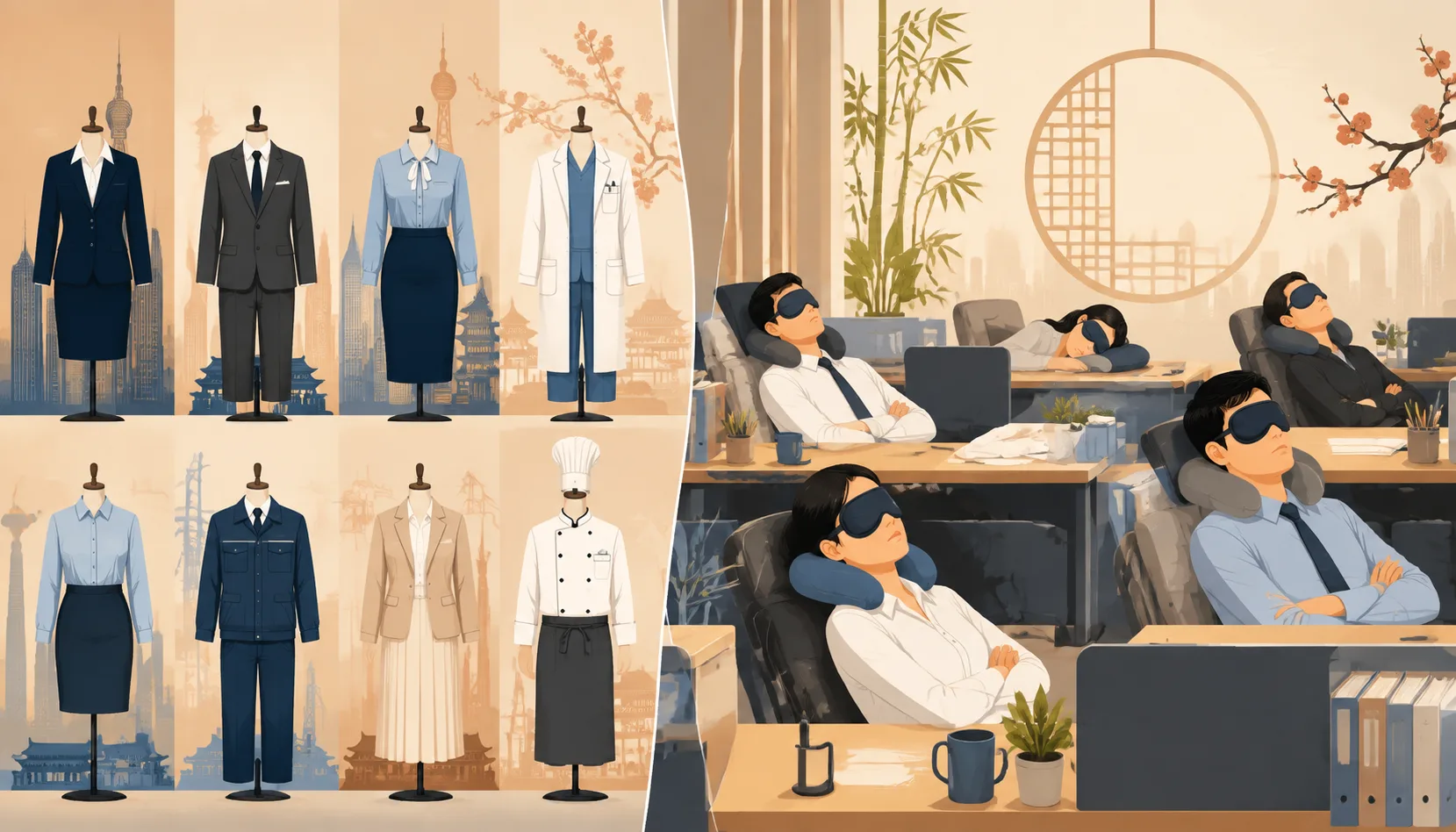
Chinese Office Etiquette: Dress Codes, Nap Culture, and Team Building
Chinese office etiquette has three surprises for most Westerners: dress codes are industry-specific and more formal than you'd expect, the lunch nap (午休) is a r…
Read the guide →
10 Social Mistakes Foreigners Commonly Make in China
The most common mistakes cluster around face (publicly correcting or disagreeing with someone), physical greeting norms (hugging or back-patting people who are …
Read the guide →