Why Smart People Still Fail in China
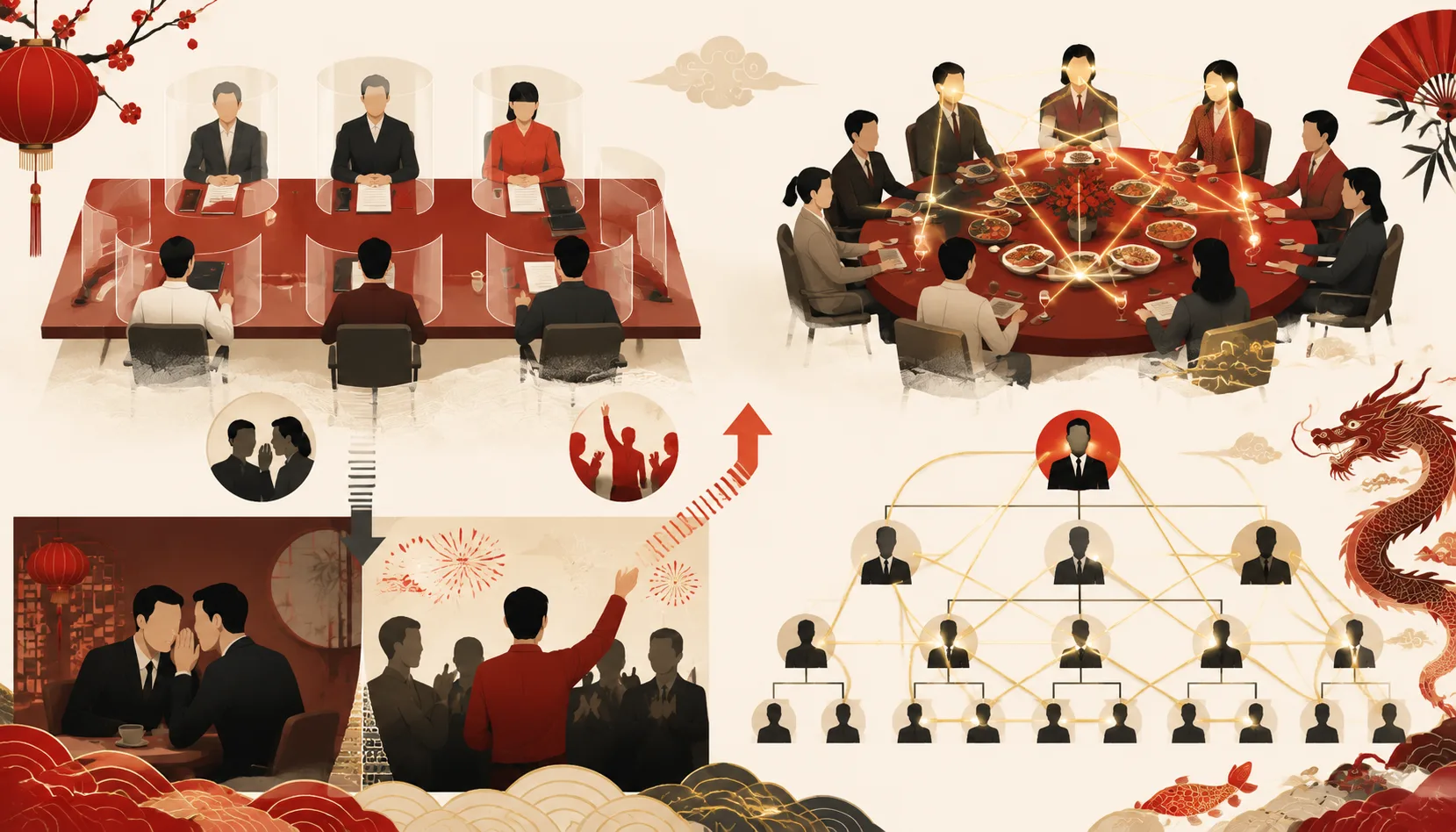
A Situation You May Recognize
A Toronto product lead is the strongest analyst on her team. She catches errors quickly, gives direct feedback, and always has evidence. Six months later, colleagues still respect her intelligence—but stop warning her about problems, inviting her into early discussions, or supporting her proposals. A quieter coworker is promoted instead.
Nothing in her performance review explains the difference. The missing factor lives in the social consequences of how competence is used.
Understanding Renqing Shigu — the Social Intelligence Nobody Teaches You
Two people join the same company.
One is clearly more talented.
He is faster, technically stronger, better educated, and often right.
The other seems less impressive.
He is not the smartest person in the room. He does not dominate meetings. He rarely shows off.
Five years later, something strange happens.
The second person has been promoted twice.
Important people trust him.
Colleagues are willing to help him.
Clients call him directly.
When a problem appears, someone quietly gives him a warning before it becomes serious.
The first person is furious.
He thinks:
“I am obviously more capable. Why is he doing better than me?”
In China, one possible answer is a phrase you will hear again and again:
人情世故 — rénqíng shìgù
It is difficult to translate perfectly.
“Social skills” is too shallow.
“Networking” is too commercial.
“Office politics” is too negative.
“Emotional intelligence” captures only part of it.
A better explanation is:
Understanding people, relationships, situations, obligations, timing, and the unspoken social consequences of what you do.
This is one of the most useful concepts for understanding how Chinese social life actually works.
And it explains something that surprises many foreigners:
Being good at your job and being good at dealing with people are two different abilities.
The most successful people often learn both.
Talent Is Visible. Social Intelligence Is Often Invisible.
Technical ability is easy to see.
Someone writes excellent software.
Someone speaks perfect English.
Someone understands finance.
Someone can negotiate a complicated contract.
Someone has two degrees from famous universities.
These things are measurable.
Renqing shigu is much harder to see.
It appears in moments so small that an outsider may not notice them.
Someone knows when not to correct the boss publicly.
Someone remembers that a colleague helped them six months ago.
Someone gives another person credit in front of the team.
Someone notices that a client is uncomfortable before the client says anything.
Someone knows that a direct “no” will embarrass the other person, so they find another way to communicate the same answer.
Someone disagrees strongly in private but preserves another person’s dignity in public.
Nothing spectacular happens.
That is precisely why the skill is easy to underestimate.
You see the final result.
You do not see the dozens of tiny social decisions that created it.
What Does “Renqing” Mean?
The first half of the phrase is:
人情 — rénqíng
Renqing can mean human feelings, favors, social obligations, personal consideration, or the give-and-take that develops between people.
Imagine that your Chinese colleague spends an entire afternoon helping you solve a problem that was not technically their responsibility.
Six months later, that colleague needs help.
There may be no contract.
There may be no written agreement.
But many people will feel:
“He helped me before. If I can help him now, I should.”
That is part of renqing.
It does not mean every favor creates a debt.
It means relationships carry memory.
People remember who helped.
People remember who disappeared.
People remember who only contacted them when they needed something.
This is not uniquely Chinese.
But Chinese language and culture give this social memory unusually explicit vocabulary.
What Does “Shigu” Mean?
The second half is:
世故 — shìgù
Used negatively, shigu can suggest being overly worldly, calculating, or slick.
But in the phrase renqing shigu, it often refers more broadly to understanding how society and people work.
A socially inexperienced person may ask:
“But I told the truth. Why is everyone angry?”
A socially experienced person asks a different question:
“Was the truth necessary? Was this the right moment? Was this the right person? Was this the right way to say it?”
That is shigu.
It does not necessarily mean lying.
It means understanding that content, timing, relationship, place, tone, and consequences all matter.
The Brilliant Person Who Keeps Creating Enemies
Imagine an engineer named Alex.
Alex works for an international company in China.
He is excellent.
During a meeting, his Chinese manager presents a plan.
Alex immediately notices a serious flaw.
He says:
“This will never work. The assumptions are completely wrong.”
Technically, Alex may be correct.
But everyone becomes uncomfortable.
Why?
Because Alex has turned a technical correction into a public status event.
The manager is no longer merely discussing a plan.
The manager is now defending competence in front of the team.
A person with stronger renqing shigu might say:
“I think there may be one risk worth checking before we finalize this. Could we look again at the assumption behind the second forecast?”
Same problem.
Same intelligence.
Very different social effect.
Later, the socially skilled employee may speak privately with the manager and explain the problem directly.
The purpose is not to protect bad decisions.
It is to solve the problem without creating a second unnecessary problem.
That distinction is central to Chinese social intelligence.
Being Right Is Not Always Enough
Western business culture also values diplomacy.
But foreigners working in China sometimes underestimate how strongly public embarrassment can affect cooperation.
This connects with another famous Chinese concept:
面子 — miànzi — face
Face is often misunderstood as vanity.
It is broader than that.
It can involve dignity, reputation, social standing, and how a person is positioned in front of others.
Imagine two sentences.
The first:
“You are wrong.”
The second:
“Maybe we should double-check this part.”
They may ultimately produce the same correction.
But socially they are not identical.
A person who understands renqing shigu asks:
“How can I achieve the necessary outcome without creating unnecessary humiliation?”
That question is extremely powerful.
Continue Reading — VIP Only
The rest of this article — real patterns, recognition signals, and step-by-step guidance for foreign executives — is available for a one-time unlock.
- ✓ Full article, including every example and action step
- ✓ Written for foreign professionals, managers & business owners
- ✓ Long-term access on this browser
Article preselected · One-time payment · Instant unlock
Try our tools
Related guides

No Permanent Friends, No Permanent Enemies?
Friendship and shared interests can coexist, but circumstances and incentives change. A practical approach to Chinese business relationships is to understand bo…
Read the guide →
Why Showing Too Much Edge Can Hurt You in China
Showing ability does not require taking all the credit or cornering the other side. Share the benefits of success, give others a graceful way to respond, and us…
Read the guide →
Be Honest, Not Naive
Honesty does not require complete disclosure. You can build trust gradually, decline intrusive questions truthfully, and protect confidential or strategic infor…
Read the guide →More in Build Real Relationships
Guanxi: Why Relationships Are China's Most Powerful Professional Currency
In a village in Henan province, a grandmother keeps a red clothbound notebook in a drawer beside the television. Inside, in careful columns,…
Read Preview →🔒 VIPWin-Win Is the Highest Form of Social Intelligence
A durable deal gives both sides a reason to continue. Understand each side’s benefits, contributions, and risks; share credit and keep promi…
Read Preview →🔒 VIPOne Thread Cannot Make a Cord
Strong individuals do not automatically form a strong team. The article examines the coordination failures that appear between talent and a …
Read Preview →