How do mianzi (face), renqing (reciprocal obligation), and guanxi (relationships) interact in Chinese workplace culture, and how can Western professionals navigate them effectively?
Quick answer
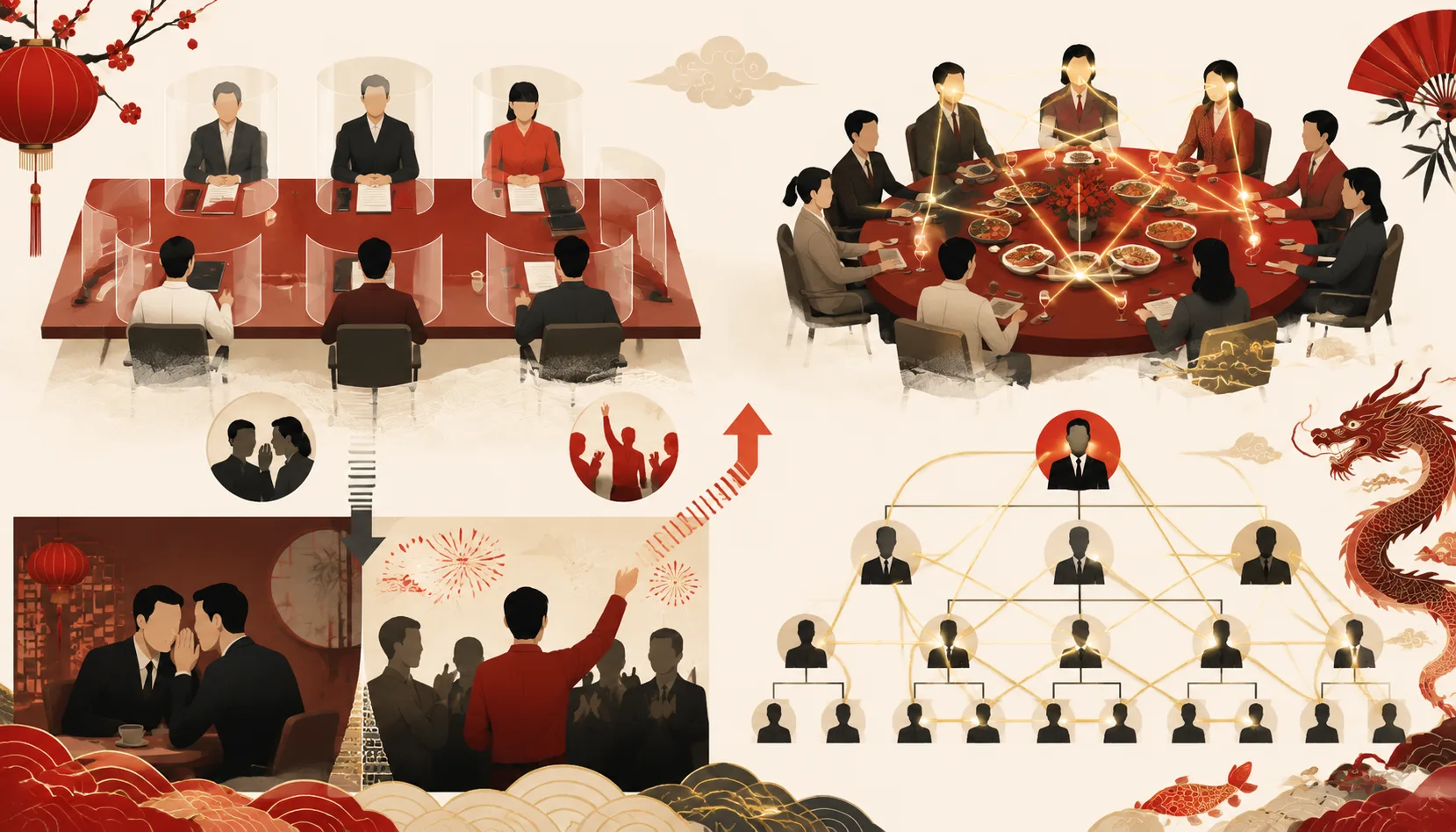
In Chinese offices, mianzi governs public interactions, renqing tracks unspoken debts and credits, and guanxi maps actual influence beyond titles. To thrive, deliver feedback privately, build informal connections through meals and favors, and understand that decisions are made through consensus-building before formal meetings.
The Three Pillars: Mianzi, Renqing, Guanxi
Chinese workplace culture runs on three interconnected systems that Western professionals often misinterpret as inefficiency or office politics. Understanding them is not optional—it's survival.
Mianzi (面子, miànzi) translates as 'face'—your social standing and dignity in the eyes of others. In the office, face is a currency: you can give it, take it, or lose it. A public compliment gives face; a public correction takes it away. The unwritten rule is to always protect others' face, especially those above you.
Renqing (人情, rénqíng) means 'human feeling' or 'favor.' It's the ledger of obligations you build through acts of help and kindness. When you do someone a favor, they owe you renqing. When you need help later, you 'call in' that debt. This isn't cynical—it's the glue of trust. A manager who never does favors finds their requests mysteriously delayed; one who helps everyone has frictionless execution.
Guanxi (关系, guānxi) is your network of relationships—who you know, who trusts you, who owes you. Formal org charts often don't reflect real influence. The CEO's secretary, the VP's old classmate in logistics—these people hold guanxi power that transcends titles.
Actionable takeaway: Map your office's informal power structure. Who do people consult before decisions? Who can get things done with a phone call? These are your guanxi nodes.
Mianzi in Meetings: The Unspoken Order
Meetings in Chinese offices follow a strict face-based hierarchy. The most senior person speaks first or last (often last, to summarize and decide). Speaking out of turn is a face violation—it implies you don't respect the order.
Disagreements are never voiced publicly. If you challenge a colleague's idea in a meeting, you're attacking their face, and they will remember. The Chinese approach is to discuss disagreements privately, one-on-one, before the meeting. By the time the meeting happens, consensus has already been built.
Credit distribution follows a clear pattern: upward to leaders, outward to teams. You never claim credit for yourself. Instead, you attribute success to your boss's guidance and your team's hard work. This gives face to others, and in return, they'll give face to you.
Feedback flows downward but never directly in front of others. A manager who criticizes a subordinate in a meeting is seen as cruel and unprofessional. The correct channel is a private conversation, framed as 'helping you improve.'
Scenario: You're a foreign manager in a weekly meeting. Your team member, Li Wei, presents a flawed plan. Western instinct: 'Li Wei, this won't work because...' Chinese instinct: 'Thank you, Li Wei, for your thorough work. Let's discuss some adjustments privately later.'
Actionable takeaway: Before your next meeting, identify who needs to agree informally. Meet them individually, share your perspective, and listen. The formal meeting will then be a formality.
Renqing in Team Dynamics: The Invisible Ledger
Every interaction in a Chinese office creates or consumes renqing. When you help a colleague meet a deadline, you've banked a favor. When you ask for help, you spend it. This ledger is invisible but constantly updated.
Consider two managers: Zhang, who never does favors, and Wang, who always helps. When Zhang asks for urgent support, his requests are politely delayed. When Wang asks, people move mountains. This isn't spite—it's renqing economics. Wang has invested in relationships; Zhang has not.
For Western managers, the lesson is to proactively build renqing with your team. This means small acts: covering for someone, sharing credit, remembering birthdays, offering help without being asked. These deposits create a buffer. When you need to push a project through or ask for overtime, your team will respond because they owe you—and because they want to.
Scenario: Your team member, Chen, is struggling with a task. Western default: 'You need to improve your skills.' Renqing-aware alternative: 'I know this is challenging. Let me help you with the data analysis this afternoon.' Chen remembers this. Next month, when you need a report urgently, Chen stays late without complaint.
Actionable takeaway: Keep a mental 'renqing ledger.' Every week, do at least one unprompted favor for a colleague or subordinate. It doesn't need to be big—a small help, a recommendation, a listening ear.
Guanxi in Decision-Making: The Real Power Map
In Chinese offices, the person with the highest title isn't always the most powerful. Real influence often lies with those who control access or information. The CEO's secretary decides who gets meetings. The VP's old classmate in procurement can expedite or delay orders. These are guanxi nodes.
When a decision seems stuck, it's often because the formal channels are blocked—but the informal ones are open. A Western manager might escalate to the CEO. A Chinese manager would first talk to the secretary, or to the person who has the CEO's ear.
Building guanxi requires time and genuine interest. It's not transactional; it's relational. You build it by eating together, asking about families, and showing up when someone is in difficulty. These aren't extras—they're the foundation of your authority.
Scenario: You need a budget approval that's been stuck for weeks. Your Chinese colleague suggests: 'Have lunch with the finance director's assistant, Xiao Liu. She knows how to move things along.' You do, and within days, your approval arrives. That's guanxi in action.
Actionable takeaway: Identify the top 3 guanxi nodes in your office—people who control access or information. Invest in those relationships deliberately. Invite them for coffee, ask their advice, show respect.
Why Decisions Take So Long: The Consensus Machine
Western managers often complain: 'Why does everything take so long?' The answer is that decisions in Chinese offices are built through a process of renqing consensus. Before any formal meeting, key stakeholders are consulted informally. Each person's face is considered. Objections are raised privately and resolved. By the time the meeting happens, the outcome is already decided.
The formal meeting is a ratification ritual, not a debate. If you walk in expecting to argue your case, you'll be frustrated. Instead, join the informal channels. Talk to people before the meeting. Understand their concerns. Adjust your proposal to address them. This is how decisions actually get made.
Scenario: You propose a new software system. In the meeting, everyone nods but nothing happens. Your Chinese mentor explains: 'You need to talk to each department head separately. Ask their opinion. Let them feel they contributed.' You do, and the next meeting approves the project unanimously.
Actionable takeaway: Before any major proposal, schedule one-on-one conversations with all key stakeholders. Ask for their input, incorporate it, and thank them publicly. This builds renqing and guanxi simultaneously.
Why Your Direct Report Didn't Tell You About the Problem
You discover a project is behind schedule—not from your team, but from a client. Your first reaction: 'Why didn't anyone tell me?' The answer lies in face dynamics.
Telling you bad news has two face risks. First, it damages your face as a leader—you should have known. Second, it risks their face—admitting failure. The Chinese instinct is to solve the problem first, then report the solution. This protects everyone's face.
As a Western manager, you need to create explicit safety for early reporting. Say: 'I value hearing about problems early, even if they're not solved. This is not about blame—it's about teamwork.' Repeat this consistently. Over time, your team will trust that early reporting doesn't cost face.
Scenario: Your team member, Wang, misses a deadline. Instead of asking 'Why is this late?' (which triggers defensiveness), say: 'I noticed the timeline slipped. What support do you need from me?' This frames the issue as a shared challenge, not a personal failure.
Actionable takeaway: In your next team meeting, explicitly state: 'If there's a problem, tell me early. I will never punish honesty. We solve problems together.' Then prove it by responding calmly to the next bad news.
Performance Reviews: The Face-Saving Approach
Performance reviews are notoriously uncomfortable in Chinese offices because they force direct criticism, which feels like a face attack. A written review with negative comments is permanent evidence of failure—a double blow.
The solution is to supplement formal reviews with private, face-saving conversations. Before the official review, meet one-on-one. Frame criticism as investment: 'I believe in your ability to grow in this area.' This gives the person a chance to respond, to explain, and to save face.
In the written review, soften negative points with positive framing. Instead of 'Poor communication skills,' write 'Has potential to enhance communication effectiveness.' The message is clear, but the face is preserved.
Scenario: Your team member, Liu, has been missing deadlines. In the review, you say: 'Liu, you're a valuable member. I see your potential. One area we can work on together is time management. I'm confident you'll improve.' Liu leaves motivated, not humiliated.
Actionable takeaway: For your next review cycle, schedule a pre-review chat. Deliver any critical feedback privately, using the 'I believe in you' framing. Then write the formal review with face-preserving language.
Building Guanxi with Your Chinese Team: Beyond the Office
Western managers often keep professional distance. In China, that's a mistake. Building guanxi requires personal connection. This means eating together—not just formal dinners, but casual meals. Ask about their families. Remember significant dates like birthdays or children's exams. Show up when they're in difficulty, whether it's a family issue or a work crisis.
These aren't extras; they're the relational foundation that makes your management authority real. When your team trusts you as a person, they'll go the extra mile. When they see you as just a title, they'll do the minimum.
Scenario: Your team member, Zhao, has a sick parent. You send a message: 'I heard your mother is unwell. Please take time to care for her. We'll manage the project.' Zhao is deeply moved. From then on, Zhao is your most loyal supporter.
Actionable takeaway: Schedule regular informal lunches with team members—no agenda, just conversation. Ask about their lives. Remember details. This is how guanxi is built.
The Expat Manager Trap: Why 'Professional Equals' Fails
Many Western managers bring a 'professional equals' model: flat hierarchy, direct feedback, meritocracy. In China, this can fail because it ignores the face architecture the team needs to function. When you treat everyone as equal, you inadvertently disrespect the hierarchy that gives your team structure and security.
You don't need to abandon your values. But you need to deliver them through face-preserving channels. Direct feedback becomes private coaching. Meritocracy becomes 'recognizing contributions' in a way that gives face. Flat hierarchy becomes 'open door' but with respect for rank.
Scenario: You're a foreign manager who says: 'We're all equals here, call me John.' Your team continues to call you 'Manager Li' or 'John laoban (老板, lǎobǎn, boss)'. They're not being resistant—they're preserving the face structure. Accept it. Use your first name in private, but don't force informality in public.
Actionable takeaway: Observe how your Chinese colleagues address each other. Match that level of formality. When in doubt, err on the side of respect. You can always loosen up later, but tightening up is harder.
Scenario Comparison: Western Default vs. Face-Aware Alternative
| Scenario | Western Default | Face/Renqing-Aware Alternative |
|---|---|---|
| Disagreeing with a colleague's idea in a meeting | Publicly state your disagreement | Discuss privately before the meeting; in the meeting, say 'I'd like to build on Li's idea...' |
| Giving critical feedback | Direct, in writing, during review | Private conversation, framed as 'I believe in your growth' |
| Receiving credit for a success | Accept credit as your due | Attribute credit to your leader and team |
| Asking for a favor | Ask directly, expect compliance | Build renqing first through small favors, then ask |
| Decision-making | Formal meeting debate | Informal consensus-building before the meeting |
| Team bonding | Work-focused, minimal personal talk | Casual meals, personal questions, remembering family details |
Actionable takeaway: Print this table and keep it at your desk. Before any interaction, ask: 'Am I using the Western default or the face-aware approach?'
What Chinese People Actually Say
In Chinese offices, mianzi governs public interactions, renqing tracks unspoken debts and credits, and guanxi maps actual influence beyond titles. To thrive, deliver feedback privately, build informal.
- 给您面子 (gěi nín miànzi) – “give you face”. Usage: Publicly praising a colleague to preserve their dignity.
- 我欠您一个人情 (wǒ qín nín yí ge rénqíng) – “I owe you a favor”. Usage: Acknowledging a renqing debt after receiving help.
- 我们之间有点关系 (wǒmen zhījiān yǒu diǎn guānxi) – “we have some guanxi”. Usage: Hint at a personal connection to influence a decision.
- 私下里再说 (sīxià lǐ zàishuō) – “let’s talk privately”. Usage: Suggest moving a sensitive topic offline to protect face.
2026 Reality Check
2026 Reality Check: In China's rapidly evolving workplace, Gen Z is reshaping the traditional dynamics of face, renqing, and guanxi. While older generations still prize hierarchical deference and reciprocal favors, younger employees increasingly demand transparent feedback and digital‑first communication, treating relationships as networks rather than obligatory debts. Tier‑1 cities like Shanghai and Beijing have seen a wave of startups that flatten hierarchies, using AI‑driven performance metrics that reduce the need for face‑saving rituals. Yet in tier‑2 and tier‑3 hubs such as Chengdu, Xi’an, and Zhuhai, the older model persists—managers still expect gift‑giving and public acknowledgment of seniority. By 2026, companies that blend the two: respecting renqing in person while leveraging digital tools for remote teams, will strike the balance between tradition and agility.
Frequently asked questions
What does 'losing face' actually look like in a Chinese office, and how can I avoid doing it to a colleague?
Losing face (diu mianzi) happens when someone is publicly embarrassed, contradicted, or shown to be wrong in front of others. This can occur during meetings, via harsh email chains, or when you reject a request in front of a group. To avoid it, never criticize publicly—always deliver negative feedback in private, one-on-one settings. Also, avoid directly saying 'no' to a colleague's idea; instead, suggest alternatives or defer the decision to a later discussion.
Can I build guanxi with Chinese colleagues if I don't speak Mandarin?
Yes, but it requires more effort. Guanxi is built through trust and shared experiences, not just language. Start by learning a few key phrases like 'xie xie' (thank you) and 'chi fan le ma?' (have you eaten?) to show respect. More importantly, invest in informal time—join team lunches, accept invitations to karaoke or tea, and remember personal details like birthdays or family news. These actions speak louder than fluent Mandarin and demonstrate genuine interest in the person, not just the transaction.
Is it rude to ask a Chinese coworker for a favor directly, or should I go through a mutual contact?
In guanxi culture, asking for a favor directly can put the other person on the spot and create an awkward obligation they may not want to accept. Instead, use an intermediary—a mutual colleague or a senior leader—to test the waters or communicate your request. This gives the other person room to decline gracefully without losing face. If you must ask directly, frame it as a request for advice or an informal chat, not a formal demand, and be ready to offer something in return later.
How do I reciprocate renqing without making it feel like a transactional bribe or exchange?
The key is timing and subtlety. Reciprocate the favor later, not immediately, and in a way that doesn't directly mirror the original act. For example, if a colleague helped you meet a tight deadline, treat them to a nice lunch a few weeks later, or offer to cover their shift when they need time off. Avoid overtly tracking favors or saying 'I owe you one'—that feels too commercial. The goal is to build a natural cycle of goodwill, not to settle a debt.
When a Chinese manager makes a decision outside a meeting, is that normal, and how should I respond?
Yes, this is very common. Major decisions in Chinese offices are often pre-negotiated behind the scenes through guanxi and consensus-building before they ever reach the formal meeting table. The meeting itself is usually a formality to announce and ratify what has already been agreed. If you're surprised by a decision, don't challenge it in the meeting. Instead, ask for a private follow-up to understand the reasoning. This shows respect for the process and helps you learn how to get involved earlier next time.
What should I do if a Chinese colleague publicly praises me—should I accept the compliment or deflect it?
Deflect it gracefully. In Chinese culture, accepting praise directly can make you seem arrogant and cause others to lose face. A typical response is to credit your team, your manager, or the collective effort: 'Thank you, but it was really a team success' or 'I couldn't have done it without everyone's support.' This shows humility (qianxu), which is highly valued. However, also be aware that public praise might be a subtle way to motivate others or to test your character, so always respond with modesty and shift the spotlight away from yourself.
Try our tools
Related guides
Chinese Business Etiquette Guide 2026: What You Must Know
Chinese business etiquette is easier to navigate when you watch three recurring patterns: relationship-building (guanxi), protecting dignity in public (mianzi),…
Read the guide →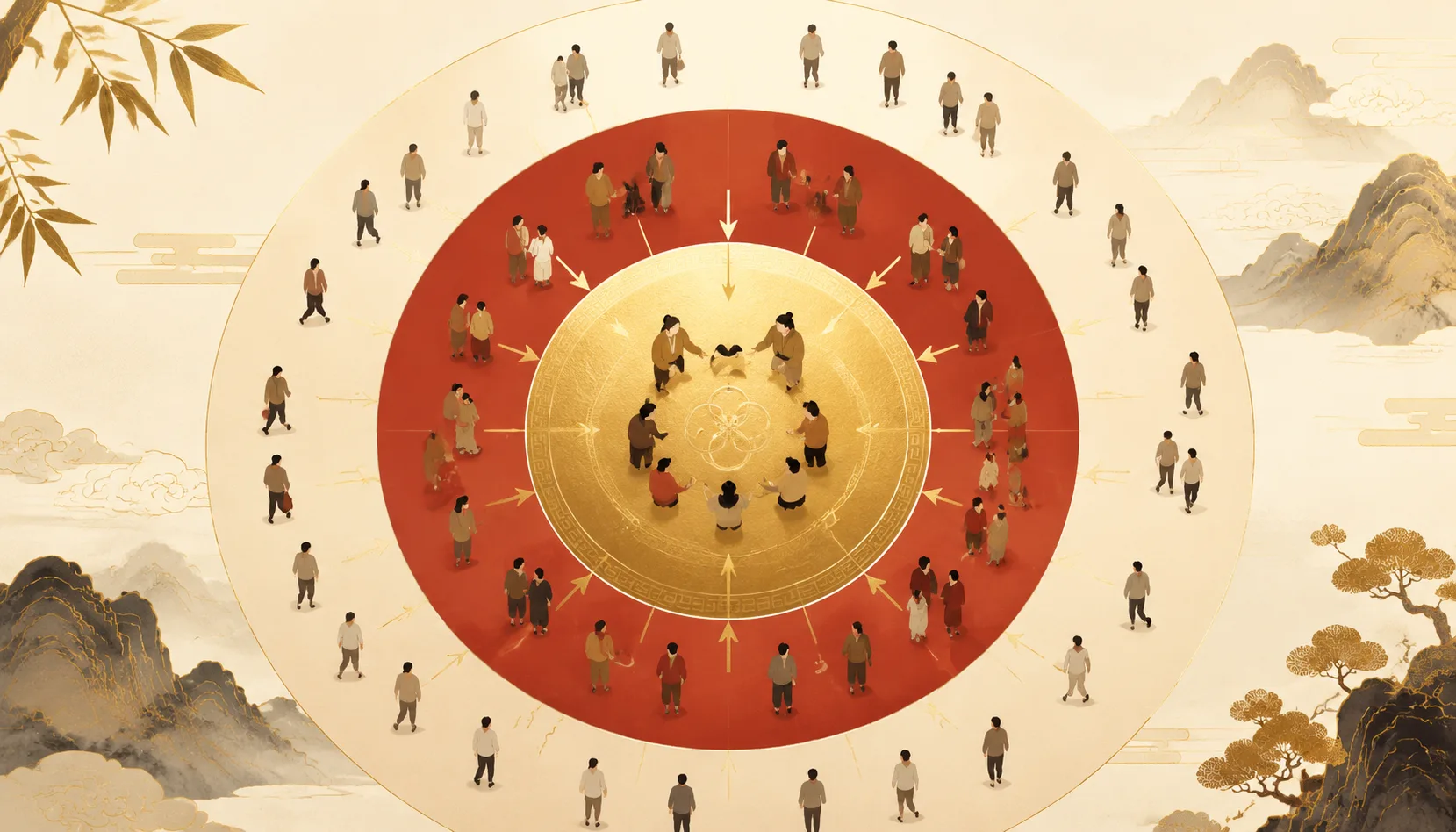
Guanxi Circles: Iron vs. Face Relationships in China
Chinese relationships are stratified into concentric circles—from iron relationships (铁关系 tiě guānxi) at the core to face-level acquaintances (面子关系 miànzi guānx…
Read the guide →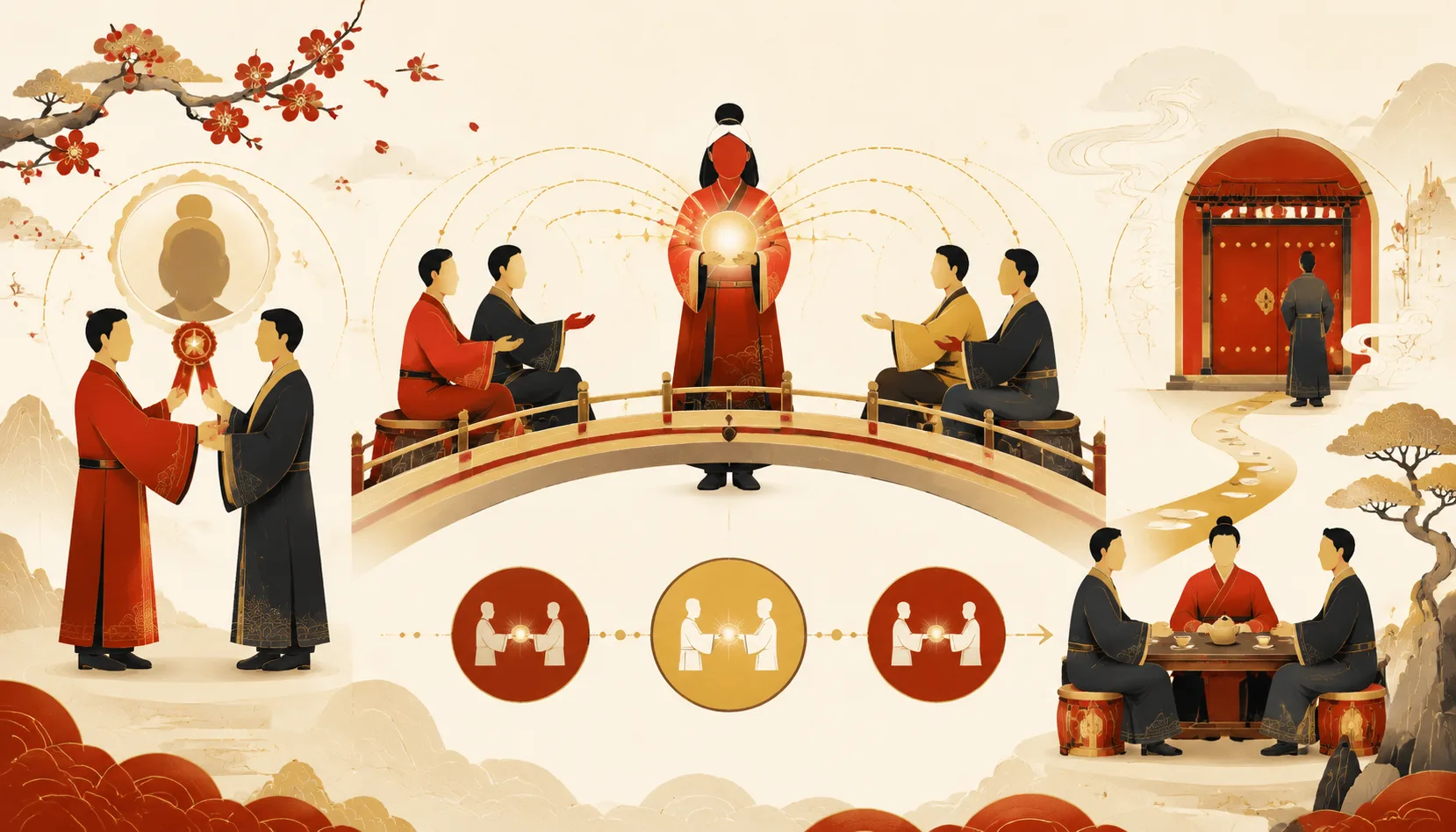
The Chinese Business Middleman (中间人): Why You Need One
In China's relationship-based business culture, a 中间人 transfers their personal trust to you, bypassing the cold-start problem of zero trust capital. Find one th…
Read the guide →