What Chinese phrases should I know when visiting a Chinese family's home?

Quick answer
Key phrases: 打扰了 (dǎ rǎo le) = "Thank you for having me," 一点心意 (yī diǎn xīn yì) = "Just a small token," 请留步 (qǐng liú bù) = "Please don't walk me further out." A handful of well-placed Chinese phrases will leave a far stronger impression than trying to speak perfect Mandarin.
You don't need to speak fluent Mandarin to impress a Chinese host. Knowing 10–15 well-timed phrases, delivered with a smile and genuine effort, will earn you more goodwill than a perfectly grammatical sentence that feels robotic. This guide compiles every useful phrase — organized by the moment you need it — so you can use them like a script at your first Chinese home visit.
Format: Chinese character → Pinyin → English meaning
At the Door: Arrival and Greetings
叔叔阿姨好!
Shū shu ā yí hǎo!
"Hello, Uncle and Auntie!" — Use this when greeting the parents of a Chinese friend. Shūshu = uncle (any adult male), āyí = auntie (any adult female). Extremely important for the first impression.
打扰了,谢谢邀请!
Dǎ rǎo le, xiè xie yāo qǐng!
"Sorry to disturb you — thank you for the invitation!" — The 打扰了 opener is essential. It doesn't mean you've done something wrong; it's a culturally loaded expression of humility.
我把鞋脱在哪儿?
Wǒ bǎ xié tuō zài nǎ'er?
"Where should I take off my shoes?" — Ask this even if it seems obvious. It demonstrates respect for their housekeeping habits.
我的脚太大了,我只穿袜子可以吗?
Wǒ de jiǎo tài dà le, wǒ zhǐ chuān wà zi kě yǐ ma?
"My feet are too big — is it okay if I just keep my socks on?" — For when the guest slippers don't fit.
Presenting the Gift
给你们带了一点水果,希望你们喜欢。
Gěi nǐmen dài le yī diǎn shuǐguǒ, xīwàng nǐmen xǐhuān.
"I brought some fruit for you — hope you enjoy it." — Replace "fruit" with whatever you brought.
一点心意,一点心意。
Yī diǎn xīnyì, yī diǎn xīnyì.
"Just a small token, just a small token." — Repeat this when the host protests that you "really didn't need to." Keep extending the gift.
Inside the Home: Compliments
你们家真大,真宽敞!
Nǐmen jiā zhēn dà, zhēn kuānchǎng!
"Your home is so big and spacious!"
装修得真漂亮,很有品味。
Zhuāngxiū de zhēn piào liang, hěn yǒu pǐnwèi.
"The decoration is beautiful — very tasteful!"
收拾得真干净,太温馨了。
Shōu shi de zhēn gānjìng, tài wēnxīn le.
"So clean and tidy — it feels so cozy and warm!"
At the Dining Table
我坐哪里比较好?
Wǒ zuò nǎlǐ bǐjiào hǎo?
"Where would be best for me to sit?" — Never choose your own seat at a Chinese table without asking first.
谢谢,我自己来就好,您也吃!
Xiè xie, wǒ zìjǐ lái jiù hǎo, nín yě chī!
"Thank you — I can serve myself, please eat too!" — When the host uses their chopsticks to serve food onto your plate.
这个菜是怎么做的?太好吃了!
Zhè ge cài shì zěnme zuò de? Tài hǎo chī le!
"How do you make this dish? It's absolutely delicious!" — The #1 compliment you can give the person who cooked.
看起来很好吃,但我对这个过敏。
Kàn qǐlái hěn hǎo chī, dàn wǒ duì zhège guòmǐn.
"It looks delicious, but I'm allergic to this." — Graceful way to decline unfamiliar food.
这个味道很特别,很好吃。
Zhège wèidào hěn tèbié, hěn hǎo chī.
"The flavor is very distinctive — delicious!" — When you genuinely don't know what you're eating but want to be polite.
谢谢,我真的吃饱了。
Xiè xie, wǒ zhēn de chī bǎo le.
"Thank you — I'm genuinely full." — For when the host keeps offering more food. The word 真的 (really/truly) adds emphasis.
Drinking and Toasting
干杯!
Gānbēi!
"Bottoms up! / Cheers!" — Literally "dry cup." Used for full-glass toasts.
随意。
Suíyì.
"As you wish / Drink however much you like." — A softer toast that allows guests to sip instead of draining the glass.
谢谢,我今天不喝酒。
Xiè xie, wǒ jīntiān bù hē jiǔ.
"Thank you — I'm not drinking today." — Clean refusal. Works for any reason: health, driving, personal preference.
Conversation Phrases
哪里哪里,还在学,说得不好。
Nǎlǐ nǎlǐ, hái zài xué, shuō de bù hǎo.
"Not at all — I'm still learning, I don't speak well." — The perfect response when someone compliments your Chinese. Humility earns more points than confidence here.
因为中国菜太好吃了,我必须得学会用筷子!
Yīnwèi Zhōngguó cài tài hǎo chī le, wǒ bìxū de xuéhuì yòng kuàizi!
"Because Chinese food is so delicious, I had to learn how to use chopsticks!" — This line almost always produces warm laughter around the table.
您太客气了。
Nín tài kè qi le.
"You're too kind." — Universal social lubricant. Use it whenever your host downplays their own hospitality.
已经非常丰盛了,谢谢您!
Yǐjīng fēicháng fēngshèng le, xièxie nín!
"It's already an amazing spread — thank you!" — When the host says "Sorry, there's not much to eat" while serving you ten dishes.
Leaving: The Goodbye Script
今天实在太感谢了,菜太好吃了。
Jīntiān shízài tài gǎnxiè le, cài tài hǎo chī le.
"Thank you so much for today — the food was truly wonderful."
时间不早了,不打扰你们休息了。
Shíjiān bù zǎo le, bù dǎrǎo nǐmen xiūxi le.
"It's getting late — I shouldn't disturb your rest."
我先回去了,下次再聚!
Wǒ xiān huíqù le, xià cì zài jù!
"I'll head back now — let's meet again soon!"
请留步,别送了,快回去休息吧!
Qǐng liúbù, bié sòng le, kuài huí qù xiūxi ba!
"Please stop here — no need to walk me further. Go back and rest!" — Say this at the elevator. It signals that you understand the Chinese escort ritual and are releasing your host from further obligation.
The Follow-Up WeChat Message
我到家了。今天非常开心,菜太好吃了,期待下次再聚!早点休息。
Wǒ dào jiā le. Jīntiān fēicháng kāixīn, cài tài hǎo chī le, qīdài xià cì zài jù! Zǎo diǎn xiūxi.
"I'm home safely. Today was wonderful — the food was amazing. Looking forward to next time! Rest well."
Send this within 2 hours of getting home. It closes the social loop and leaves a lasting positive impression.
Quick Reference: The 10 Phrases You Must Know
| Situation | Chinese | Pinyin | English |
|---|---|---|---|
| Greeting parents | 叔叔阿姨好! | Shūshu āyí hǎo! | Hello, Uncle and Auntie! |
| Entering | 打扰了! | Dǎ rǎo le! | Thank you for having me! |
| Gift offer | 一点心意。 | Yī diǎn xīnyì. | Just a small token. |
| Home compliment | 太温馨了! | Tài wēnxīn le! | It's so cozy! |
| Seating | 我坐哪里? | Wǒ zuò nǎlǐ? | Where should I sit? |
| Food compliment | 太好吃了! | Tài hǎo chī le! | This is delicious! |
| Full | 我吃饱了,谢谢。 | Wǒ chī bǎo le, xièxie. | I'm full, thank you. |
| Kind host | 您太客气了。 | Nín tài kèqi le. | You're too kind. |
| Goodbye | 下次再聚! | Xià cì zài jù! | Let's meet again soon! |
| Escort stop | 请留步! | Qǐng liúbù! | Please stop here! |
What Chinese People Actually Say
- 打扰了 | dǎ rǎo le | "Sorry to bother you" | Say when entering someone's home as a polite greeting.
- 谢谢招待 | xiè xiè zhāo dài | "Thank you for your hospitality" | Say when leaving to show gratitude.
- 随便坐 | suí biàn zuò | "Feel free to sit anywhere" | Host says to make guests comfortable.
2026 Reality Check
2026 Reality Check: Traditional visiting phrases like "打扰了" (dǎ rǎo le - sorry to bother) and "谢谢招待" (xiè xiè zhāo dài - thanks for the hospitality) are still used, but formality has softened significantly.
Gen Z vs Older Generations: Younger Chinese (under 30) often skip formal phrases, using casual "来了" (lái le - I'm here) or just texting "到了" (dào le - arrived). Parents and grandparents still expect basic courtesy phrases, causing mild friction in family settings.
Beijing/Shanghai vs Smaller Cities: Tier-1 cities see more casual, Western-influenced greetings among friends. Smaller cities and rural areas maintain stronger traditional etiquette expectations—visiting without bringing gifts or using polite phrases still draws visible disapproval.
Frequently asked questions
What should I say when entering a Chinese person's home for the first time?
Say 打扰了 (dǎ rǎo le) meaning 'sorry to disturb' or 'thank you for having me.' This humble greeting shows respect and is expected when entering someone's home. You can also add 你好 (nǐ hǎo) for hello, but 打扰了 is the culturally appropriate opener that signals you don't want to be a burden.
How do I politely refuse food or drink when offered in a Chinese home?
Say 谢谢,我吃饱了 (xiè xie, wǒ chī bǎo le) meaning 'thank you, I'm full.' If you're still hungry but want to decline a specific dish, use 我不吃这个,谢谢 (wǒ bù chī zhè ge, xiè xie). Never say 'no' bluntly—always pair refusal with gratitude. Hosts may insist twice, so a gentle but firm reply works best.
What phrase should I use when giving a gift to my Chinese host?
Say 一点心意 (yī diǎn xīn yì), meaning 'just a small token.' This humble phrase downplays the gift's value, which is culturally appropriate. Hand it with both hands and add 希望你喜欢 (xī wàng nǐ xǐ huan) for 'hope you like it.' Avoid saying the gift is expensive—that's considered boastful.
Is it okay to compliment the food or home during a visit?
Yes, compliments are welcomed. Say 你做的菜真好吃 (nǐ zuò de cài zhēn hǎo chī) for 'your cooking is delicious' or 你家真漂亮 (nǐ jiā zhēn piào liang) for 'your home is beautiful.' Complimenting the host's effort builds rapport. However, avoid overdoing it—modest praise is more genuine than excessive flattery.
What should I say when leaving a Chinese home to be polite?
Say 请留步 (qǐng liú bù), meaning 'please don't walk me further out.' This tells the host not to accompany you to the door or street, which is a common courtesy. Add 谢谢您的招待 (xiè xie nín de zhāo dài) for 'thank you for your hospitality.' This combination leaves a lasting positive impression.
Can I use these phrases in Hong Kong or Taiwan, or are they different?
All phrases work in mainland China, but in Hong Kong, Cantonese is preferred, though Mandarin is understood. In Taiwan, the same Mandarin phrases are used, but 打扰了 may sound slightly formal—locals might say 打擾了 (same characters) or simply 謝謝. For safety, stick to the pinyin phrases; they're universally recognized across Chinese-speaking regions.
Try our tools
Related guides

Visiting a Chinese Home: Complete Etiquette Guide for Foreigners
Bring a small gift, arrive 5 minutes late (never early), remove shoes at the door, wait for the host to assign your seat, and let the eldest eat first. Follow t…
Read the guide →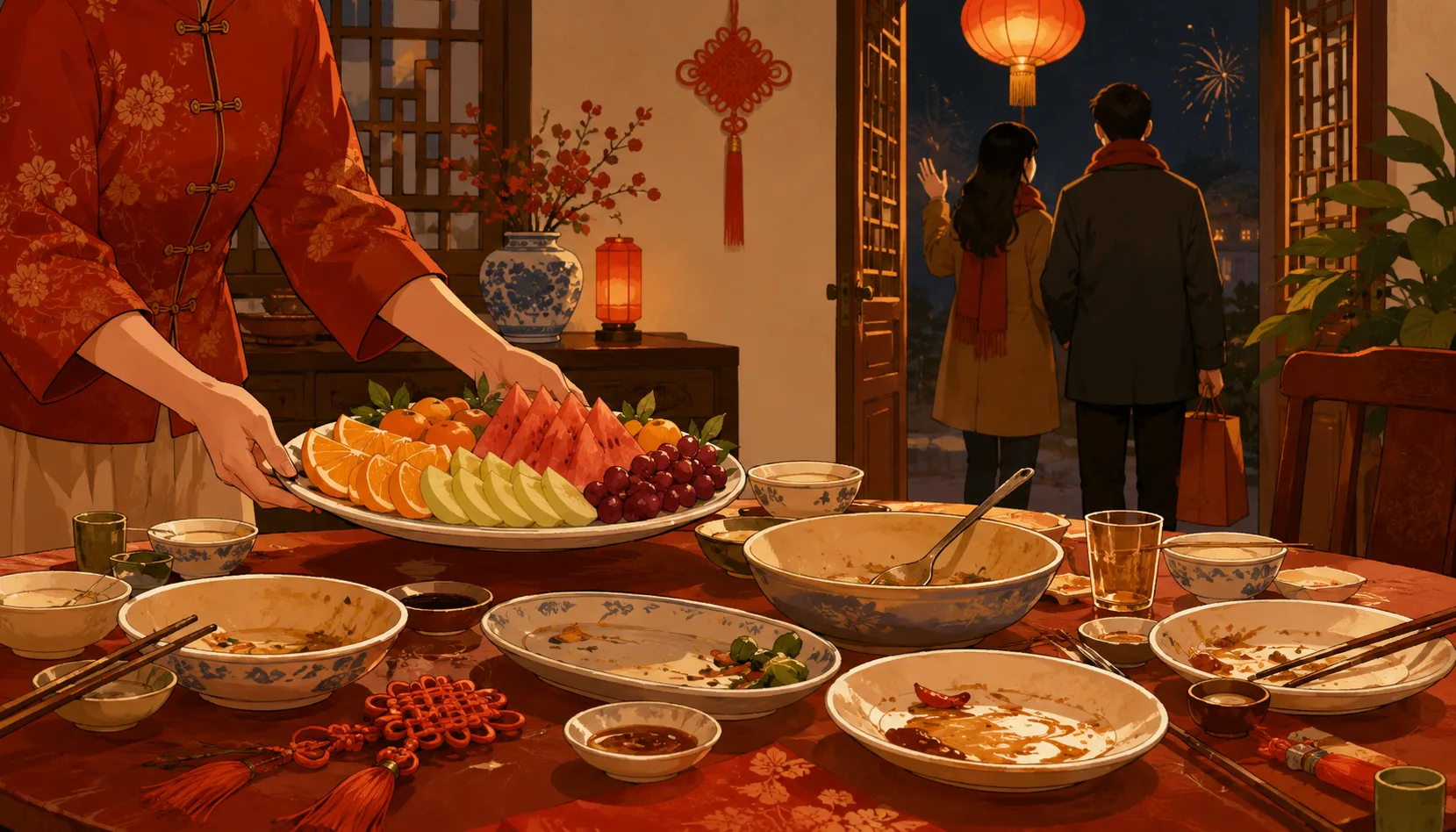
How to Leave a Chinese Dinner Party: Reading the Signs and Saying Goodbye
Your host will never directly tell you to leave. Watch for the fruit platter signal, conversations tapering off, and dishes being cleared. When you see the sign…
Read the guide →
Chinese Polite Phrases Decoded: What People Really Mean
Chinese social interaction is lubricated by ritual phrases (客套, kètào) that have specific social functions but often do not mean what they literally say. 'Have …
Read the guide →