Why Smart People Don't Always Look Smart
A Situation You May Recognize
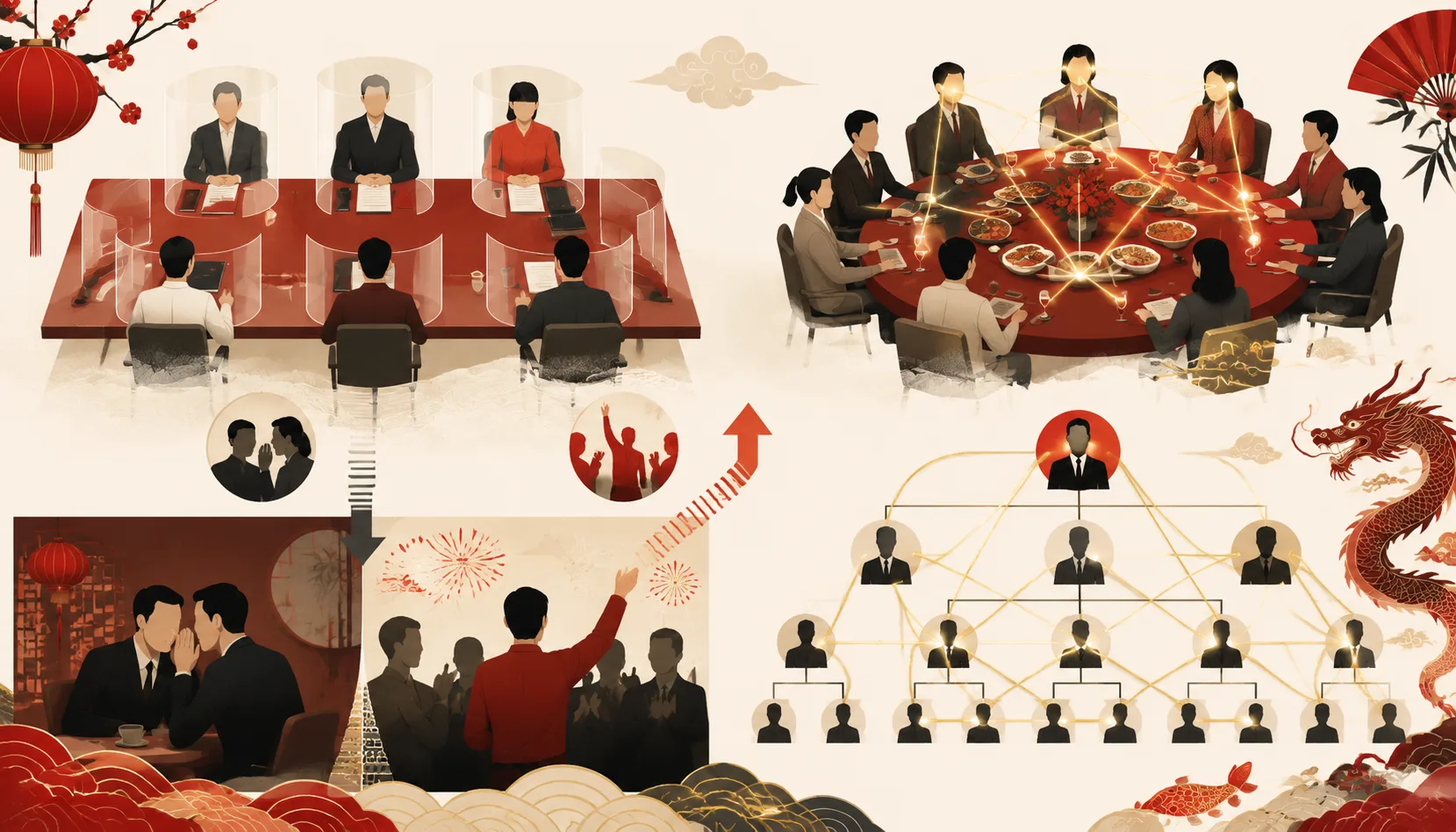
An Oxford-trained strategist joins a China market review and fills the room with detailed models, polished terminology, and fast answers. A quieter colleague asks one basic question about who can actually approve the plan. The entire proposal suddenly has to be reconsidered.
One person looked intelligent throughout the meeting. The other changed the quality of the decision. Which kind of intelligence will the room remember when results arrive?
Understanding the Chinese idea of Da Zhi Ruo Yu
Imagine two people in a meeting.
The first speaks constantly.
He corrects other people.
Uses complicated terminology.
Answers questions before anyone else can.
Frequently reminds the room of what he predicted last quarter.
By the end of the meeting, nobody doubts that he wants to be seen as intelligent.
The second person says very little.
She asks three simple questions.
One of them exposes a problem nobody had noticed.
Later, when the team becomes stuck, she explains the issue in two minutes.
No drama.
No performance.
Who is smarter?
You cannot know from this scene alone.
But Chinese culture has an expression for something worth noticing:
大智若愚 — dà zhì ruò yú
Literally:
Great wisdom may appear foolish.
There is a related expression:
大巧若拙 — dà qiǎo ruò zhuō
Great skill may appear clumsy or simple.
These sayings do not mean:
“Pretend to be stupid so you can manipulate people.”
That interpretation turns wisdom into theatre.
The deeper idea is almost the opposite:
When you are genuinely capable, you do not need to prove your intelligence every minute.
The Need to Look Smart Can Make You Less Smart
Suppose someone says something incorrect.
You immediately interrupt:
“Actually…”
You are right.
Everyone now knows you are right.
Success?
Maybe.
But imagine the mistake was irrelevant to the decision.
You spent:
time,
goodwill,
and social attention
to win something that did not matter.
An intelligent answer asks:
“Am I correct?”
A wiser answer also asks:
“Does being correct here matter?”
Those are different questions.
Smart People Can Afford Simple Questions
A new employee attends a technical meeting.
Everyone is using complicated acronyms.
Nobody wants to admit confusion.
She asks:
“Can someone explain what problem this system is actually solving?”
Silence.
Then the room discovers that three departments have been discussing three different problems.
Her question sounded elementary.
Its effect was not.
This is one reason genuine intelligence can sometimes look surprisingly simple.
People trying to look smart often complicate.
People trying to understand often simplify.
There Is a Social Cost to Displaying Intelligence
Being visibly capable creates benefits.
People notice you.
You gain influence.
You may receive better opportunities.
But constant intellectual display also creates costs.
Others may feel:
corrected,
competed with,
lectured,
or unnecessarily diminished.
This does not mean hiding your competence.
It means understanding something more subtle:
Intelligence has maximum value when it improves the outcome—not when it merely improves your position in the room.
And that leads to the question most people never ask:
When should you let people see exactly how much you know—and when is it smarter not to?
1. Da Zhi Ruo Yu Is Not “Playing Dumb”
This distinction comes first.
Playing dumb means:
you know something,
pretend not to know it,
and use that false impression strategically.
Sometimes fictional characters do this.
Political and military stories are full of it.
That is not the lesson a modern professional needs.
The healthier version is:
Do not perform intelligence when performance adds no value.
You can know the answer without announcing that you knew it first.
You can notice another person's mistake without turning it into a public event.
You can have expertise without making everyone else feel like a beginner.
That is restraint, not deception.
2. Intelligence Does Not Need Constant Advertising
Suppose someone repeatedly tells you:
“I'm extremely intelligent.”
Does the statement increase your confidence?
Usually not.
The same is true of:
“I'm a great leader.”
“I'm very humble.”
“Everybody trusts me.”
Some qualities become less convincing when repeatedly advertised.
Competence is usually strongest when other people discover it through experience.
3. Let the Work Reveal the Ability
You say:
“I'm excellent at crisis management.”
Interesting.
Then a crisis arrives.
That is the real presentation.
You say:
“I am very detail-oriented.”
Then send a document full of errors.
The label disappears.
A useful principle:
Do less self-description. Produce more evidence.
4. You Don't Need to Correct Everything
This may be one of the hardest habits for intelligent people.
Someone uses a slightly wrong date.
Do you correct it?
Someone mispronounces a word.
Do you correct it?
Someone tells a story and gets a tiny detail wrong.
Do you correct it?
Sometimes yes.
Often no.
Ask:
Does this error change the decision?
If not, correction may provide very little value.
Continue Reading — VIP Only
The rest of this article — real patterns, recognition signals, and step-by-step guidance for foreign executives — is available for a one-time unlock.
- ✓ Full article, including every example and action step
- ✓ Written for foreign professionals, managers & business owners
- ✓ Long-term access on this browser
Article preselected · One-time payment · Instant unlock
Try our tools
Related guides

More Than Guanxi
A large network and a deeply understood friendship serve different human needs. This guide explores how Chinese friendship grows beyond contacts and favors.
Read the guide →
18 Unwritten Rules of Chinese Drinking Dinners
A practical review of 18 drinking-dinner rules, separating useful signals from customs that depend on the host, region, generation, and level of formality.
Read the guide →
Don't Make Yourself the Easiest Target
Talent helps, but displaying every strength in every room can change how colleagues use, judge, or resist you. This guide explains what to notice before showing…
Read the guide →More in Chinese Social Philosophy
What 'Collective Success' Actually Looks Like in Chinese Team Culture
On the forty-first floor of a Hangzhou office tower, forty employees are packed around four round tables at a celebration dinner. The featur…
Read Preview →🔒 VIPThe World Is Full of “Smart” Fools
Da zhi ruo yu points to wisdom that does not need constant display. Focus on good outcomes, share credit, own mistakes, and choose when to s…
Read Preview →